
Introduction
For road cyclists, the wheelset is one of the most important components affecting overall riding performance. While many riders focus on rim depth, weight, and aerodynamics, the hub engagement system also plays a crucial role in how quickly power is transferred to the wheel.
Among modern high-performance wheelsets, ratchet hub systems have become increasingly popular because of their durability, simplicity, and smooth engagement. Two common options found in many carbon wheelsets are 54T ratchet hubs and 36T ratchet hubs.

Although both systems use the same fundamental mechanism, they differ in engagement speed, responsiveness, and riding feel. Understanding these differences can help cyclists choose the right wheelset for their riding style.
In this article, we will compare 54T and 36T ratchet hubs in terms of engagement angle, acceleration, durability, and overall riding performance.
What Is a Ratchet Hub?
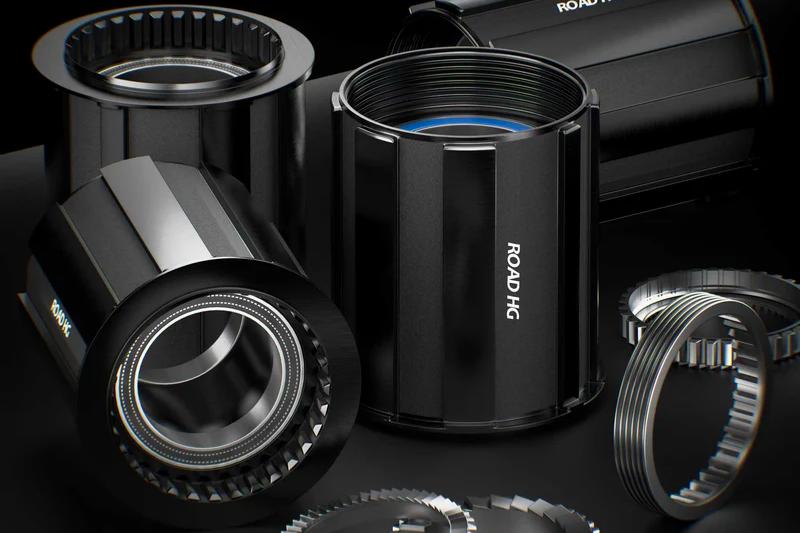
A ratchet hub uses two toothed discs (ratchets) that engage with each other when the rider pedals. When you stop pedaling, the ratchets separate slightly, allowing the wheel to rotate freely. When you start pedaling again, the teeth engage and transfer power to the drivetrain.
The number of teeth on the ratchet determines how quickly the hub engages.
For example:
36T hub = 36 engagement points
54T hub = 54 engagement points
More teeth mean smaller engagement angles and faster power transfer.
Engagement Angle Comparison
One of the biggest differences between a 54T ratchet hub and a 36T ratchet hub is the engagement angle.
| Hub Type | Teeth | Engagement Angle |
|---|---|---|
| 36T Ratchet Hub | 36 | 10° |
| 54T Ratchet Hub | 54 | 6.7° |
The engagement angle refers to how far the crank must rotate before the hub engages and begins driving the wheel.
A 54T hub has a smaller engagement angle, which means the wheel responds more quickly when the rider starts pedaling.
Why Engagement Angle Matters
A faster engagement angle can make a noticeable difference in several riding situations:
Sprinting
Accelerating out of corners
Climbing steep terrain
Technical riding situations
With a 54T hub, power transfer feels almost instantaneous.
Acceleration and Responsiveness
Acceleration is another key factor when comparing these two hub systems.
54T Ratchet Hub
A 54T hub provides faster engagement, which leads to quicker acceleration. This can be particularly beneficial for riders who frequently change cadence or need immediate power delivery.
Competitive cyclists, racers, and aggressive riders often prefer this system because it offers a more responsive riding experience.
36T Ratchet Hub
A 36T hub still performs very well, but the slightly larger engagement angle means power delivery is not quite as immediate. However, for many riders, the difference is relatively small and may not be noticeable during steady riding.
For endurance cyclists and long-distance riders, a 36T hub can still provide smooth and reliable performance.
Durability and Reliability
Durability is another important aspect of hub design.
36T Ratchet Hub Durability
Because the teeth are slightly larger and spaced farther apart, 36T ratchets are often considered extremely durable. They can handle high torque loads and require minimal maintenance.
This is one reason why many touring and endurance wheelsets use 36T systems.
54T Ratchet Hub Durability
A 54T ratchet hub still offers excellent durability, especially when made with high-quality materials and precision machining. Modern manufacturing techniques ensure that the teeth remain strong and reliable even under demanding riding conditions.
For most riders, both systems provide more than enough durability for years of use.
Riding Feel and Sound
Another difference between the two hub systems is the riding feel and hub sound.
54T Hub Sound
Because of the higher number of engagement points, 54T hubs often produce a higher-pitched and faster buzzing sound when coasting.
Many riders actually enjoy this sound because it gives the bike a more performance-oriented feel.
36T Hub Sound
A 36T hub typically produces a slightly slower and deeper sound. Some cyclists prefer this quieter and smoother feel.
Ultimately, hub sound is mostly a matter of personal preference.
Weight Differences
Weight differences between 54T and 36T ratchet hubs are usually minimal.
In most modern wheelsets, the difference is only a few grams, which is not significant enough to affect performance for most riders.
Instead of focusing solely on the ratchet system, riders should consider the overall wheelset weight, rim design, spokes, and bearings.
For example, high-performance wheelsets like the Superteam Ultra H2 combine multiple advanced technologies, including:

54T Ratchet Hubs
3.2mm Carbon Spokes
Titanium Alloy Spoke Nipples
Ceramic Bearings
Lightweight construction of only 1290g
Click to view the SGS durability test results for the S-ALL Carbon Ultra H2 D30-50 wheelset.
These features work together to create a wheelset that is both responsive and aerodynamic.
Which Hub Should You Choose?
Choosing between a 54T ratchet hub and a 36T ratchet hub ultimately depends on your riding style.
Choose a 54T Ratchet Hub If:
You want faster engagement
You frequently sprint or accelerate
You ride competitively
You prefer a more responsive wheelset
Choose a 36T Ratchet Hub If:
You prioritize long-term durability
You mainly ride endurance distances
You prefer slightly smoother engagement
You want a quieter hub sound
Both options are excellent and reliable choices for modern road bikes.
Conclusion
Both 54T and 36T ratchet hubs offer excellent performance and durability, making them popular choices for carbon wheelsets. The main difference lies in engagement speed and responsiveness.
A 54T ratchet hub provides faster engagement and more immediate power transfer, making it ideal for racers and performance-oriented cyclists. On the other hand, a 36T ratchet hub offers smooth, reliable engagement and exceptional durability, which can appeal to endurance riders.
Ultimately, the best wheelset is the one that matches your riding style and performance goals. If you are looking for a modern high-performance wheelset with fast engagement and advanced materials, options like the Superteam Ultra H2 demonstrate how innovative hub systems can significantly enhance the riding experience.



Dejar un comentario
Todos los comentarios se revisan antes de su publicación.
Este sitio está protegido por hCaptcha y se aplican la Política de privacidad de hCaptcha y los Términos del servicio.