


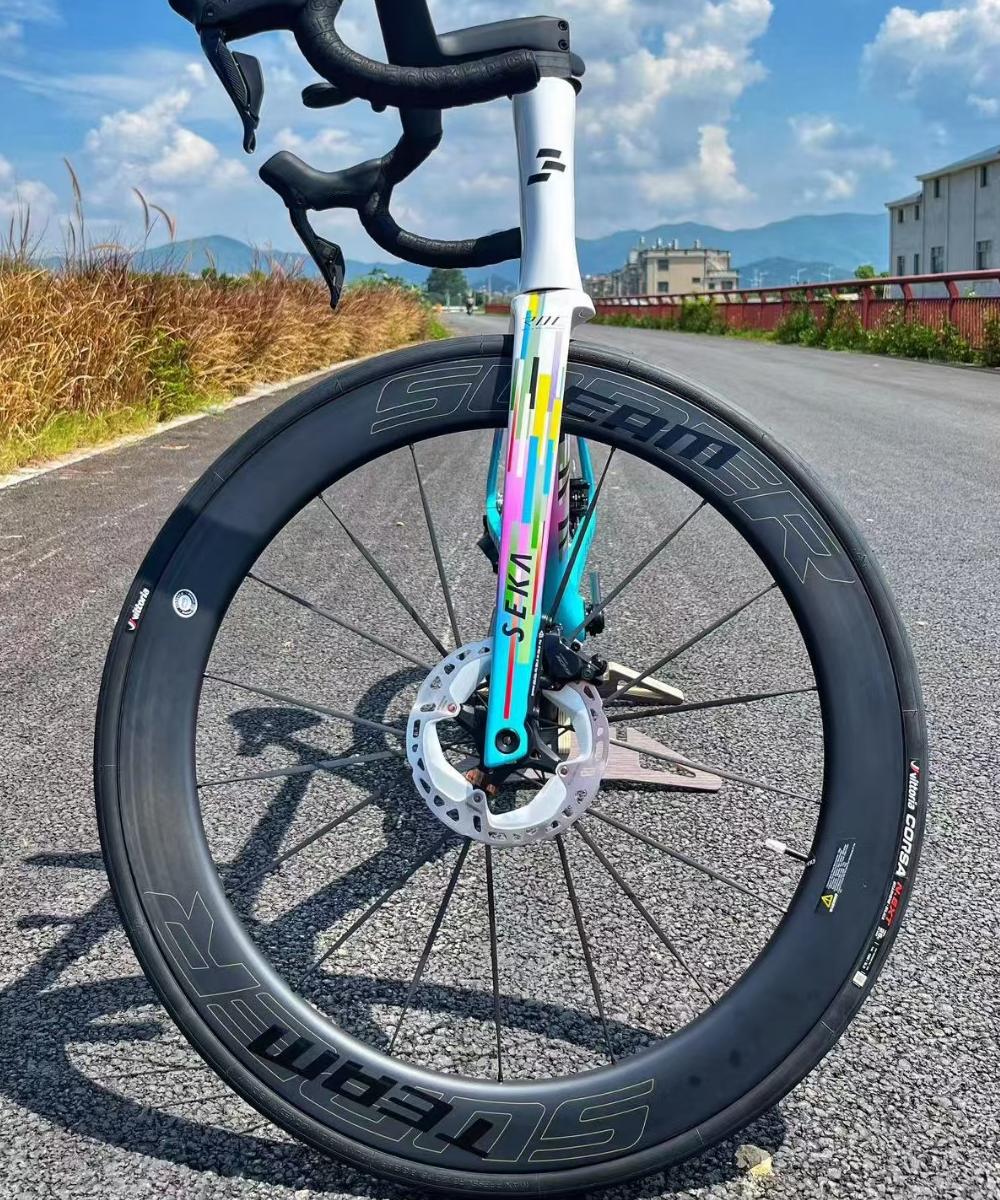

The Physics of Wheel Spin-Up: Energy Costs Beyond Weight
When cyclists talk about wheel performance, weight often dominates the discussion. Lighter wheels are assumed to accelerate faster, but the physics of wheel spin-up tells a more complex story. Beyond static weight, rotational inertia and energy distribution play crucial roles in how quickly a wheelset responds to rider input.
Rotational Inertia: The Hidden Factor
Unlike the weight of a frame or saddle, wheel mass is not simply carried—it spins. To accelerate, a rider must not only move the bike forward but also impart angular velocity to the wheels. This requires additional energy, governed by the equation for rotational kinetic energy:
E = ½ I ω²,
where I is the moment of inertia and ω is the angular velocity.
The key insight is that the farther mass is located from the hub, the higher the moment of inertia. A wheel with heavy rims feels sluggish to spin up even if its total weight is the same as a wheel with lighter rims but heavier hubs.
Rim vs. Hub Weight
A 100g saving at the rim does not equal a 100g saving at the hub. Because the rim rotates at the largest radius, mass located there requires more energy to accelerate. Studies have shown that removing 50g from the rim can have the same acceleration effect as removing nearly 100g from the hub area. This explains why manufacturers focus on lighter carbon rims and bladed spokes rather than shaving grams off hub shells.
Beyond Pure Acceleration: Real-World Riding
While lab tests highlight the benefits of reducing rim weight, real-world cycling is more nuanced. On flat roads with steady pacing, aerodynamic drag dominates energy expenditure, and small differences in spin-up energy fade into the background. However, in criteriums, climbs with repeated accelerations, or sprint finishes, reduced rotational inertia can noticeably improve responsiveness.
Braking and Handling Considerations
Spin-up costs also work in reverse during braking. Heavier rims take longer to decelerate, slightly reducing braking efficiency and control in technical descents. Similarly, wheels with lower inertia feel more agile in cornering, allowing riders to change speed and direction more precisely.
Practical Implications for Riders
Sprinters and criterium racers benefit the most from low-inertia wheels, where rapid accelerations and decelerations define performance.
Climbers gain from lighter rims, especially on steep gradients where frequent gear changes and accelerations amplify inertia effects.
Endurance riders may find that aerodynamics and comfort outweigh small differences in spin-up energy, making deeper or sturdier rims a better choice.
Conclusion
The physics of wheel spin-up reveals that energy costs go beyond total weight. It is not just how much a wheel weighs, but where that weight is distributed that determines acceleration efficiency. For riders seeking sharper responses in dynamic racing scenarios, minimizing rotational inertia at the rim can be as impactful—if not more so—than cutting overall bike weight.