


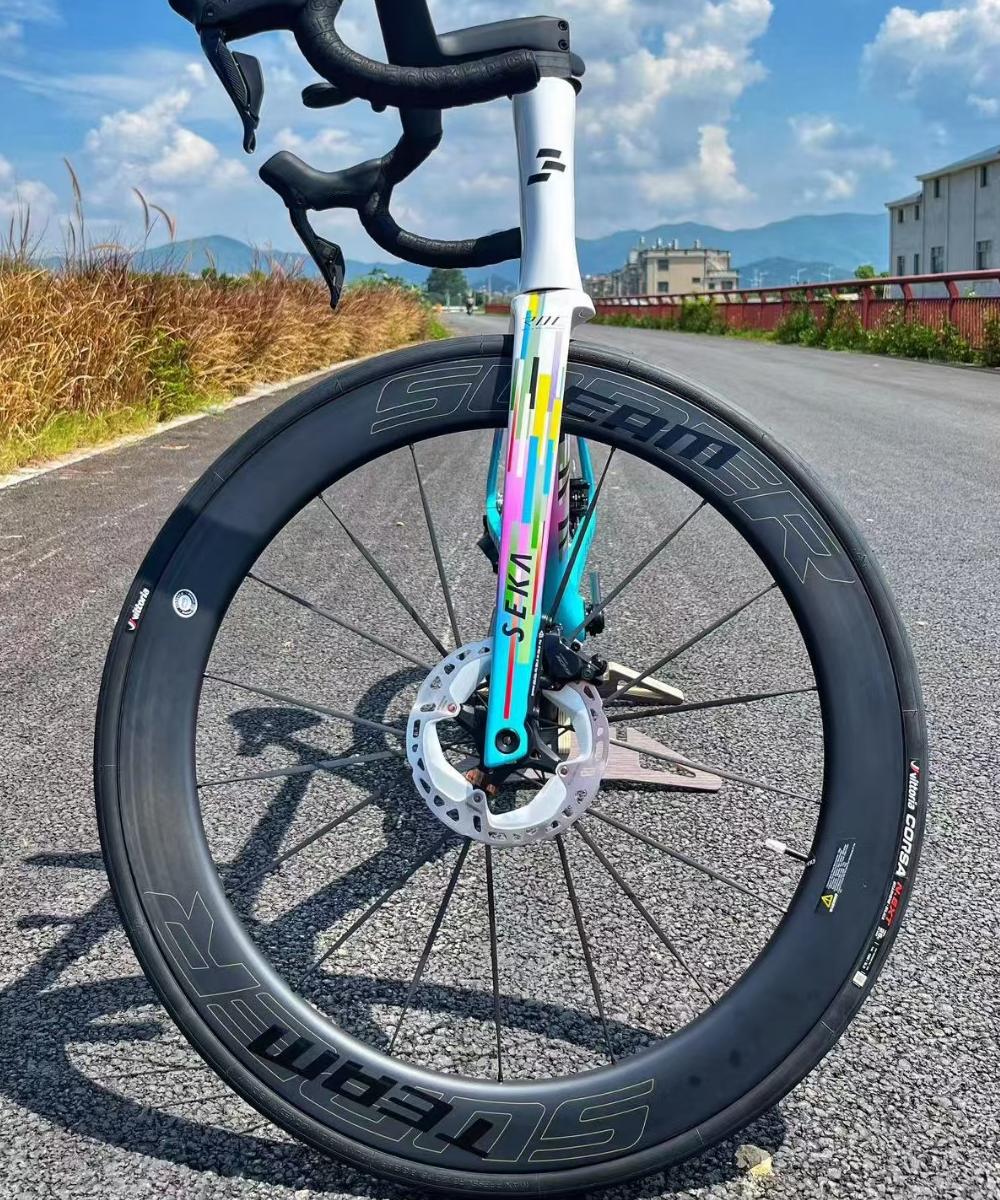

Impact Testing Standards for Carbon Wheels: What They Really Prove
Carbon wheelsets are celebrated for their lightweight design and stiffness, but durability remains a critical concern for riders. Manufacturers rely on standardized impact testing to demonstrate resilience, but understanding what these tests actually measure is key to interpreting their results correctly.
1. Common Impact Testing Protocols
Drop Tests: Wheels are subjected to vertical drops with a defined mass from specific heights to simulate potholes or curb impacts.
Lateral Impact Tests: Rims are struck from the side to mimic sidewall collisions or falls.
ASTM and ISO Standards: Organizations such as ASTM (F2922) and ISO (4210-5) provide structured guidelines to ensure consistent testing across brands.
2. What These Tests Measure
Structural Integrity: Determine if the wheel can survive a specified impact without catastrophic failure.
Deformation Thresholds: Assess how much the rim or hub deforms under a given load.
Safety Margins: Provide a baseline for maximum expected stress under controlled scenarios.
3. Limitations of Standardized Testing
Controlled Conditions: Labs cannot replicate the full variability of real-world riding, including uneven surfaces, multiple impacts, or temperature fluctuations.
Single-Point Focus: Tests usually evaluate a specific spot on the wheel rather than cumulative stress across the entire structure.
Rider Weight and Speed Variability: Standardized tests often assume average rider weight and speed, which may not match individual conditions.
4. Practical Takeaways for Riders
Impact-tested wheels offer confidence in basic durability, but real-world caution is still necessary.
Avoid aggressive curb impacts, potholes, or high-speed crashes, even with tested carbon rims.
Regular inspection for cracks, delamination, or spoke issues complements test data to ensure ongoing safety.
Conclusion
Impact testing standards provide a valuable benchmark for carbon wheel durability, but they do not guarantee immunity from real-world damage. Riders should view these tests as a minimum safety guideline, combining them with careful riding practices and routine maintenance to maximize both performance and longevity.