

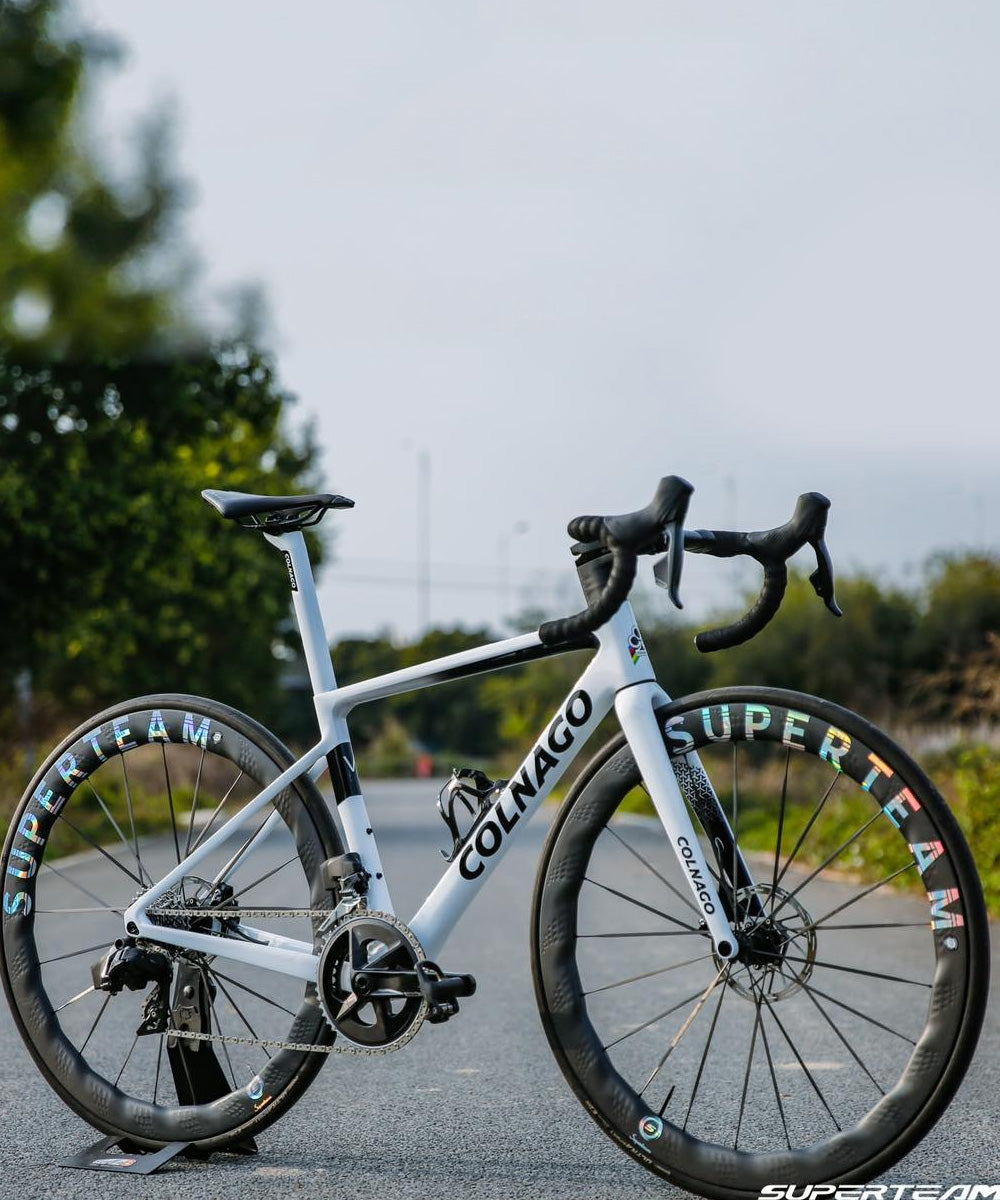


How Pro Mechanics Prepare Wheels Before a Grand Tour
In professional cycling, the meticulous preparation of wheels before a Grand Tour represents one of the most critical aspects of race readiness. Each wheel must deliver the perfect balance of aerodynamics, stiffness, weight, and reliability over thousands of kilometers and diverse terrain. Pro mechanics follow a rigorous, systematic process to ensure that every wheelset performs flawlessly from the opening stage to the final time trial.
The preparation begins with precise inspection and tension calibration. Mechanics use digital tensiometers to measure spoke tension across the wheel, ensuring even distribution that prevents premature fatigue or lateral deflection under power. Spoke threads are lubricated or treated with thread-locking compounds depending on the rim and spoke material, guaranteeing stable tension throughout long, high-stress stages. Each wheel is then trued to exacting tolerances—often within fractions of a millimeter—to eliminate any lateral or radial imperfections.
Next, hub servicing becomes a focal point. Bearings are removed, cleaned, and re-greased with race-specific lubricants that balance smoothness with weather resistance. For time trial or dry-weather stages, mechanics may opt for lighter grease or ceramic bearings to reduce frictional losses, while mountain stages and wet conditions call for heavier, more protective formulations. Hub preload and endcap alignment are checked to ensure zero play and optimal freehub engagement.
Rim and tire preparation are equally detailed. Carbon rims undergo close inspection for micro-cracks, delamination, or surface irregularities, often under magnification. Tubeless and tubular setups are tested for airtightness, with new sealant or glue applied according to environmental conditions—thicker layers in hot climates to prevent premature drying, and thinner coatings for cooler, humid stages. Tires are pre-stretched, pressure-tested, and matched to rim profiles to guarantee perfect seating and consistent rolling resistance.
Mechanics also take into account stage-specific demands. For flat, fast stages, teams often use deep-section aerodynamic rims paired with narrow, high-pressure tires. In contrast, mountain stages call for lightweight, shallow rims with enhanced braking control and lower pressures for improved comfort and grip. Crosswind-prone routes prompt further adjustments in rim depth and spoke count to optimize handling stability.
Finally, every wheelset is labeled, logged, and tested. Mechanics record tension values, bearing smoothness, and rim alignment data in service logs, ensuring that each wheel can be traced and verified throughout the race. After mounting, wheels are spun and load-tested on the bike to detect any residual vibration or imbalance.
This disciplined approach exemplifies the precision and foresight that define professional cycling. By the time riders roll up to the start line, their wheels are not merely components—they are meticulously engineered systems, tuned to deliver maximum performance and reliability under the most demanding conditions of the sport.