


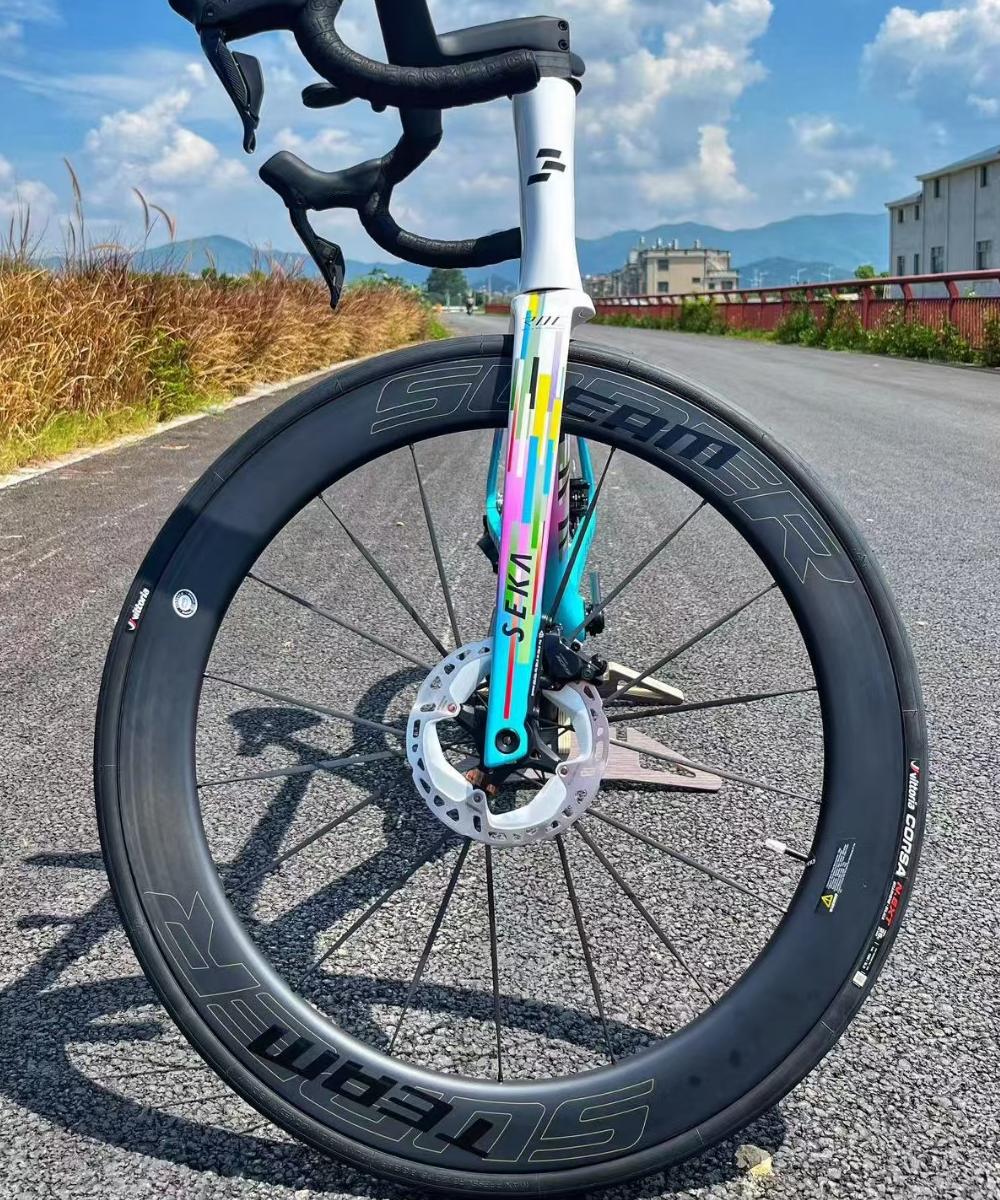

How Many Spokes Do Carbon Wheels Really Need? A Deep Dive into Performance and Reliability
The spoke count of a carbon wheelset is more than a cosmetic or traditional design choice—it is one of the defining characteristics that determine how a wheel behaves under real-world riding conditions. From high-speed efficiency to long-term structural stability, the number of spokes affects nearly every aspect of performance. As carbon wheelsets become more sophisticated, understanding spoke count becomes even more essential for riders seeking the perfect balance of speed, stability, and durability.
The Function of Spokes in a Carbon Wheel
A spoke is responsible for transferring tension between the hub and the rim. In carbon wheels, the rim is extremely stiff, which means that spoke tension must be carefully balanced to avoid uneven stress. Because carbon does not deform like aluminum, the spoke count plays a critical role in ensuring even load distribution.
When a wheel hits an obstacle or experiences a lateral load, the tension on individual spokes changes momentarily. The more spokes a wheel has, the smaller the load change per spoke, resulting in:
Less fatigue at the nipple bed
Better long-term stability
Reduced risk of cracks
Low Spoke Count: Designed for Speed
Many aerodynamic carbon wheels use 16–18 spokes in the front and 21–24 in the rear. These wheels are optimized for performance in competitive conditions.
Advantages:
-
Lower aerodynamic drag
Fewer spokes mean less turbulence and cleaner airflow over the wheel. -
Reduced rotating mass
Each eliminated spoke saves weight at the outermost part of the wheel. -
Sharper acceleration
The wheel becomes easier to spin up, especially useful in races and climbs. -
Stiffer, more responsive feel
Low-spoke wheels usually employ higher tension, making the wheel precise and reactive.
Best suited for:
Road racing
Climbing competitions
Time trial and triathlon
Riders under 90 kg on smooth roads
High Spoke Count: Built for Strength and Versatility
Carbon wheelsets with 24–28 spokes on each wheel (and sometimes up to 32) are designed for maximum stability and durability.
Benefits include:
-
Excellent load distribution
More spokes reduce the burden each needs to carry. -
Greater impact absorption
Rough terrain becomes easier to manage. -
Better resistance to spoke failure
If one spoke breaks, the wheel stays truer compared to low-spoke designs. -
More predictable flex characteristics
Higher spoke count adds compliance, improving comfort.
Ideal for:
Gravel riding
Adventure and touring
Heavy or powerful riders
Rough or unpredictable road conditions
Rear Wheel Requirements Are Different
Rear wheels endure drivetrain torque, so even race-oriented designs often have additional spokes on the drive side—or use lacing patterns such as:
2:1 (16 drive-side, 8 non-drive-side)
Triplet lacing
Optimized tension balance
The front wheel focuses on aerodynamics and steering precision, while the rear wheel focuses on power transfer and stability.
Material Interaction: Carbon vs. Spokes
Because carbon rims are structurally rigid:
Low spoke counts require premium layups, reinforced nipple areas, and precise tensioning.
High spoke counts offer reliability, but increase weight and reduce aerodynamic advantage.
Brands differ widely in their rim layup quality, meaning some can safely reduce spoke count without compromising on strength.
What Riders Should Choose
To choose properly, consider:
Your weight
Typical road conditions
Riding style (aggressive vs. endurance)
Whether you prioritize speed or durability
Conclusion
Spoke count is a key factor that determines how a carbon wheelset feels, performs, and lasts over time. Riders who understand how spoken quantity influences performance can make choices that elevate both comfort and efficiency on the bike.