

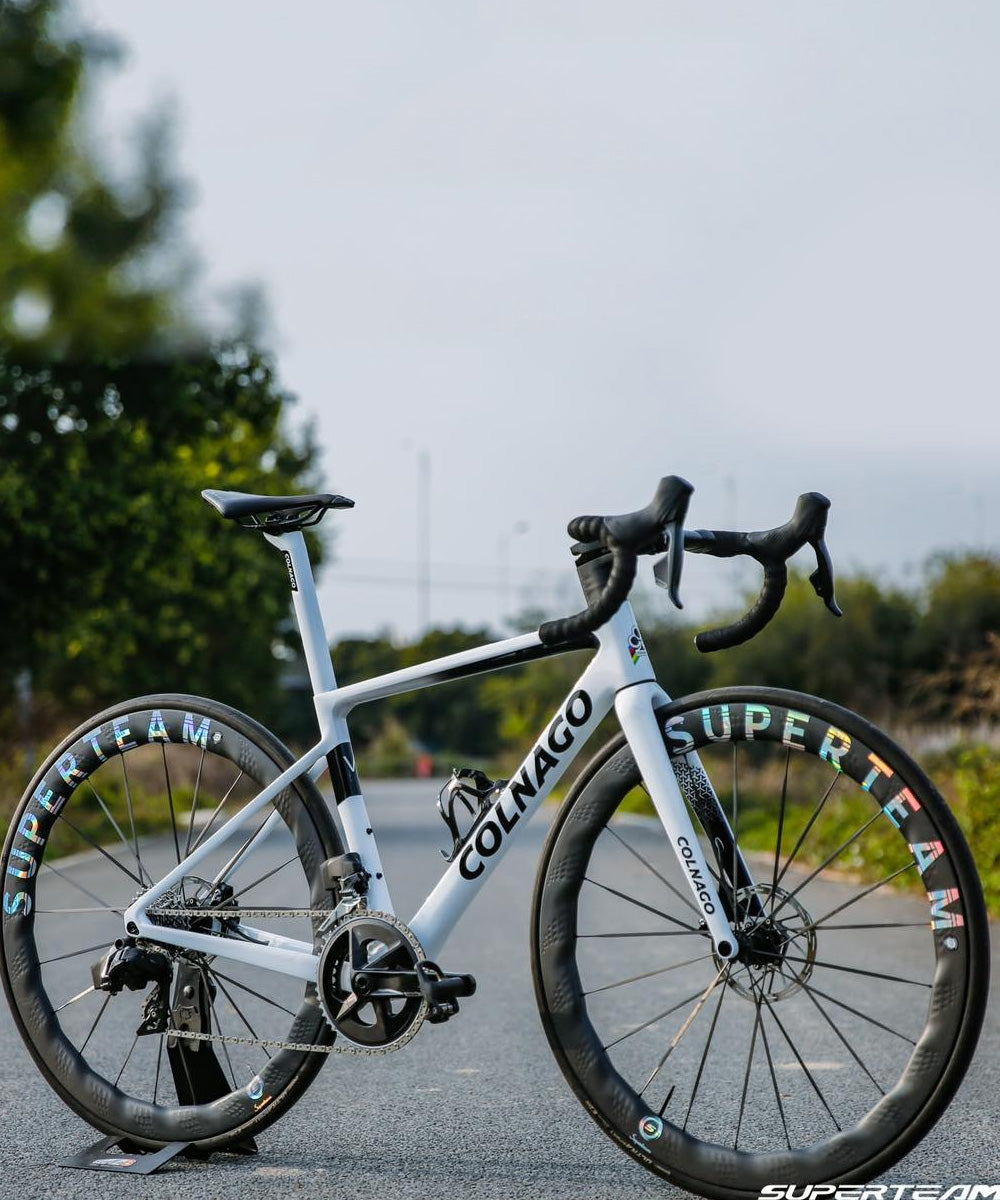


Do Carbon Wheels Really Stay True? Separating Myths from Reality
Carbon fiber wheels have earned a reputation for being stiff, fast, and virtually maintenance-free. Many cyclists believe that once a carbon wheelset is installed, it will “stay true forever.” But is that really the case? In this article, we separate myths from reality and explain whether carbon wheels truly eliminate the need for regular truing.
Myth 1: Carbon Wheels Never Go Out of True
One of the most common misconceptions is that carbon rims are so rigid they cannot lose alignment. While it is true that carbon fiber is far stiffer than aluminum, a wheel’s trueness is not determined by the rim alone.
A bicycle wheel is a tension system made up of:
Rim
Spokes
Nipples
Hub
Even if the carbon rim remains perfectly round, changes in spoke tension can still cause lateral or radial deviations. Spokes stretch under load, nipples can settle, and repeated stress cycles slowly alter tension balance.
Reality: Carbon wheels can go out of true, just more gradually and subtly.
Myth 2: If There’s No Visible Wobble, Truing Isn’t Needed
Many riders assume truing is only necessary when a wheel visibly wobbles. In reality, by the time a wobble is obvious, tension imbalance has already progressed significantly.
Early-stage issues often appear as:
Slight disc brake rubbing
Uneven braking feel
Reduced high-speed stability
Unequal spoke tension when squeezed by hand
Carbon wheels are designed with tighter tolerances, so even small tension variations can affect performance.
Reality: Preventive truing can extend wheel life even when alignment looks acceptable.
Why Carbon Wheels Lose Tension Over Time
Carbon rims do not fatigue in the same way aluminum rims do, but the metal components of the wheel still behave normally. Over thousands of kilometers:
Spokes undergo elastic stretch
Nipples bed into the rim or washers
Hub flanges experience micro-movement
Heat cycles from braking or ambient temperature affect materials
These factors slowly change the tension profile of the wheel, not the rim shape itself.
Do Carbon Wheels Need “Regular” Truing?
The word “regular” depends heavily on riding conditions.
For most riders:
Road cycling: Truing is rarely needed unless symptoms appear
Gravel or cobbles: More frequent inspections recommended
Powerful or heavier riders: Tension drift occurs faster
Racing: Precision matters more than durability
In practice, many carbon wheels go several seasons without needing adjustment, especially if they were well-built initially.
Carbon Wheels vs Aluminum Wheels: A Maintenance Comparison
Compared to aluminum wheels:
Carbon rims resist deformation better
They maintain lateral stiffness longer
They are less affected by minor impacts
They rely more on precise tension balance
Aluminum rims often require truing after impacts or potholes because the rim itself bends. Carbon rims usually remain structurally straight, shifting the maintenance focus toward spokes and nipples.
Is Truing Carbon Wheels More Dangerous?
Truing carbon wheels is not inherently dangerous, but it requires more precision.
Carbon rims have:
Narrower tension windows
Less tolerance for over-tightening
Greater consequences if mistakes are made
This is why many manufacturers recommend carbon wheel truing be performed by experienced mechanics using a tension meter rather than by feel alone.
When Should You Check Carbon Wheel Trueness?
A good maintenance routine includes:
Initial inspection after break-in
Periodic visual checks during tire changes
Listening for new noises
Monitoring brake clearance
You do not need to true carbon wheels frequently, but ignoring early signs can lead to bigger issues later.
Final Verdict: Myth or Reality?
Carbon wheels do not stay perfectly true forever—but they do stay true longer than aluminum wheels when properly built and maintained. The idea that carbon wheels never need truing is a myth, yet the fear that they require constant adjustment is equally false.
With proper care, carbon wheels deliver exceptional longevity, stability, and performance with minimal maintenance.