
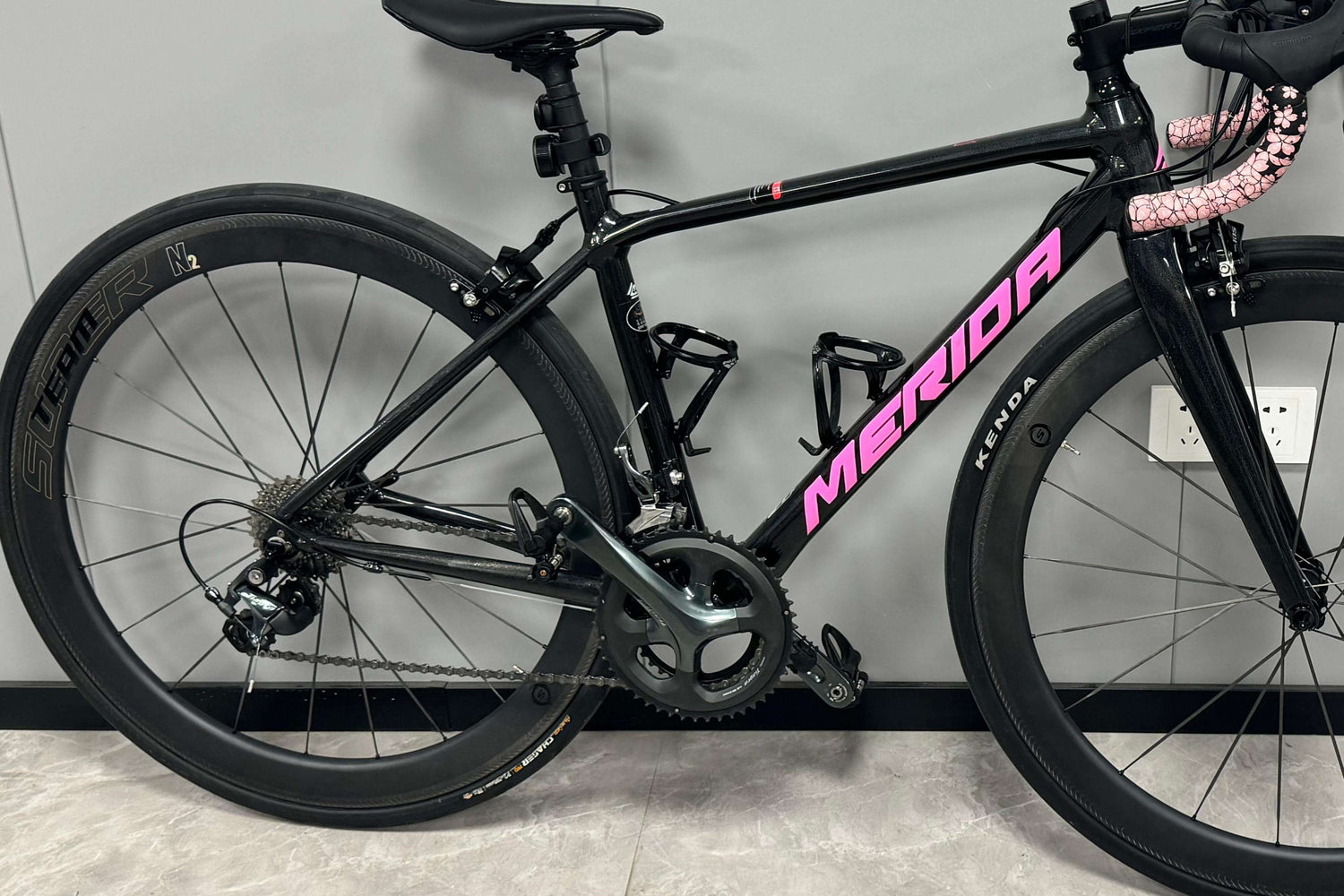
Winter cornering is less about rider skill and more about how the road surface behaves at low temperatures. Grip changes are subtle, uneven, and often invisible, making cornering one of the highest-risk actions in winter road cycling.
Cold Asphalt and Reduced Micro-Grip
As temperatures drop, asphalt hardens and loses its ability to deform under tire load. This reduces micro-grip—the tiny mechanical interlocking between tire rubber and road texture. In corners, where lateral forces dominate, this loss becomes critical.
Grip reduction is progressive, not sudden.
 Painted Lines and Road Markings
Thermoplastic paint used for lane markings, arrows, and symbols offers significantly less friction in cold conditions. In winter, even dry paint can behave like a low-friction surface, especially at lean. Crossing paint mid-corner is a common crash trigger.
Smooth Asphalt and New Pavement
Freshly laid or heavily polished asphalt often appears clean and fast, but provides less texture for cold tires. In winter, these surfaces offer little warning before grip disappears.
Smooth looks safe, but it is not.

Debris Accumulation in Corners
Sand, salt, leaves, and fine gravel accumulate on the outside and exit of corners throughout winter. These materials are often invisible until traction is already compromised.
Corners collect hazards.
Moisture Retention and Shaded Sections
In winter, shaded corners dry slowly or not at all. Even when the rest of the road is dry, these areas may remain damp or near-freezing, reducing available grip.
Shade changes conditions instantly.
 Surface Transitions
Transitions between asphalt, concrete, metal covers, and bridge joints freeze and dry at different rates. Leaning while crossing these transitions greatly increases the risk of front-wheel washout.
Transitions are traction traps.
Road Camber and Drainage
Poor drainage causes water to pool along the inside of corners. In winter, this water may remain cold enough to reduce grip even without freezing.
Water shifts the grip limit.
Tire Interaction with Cold Surfaces
Cold road surfaces stiffen tire rubber, reducing its ability to conform to surface irregularities. This amplifies the negative effects of smooth, painted, or contaminated surfaces.
Surface and tire effects compound.
 Visual Misjudgment in Winter Light
Low sun angles and deep shadows make it harder to read surface texture. Riders often misjudge grip based on appearance rather than temperature and location.
Vision lags behind reality.
Cornering Technique Adjustments
Winter cornering requires reduced lean angles, earlier braking, and smoother steering inputs. Entering corners slower provides margin when surface grip is uncertain.
Speed control is grip management.
Practical Takeaway
In winter, the road surface—not rider confidence—sets the grip limit. Recognizing high-risk surfaces and adapting the cornering technique is essential for staying upright.

Conclusion
Winter cornering failures are rarely caused by a single mistake. They result from subtle surface changes that reduce traction without warning. Understanding how road surfaces behave in cold conditions allows cyclists to corner with greater awareness and safety.


Dejar un comentario
Todos los comentarios se revisan antes de su publicación.
Este sitio está protegido por hCaptcha y se aplican la Política de privacidad de hCaptcha y los Términos del servicio.