

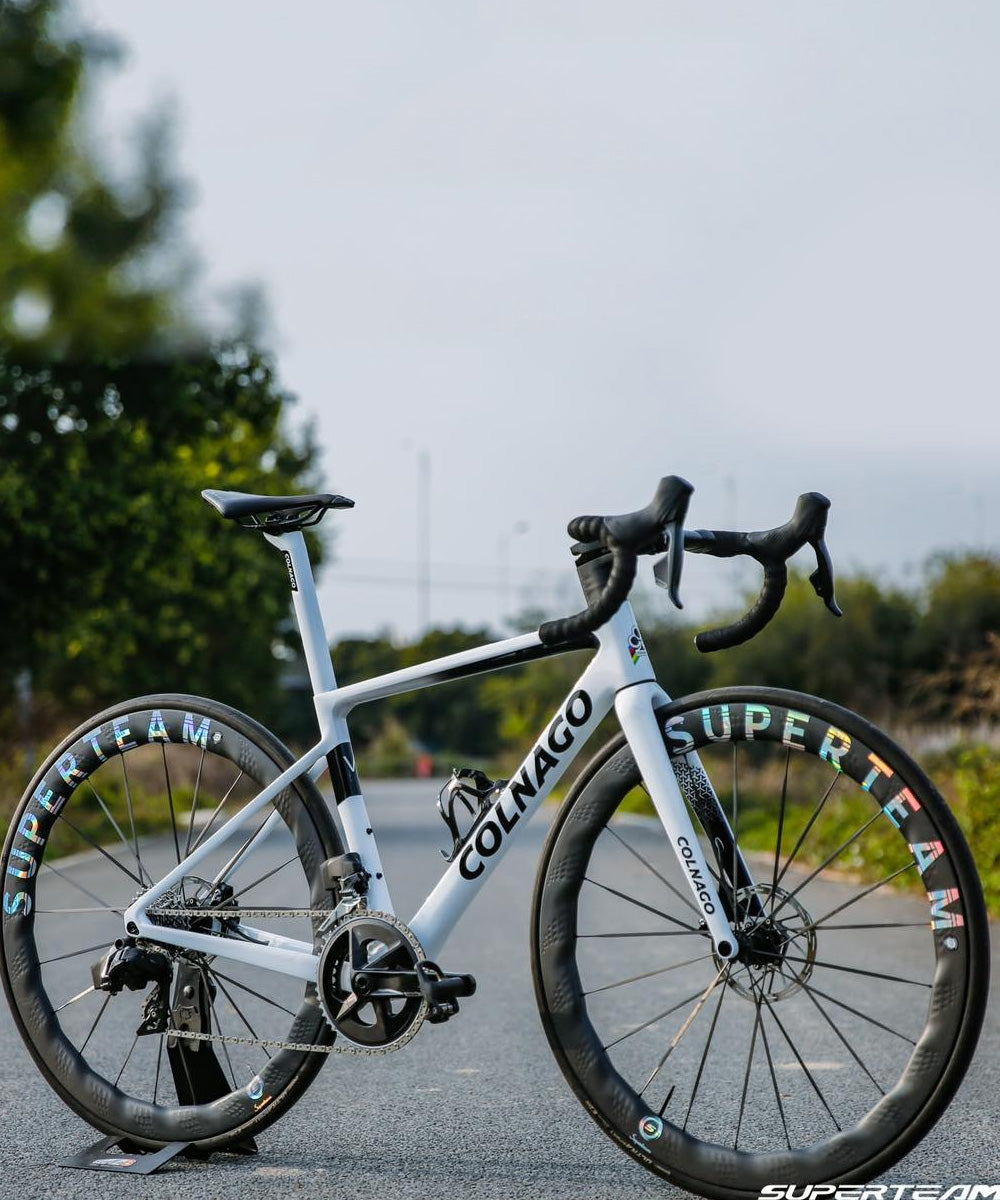


Why a Disc Wheel Bike Is the Fastest Option for Time Trials
Time trials are all about minimizing drag, maximizing efficiency, and sustaining high speeds over a set distance. One of the most effective ways to achieve these goals is by using a disc wheel on the rear of your bike. Disc wheels are specifically designed to reduce aerodynamic resistance, transfer power efficiently, and maintain speed, making them the fastest option for time trials.
Aerodynamic Advantage
The primary benefit of a rear disc wheel is its superior aerodynamics. Unlike traditional spoked wheels, a disc wheel creates a smooth, solid surface that minimizes turbulence behind the bike. This reduction in drag allows riders to maintain higher speeds with less effort, which is especially critical on long, flat, or straight time trial courses. The continuous surface helps the airflow remain attached to the wheel, improving overall efficiency and saving precious watts over the course of the ride.
Stiffness and Power Transfer
Disc wheels are extremely stiff, which enhances power transfer from the rider to the road. Every pedal stroke is efficiently translated into forward motion with minimal energy lost to wheel flex. This stiffness is particularly advantageous during sprints, accelerations, and when maintaining a high, steady speed—common situations in time trials. Riders can rely on consistent performance without the slight energy loss that occurs with more flexible spoked wheels.
Stability at High Speed
While disc wheels are more sensitive to crosswinds than spoked wheels, their stability at high speed on flat terrain is unmatched. On courses with minimal wind or where riders are experienced in handling aerodynamic equipment, disc wheels allow cyclists to maintain a powerful, streamlined position throughout the ride. The added stability from the solid structure helps sustain momentum and reduces fatigue caused by constant micro-corrections that would be required with traditional wheels.
Weight Considerations
Disc wheels are heavier than deep-section spoked wheels, which can make climbing or frequent acceleration slightly more challenging. However, in typical time trial conditions—flat or gently rolling terrain—the added weight is offset by aerodynamic gains. The overall speed increase from reduced drag far outweighs the minor disadvantage of extra mass, making disc wheels the faster choice for these specific events.
Course Profile and Usage
Disc wheels are most effective on flat, straight courses with long, uninterrupted sections. For rolling or technical courses with tight corners and steep climbs, riders may prefer a combination setup: a deep-section aero front wheel and a rear disc. This approach balances aerodynamic efficiency with better handling and acceleration. For standard time trial courses, though, a full rear disc remains the fastest and most efficient option.
Conclusion
A disc wheel bike is the fastest option for time trials due to its aerodynamic efficiency, stiffness, and high-speed stability. While heavier and more sensitive to crosswinds than spoked wheels, the performance benefits on flat or straight courses are substantial. For riders focused on minimizing drag and maximizing speed, investing in a rear disc wheel is a proven strategy to gain valuable seconds and achieve the best possible time trial performance.