
Wheel Maintenance Schedule for High-Mileage Riders
If you ride a lot, your wheels work harder than any other component on the bike. They absorb road vibration, transmit power, manage braking forces, and quietly accumulate stress mile after mile. For high-mileage riders, wheel maintenance isn’t something you do when a problem appears—it’s something you plan around mileage and time, long before performance or safety is compromised.
At a weekly level, the focus should be on quick checks rather than adjustments. Spin each wheel in the bike and watch it against the brake caliper or frame. You’re not looking for perfection, just changes. New wobbles, new brake rub, or new sounds are signals. Also, check tire pressure retention. A sudden increase in pressure loss often points to rim bed, valve, or spoke-related issues rather than the tire itself.
Every 1,000–1,500 km, a more deliberate inspection is worthwhile. Clean the wheels properly and look closely at spoke holes, rim edges, and the hub flanges. Wipe each spoke with a rag while gently squeezing paired spokes together. Differences in tension can often be felt before they are visible. This is also a good interval to check hub smoothness by spinning the axle with the wheel off the bike. Any grittiness or uneven resistance is an early warning sign, not something to ignore until it gets worse.
Around the 3,000–5,000 km mark, spoke tension balance becomes more important, especially for riders over rough roads, heavier riders, or anyone riding aggressively. Even if the wheel remains true, uneven tension accelerates fatigue in both spokes and rims. You don’t need to fully re-tension the wheel every time, but checking for outliers—spokes that are noticeably looser or tighter—can prevent long-term damage. This is also a good window to inspect freehub engagement and listen for changes in sound that might indicate contamination or wear.
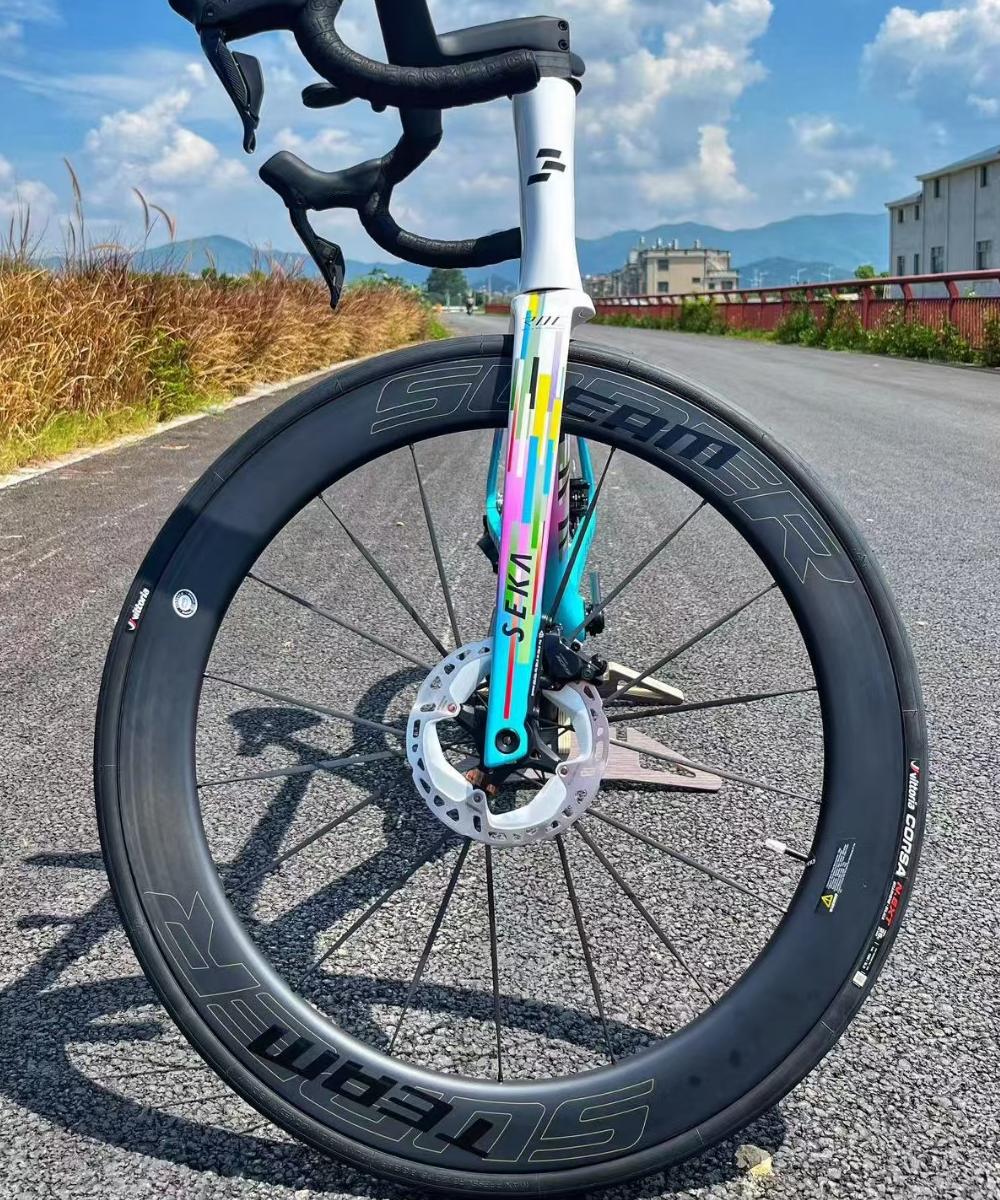
For disc brake wheels, this same mileage range is when you should inspect rotor mounting interfaces and hub end caps. Small amounts of play can develop gradually and are often misdiagnosed as frame or brake issues. Catching them early avoids unnecessary part swaps and preserves a consistent braking feel.
At roughly 8,000–10,000 km, hub service should be planned rather than postponed. Even high-quality sealed bearings degrade over time, especially in wet or gritty conditions. Waiting until bearings feel “bad” usually means internal wear has already affected hub races or axles. Proactive bearing replacement or service keeps rolling resistance low and prevents secondary damage that’s far more expensive.
Rim inspection becomes increasingly critical as mileage accumulates. For carbon rims, this means watching for surface changes, micro-cracks around spoke holes, or subtle shape changes. For alloy rims, brake track wear or deformation still matters, even with disc brakes, due to impact and fatigue loads. High-mileage riders should assume rims are consumable items over the long term and monitor them accordingly.
Seasonal transitions are another natural maintenance checkpoint. Moving from wet winter riding to dry conditions—or vice versa—is a good time to reset your baseline. Clean, inspect, and reassess everything so you know what “normal” feels and sounds like for your wheels again.
The biggest mistake high-mileage riders make is treating wheel maintenance as reactive. By the time a spoke breaks or a bearing fails, the system has been asking for attention for thousands of kilometers. A simple, mileage-based maintenance rhythm keeps wheels fast, quiet, and reliable—and lets you focus on riding instead of repairs.