



Road Cycling Rims in Crosswinds: Which Designs Perform Best?
Crosswinds are one of the most challenging conditions for road cyclists. Even experienced riders can feel their bike suddenly pushed sideways when gusts hit deep-section rims. Stability becomes just as important as speed, and rim design plays a major role in determining how confidently a rider can handle windy conditions. This article explains how different rim shapes perform in crosswinds and which designs offer the best balance between aerodynamics and handling.
Crosswinds affect a wheel by creating side forces that push the rim laterally. The deeper and flatter the rim profile is, the more surface area it exposes to the wind. This can cause the wheel to “catch” gusts, making the bike harder to control. Modern rim designs reduce this effect by shaping the rim to redirect airflow, increasing aerodynamic stability without sacrificing deep-section performance.
The classic V-shaped rims used in older aerodynamic wheels tend to perform poorly in crosswinds. Their sharp, narrow leading edges slice through headwinds efficiently but become unstable when air hits from an angle. Riders often describe these rims as twitchy or unpredictable during sudden gusts.
In contrast, modern U-shaped and toroidal rim designs offer far better crosswind stability. These shapes create smoother airflow transitions along the rim surface, reducing the side-force magnitude when wind hits at yaw angles between 10° and 20°—the range where most real-world riding happens. Riders using U-shaped rims typically experience less steering deflection and more consistent handling on windy roads.
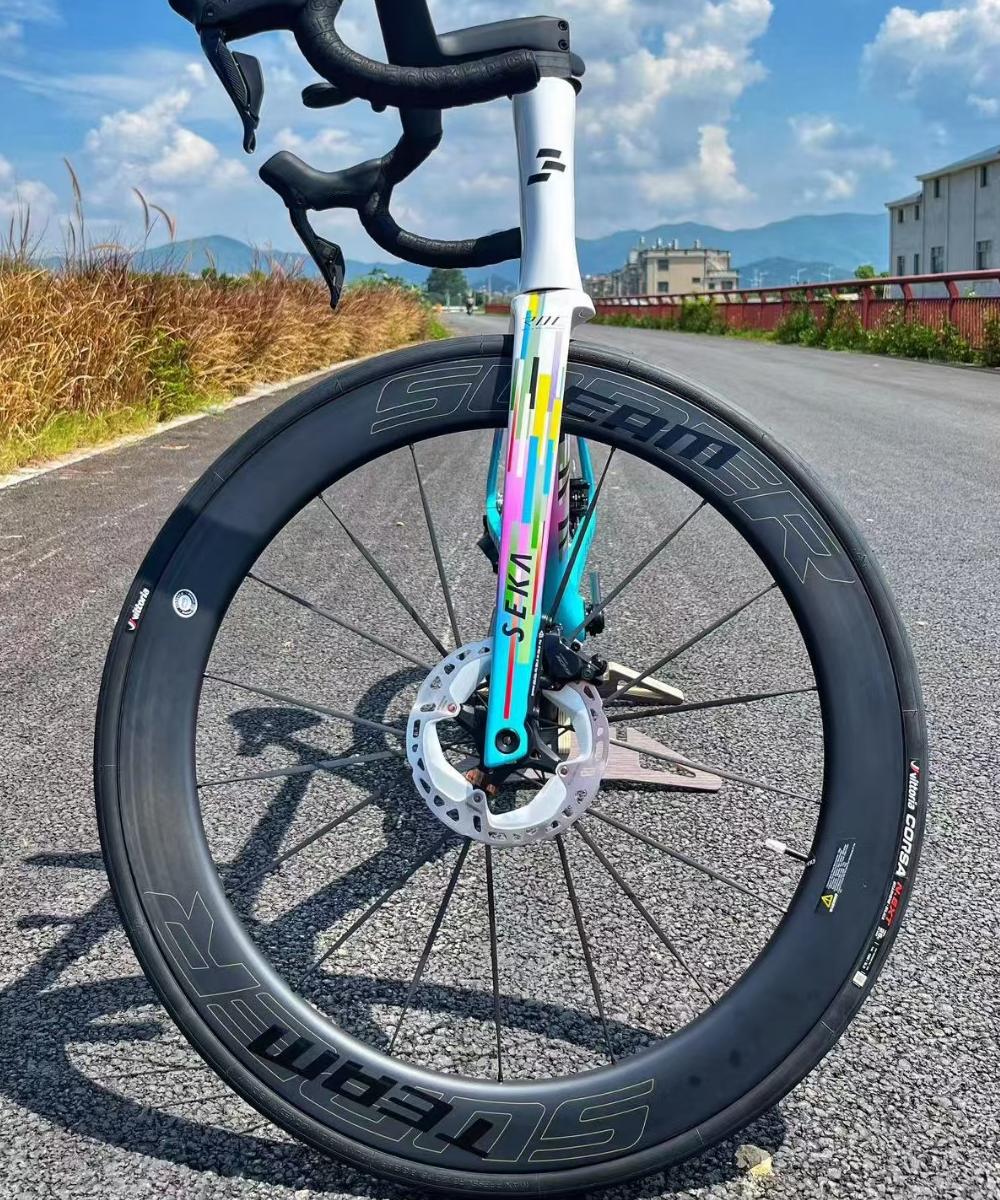
Rim depth also plays a significant role. While deeper rims (50–60mm) provide strong aerodynamic gains, they are more exposed to crosswind forces. Mid-depth rims around 40–45mm strike the best balance for most riders, offering aerodynamic benefits with more manageable handling. Very shallow rims (30–35mm) provide the highest stability but reduce aero efficiency on faster flat routes.
Internal rim width has an indirect effect as well. Wider rims support wider tires, which can improve handling by offering a larger contact patch. This added stability helps counteract the influence of crosswinds, especially on technical descents or exposed coastal roads.
Spoke design and tension also contribute to crosswind behavior. Bladed spokes reduce turbulence and help maintain predictable steering. Lower spoke counts can reduce total surface area, though too few spokes compromise wheel strength. Most modern aero wheels use 18–24 spokes as an optimal balance.
Real-world testing consistently shows that wheels with modern toroidal or semi-toroidal designs have the best crosswind performance. They feel calmer during unpredictable gusts and require fewer corrective steering inputs. Riders experience more confidence on open bridges, coastal routes, and mountainous ridge roads where wind direction changes rapidly.
For cyclists choosing rims with crosswind stability in mind, the ideal combination includes a rounded U-shaped profile, moderate depth, and well-designed bladed spokes. These features reduce side-force impact while maintaining strong aerodynamic efficiency. Riders sensitive to wind or those who frequently ride in exposed regions should avoid old V-shaped rims and extremely deep sections unless they prioritize aero gains above all else.
Crosswinds will always challenge riders, but the right rim design minimizes instability. Modern aerodynamic engineering allows cyclists to enjoy the benefits of aero wheels without the unpredictable handling of the past. When stability matters, smart rim shape and depth choices can make windy-day riding faster, safer, and far more controlled.