



How Spoke Count and Pattern Affect Gravel Wheel Durability
Introduction
Gravel riding pushes wheels to their limits—rough surfaces, unpredictable impacts, and long miles combine to test the integrity of every component. Among these, spoke count and lacing pattern play a decisive role in how well a wheel withstands punishment. Unlike road wheels, where aerodynamics often take priority, gravel wheels must prioritize durability, stability, and serviceability.
The Role of Spoke Count
Wheels with a higher spoke count (28–32 spokes) distribute loads more evenly across the rim, making them stronger against both lateral and vertical impacts. They also offer redundancy—if one spoke fails, the wheel is usually still rideable. The trade-off is a slight increase in weight and a minor aerodynamic penalty.
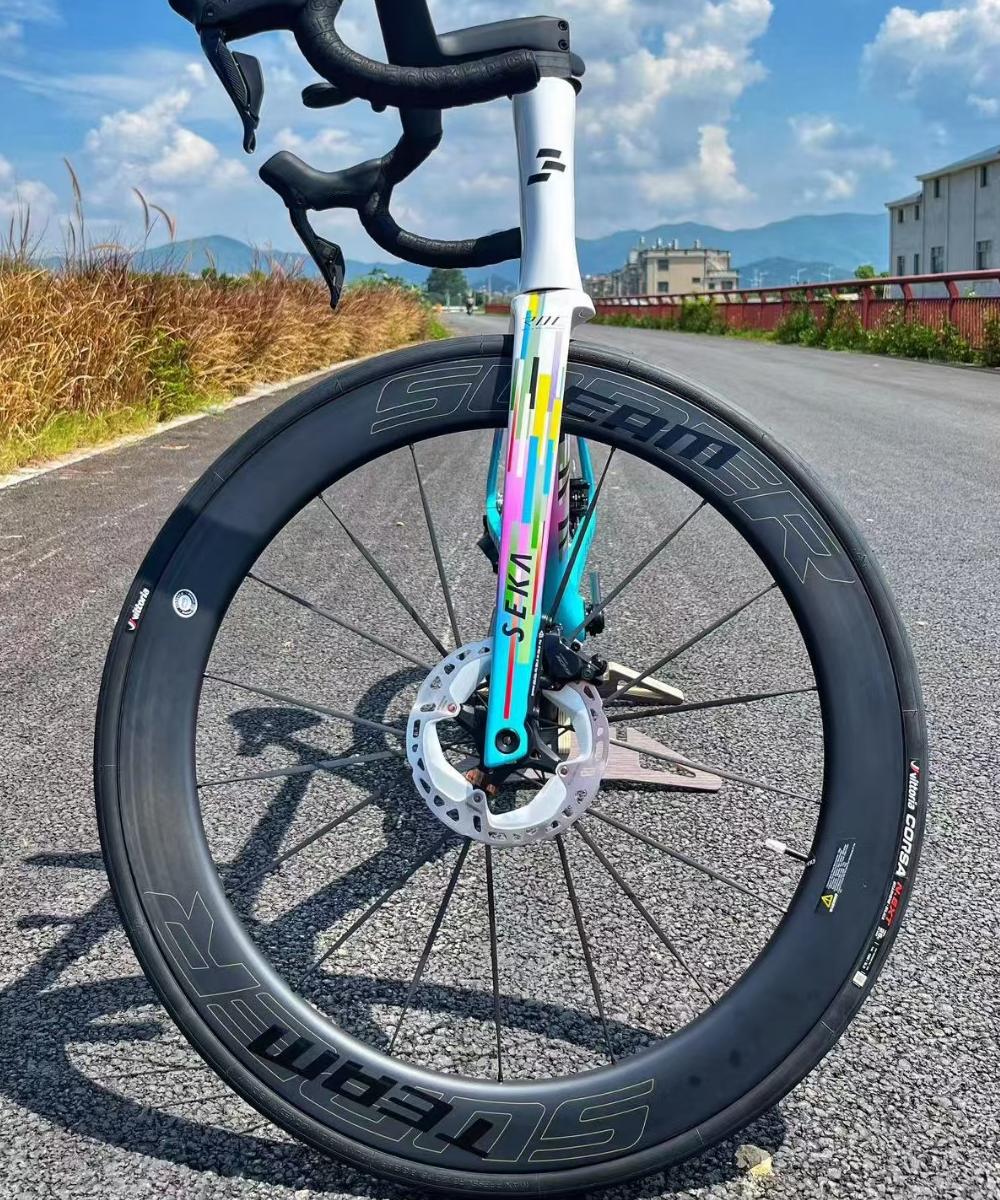
On the other hand, wheels with a lower spoke count (20–24 spokes) are lighter and more aerodynamic. While this setup is common in road racing, it leaves less margin for error on gravel terrain, where a single spoke failure can compromise wheel integrity.
The Importance of Spoke Pattern
The lacing pattern is equally important. A 3-cross (3x) pattern is the most common choice for gravel, as each spoke crosses three others, creating a strong, balanced structure capable of handling both torque and impact loads.
A 2-cross (2x) pattern is slightly lighter and stiffer, suitable for front wheels or lighter riders, but it does not distribute shock loads as effectively as 3x. Radial lacing, where spokes run directly from hub to rim without crossing, offers stiffness and weight savings but concentrates stress on the hub, making it rare for gravel applications.
How These Factors Influence Durability
More spokes and stronger patterns improve impact resistance, protecting rims from cracks and bends. They also manage torsional loads better, especially on steep gravel climbs where torque is high. In addition, higher spoke counts make wheels easier to true and maintain over years of rough use.
Practical Recommendations
Heavier riders or those tackling rugged terrain should choose 28–32 spoke wheels with a 3x lacing pattern for maximum strength. Lighter riders focused on speed may consider 24 spokes with a 2x pattern, particularly for the front wheel. Rear wheels, which endure more torque, should almost always use higher spoke counts and stronger lacing.
Conclusion
On gravel, every mile is a test of equipment. Spoke count and pattern are crucial for wheel durability. Higher spoke counts with 3x lacing provide resilience and confidence for most riders, ensuring wheels remain strong and serviceable despite the unpredictable challenges of gravel roads.