

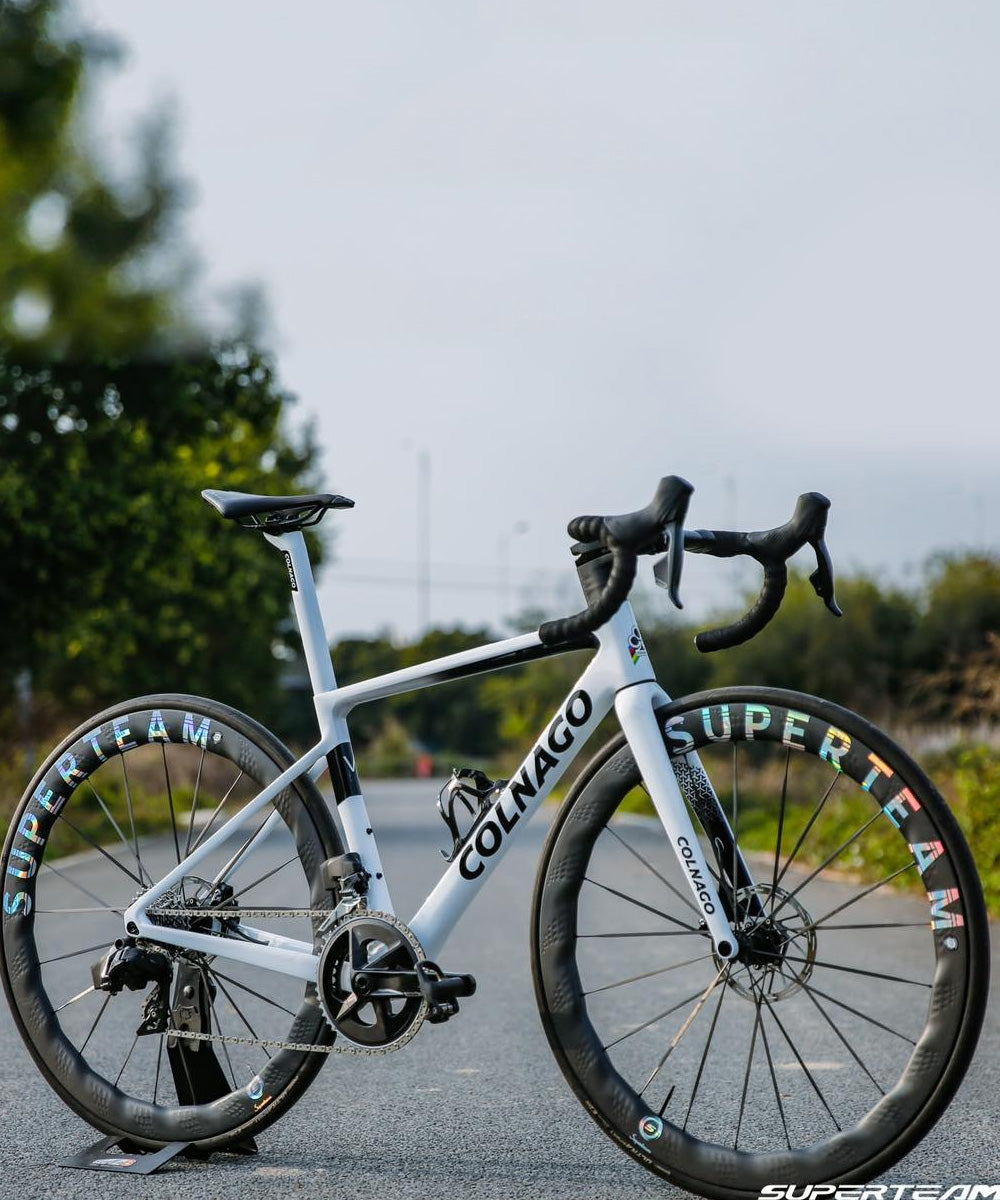


How Rim Profile Affects Tire Air Volume and Comfort
When most riders think about rim profile, they picture aerodynamic gains or crosswind stability. But rim profile also plays a crucial role in determining tire air volume — which in turn directly impacts ride comfort, grip, and even rolling resistance.
1. Internal Rim Width and Air Volume
The internal width of the rim — measured between the inside faces of the rim walls — dictates how a tire’s shape changes once mounted. A wider internal rim spreads the tire casing out, increasing its actual measured width and internal air volume. This extra volume allows you to run lower pressures without risking excessive squirm, which improves comfort and traction.
2. External Rim Shape and Sidewall Support
While internal width has the biggest influence on air volume, the external shape also matters. U-shaped or boxy profiles tend to offer better sidewall stability, meaning the tire deforms more predictably under load. This stability can make lower pressures feel more controlled, further enhancing comfort over rough surfaces.
3. Depth and Pressure Retention
Deep-section rims don’t directly change air volume, but their stiffness can influence how a tire behaves under different pressures. Stiffer rims tend to maintain consistent handling even when tire pressures are lowered for comfort, whereas more flexible shallow rims might feel vague at similar pressures.
4. Comfort vs. Efficiency Trade-Off
More air volume generally means more comfort, but it’s a balancing act. Too much volume with very low pressure can increase rolling resistance on smooth roads. On the other hand, for gravel or mixed-surface riding, the extra volume from a wider rim can significantly reduce fatigue by absorbing bumps and vibrations.
5. Matching Rim Profile to Tire Choice
If you’re running 25mm road tires, a 19–21mm internal rim is often ideal for balancing volume, aerodynamics, and rolling efficiency. For gravel or endurance riding with 35–45mm tires, going up to 23–25mm internal width can dramatically improve comfort without sacrificing handling.
Conclusion
Rim profile isn’t just about speed — it’s a hidden factor in how your bike feels on the road. By choosing a rim width and shape that optimizes air volume for your tire size, you can fine-tune comfort, grip, and performance to match your riding style.