

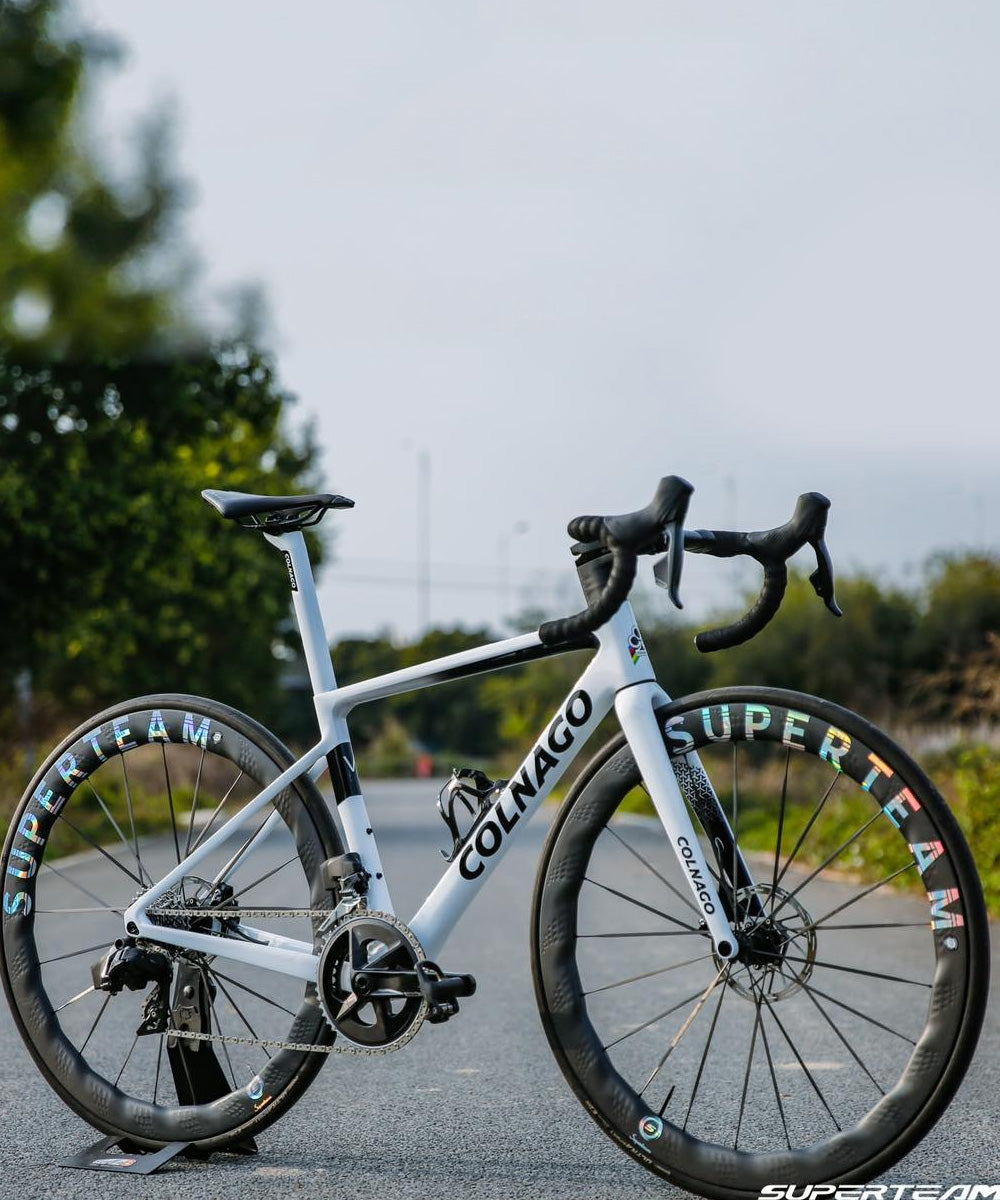


Disc vs Rim Brake Road Wheels: Full Comparison Guide
When it comes to choosing between disc brake and rim brake road wheels, the debate is more relevant than ever. Each system has its advantages, trade-offs, and ideal use cases. Whether you’re upgrading your current setup or building a new bike, understanding how braking technology affects your wheel choice can help you ride smarter — and faster.
1. Braking Performance
Disc brakes use rotors mounted on the hub, providing consistent stopping power in all weather conditions. They perform better on wet or steep descents and offer finer modulation.
Rim brakes, on the other hand, rely on brake pads squeezing the rim surface. While lighter, they lose performance in rain or mud, and carbon rims in particular can overheat during long descents.
Disc advantage: Reliable braking in all conditions, better control.
Rim advantage: Simpler, lighter, and easier to maintain.
2. Heat Management
This is one of the biggest differences between the two systems.
Disc brakes dissipate heat at the rotor and caliper, away from the tire and rim. This means less risk of tire blowouts or delamination on carbon rims.
Rim brakes generate heat directly on the rim, which can become dangerous on long mountain descents — especially with carbon wheels.
Disc advantage: Superior thermal control and safer for long descents.
Rim disadvantage: Heat buildup can damage carbon rims and tires.
3. Wheel Design and Stiffness
Disc brake wheels are built with thru-axles and disc-specific hubs, which improve stiffness and power transfer. Because the braking forces are handled by the rotor, the rim can be lighter and more aerodynamic.
Rim brake wheels require reinforced braking surfaces, slightly increasing rim weight and limiting shape flexibility.
Disc advantage: More modern rim shapes, stiffer overall build.
Rim advantage: Slightly lighter setup, simpler hub design.
4. Weight Comparison
Traditionally, rim brake setups are 200–400 grams lighter due to the absence of rotors, calipers, and heavier hubs.
However, advances in carbon layups and lightweight rotors have narrowed the gap — some high-end disc systems now rival rim setups in total bike weight.
Disc disadvantage: Slightly heavier due to added hardware.
Rim advantage: Better for weight-conscious climbers.
5. Aerodynamics
Disc brakes free wheel designers from adding flat brake tracks, allowing for more rounded, aerodynamic rim profiles.
Rim brake wheels still perform well aerodynamically, but are constrained by brake pad clearance.
Disc advantage: Better rim shaping for aero gains.
Rim advantage: Minimal for traditional setups, still competitive in shallow profiles.
6. Maintenance and Compatibility
Rim brakes are simpler to maintain — just swap pads and adjust cable tension. Replacement parts are inexpensive and universally available.
Disc brakes, particularly hydraulic systems, require more technical maintenance and occasional bleeding. However, they offer better long-term reliability once properly set up.
Disc disadvantage: More complex setup and service needs.
Rim advantage: Easy DIY maintenance and lower running costs.
7. Frame and Fork Compatibility
Modern road frames are increasingly disc-specific, using thru-axles and flat-mount calipers.
If your frame supports both systems, remember that disc brake hubs use different spacing (typically 12x100mm front, 12x142mm rear), so wheelsets are not interchangeable between systems.
Disc note: Check rotor size and axle type before upgrading.
Rim note: Compatible only with frames having brake caliper mounts.
8. Real-World Ride Feel
Many riders describe rim brake bikes as feeling more “direct” and “lively,” thanks to lower rotating weight.
Disc setups feel more stable under braking and inspire confidence on technical descents or wet roads.
Disc feel: Confident, predictable, smooth.
Rim feel: Lively, lightweight, and snappy.
9. Price and Value
Rim brake technology has matured, and as the market shifts toward discs, rim brake wheels offer incredible value. You can find top-tier carbon wheelsets at a fraction of the cost of equivalent disc models.
Disc brake wheels remain more expensive but deliver future-proof performance and better compatibility with modern bikes.
10. Which Should You Choose?
Choose Disc Brake Wheels if:
You ride in mixed weather, prioritize control on descents, or plan to keep your setup for years to come.
Choose Rim Brake Wheels if:
You value weight savings, simplicity, and affordability, or ride mostly on dry, rolling terrain.
Final Thoughts
Disc and rim brake wheels both have their place in road cycling. While disc brakes dominate modern designs, rim brakes remain an elegant, lightweight solution for traditionalists and climbers.
Ultimately, the best wheelset depends on your riding environment, maintenance preference, and frame compatibility.
Whichever system you choose, a well-built wheelset — like those from Superteam — ensures performance, reliability, and enjoyment on every ride.