


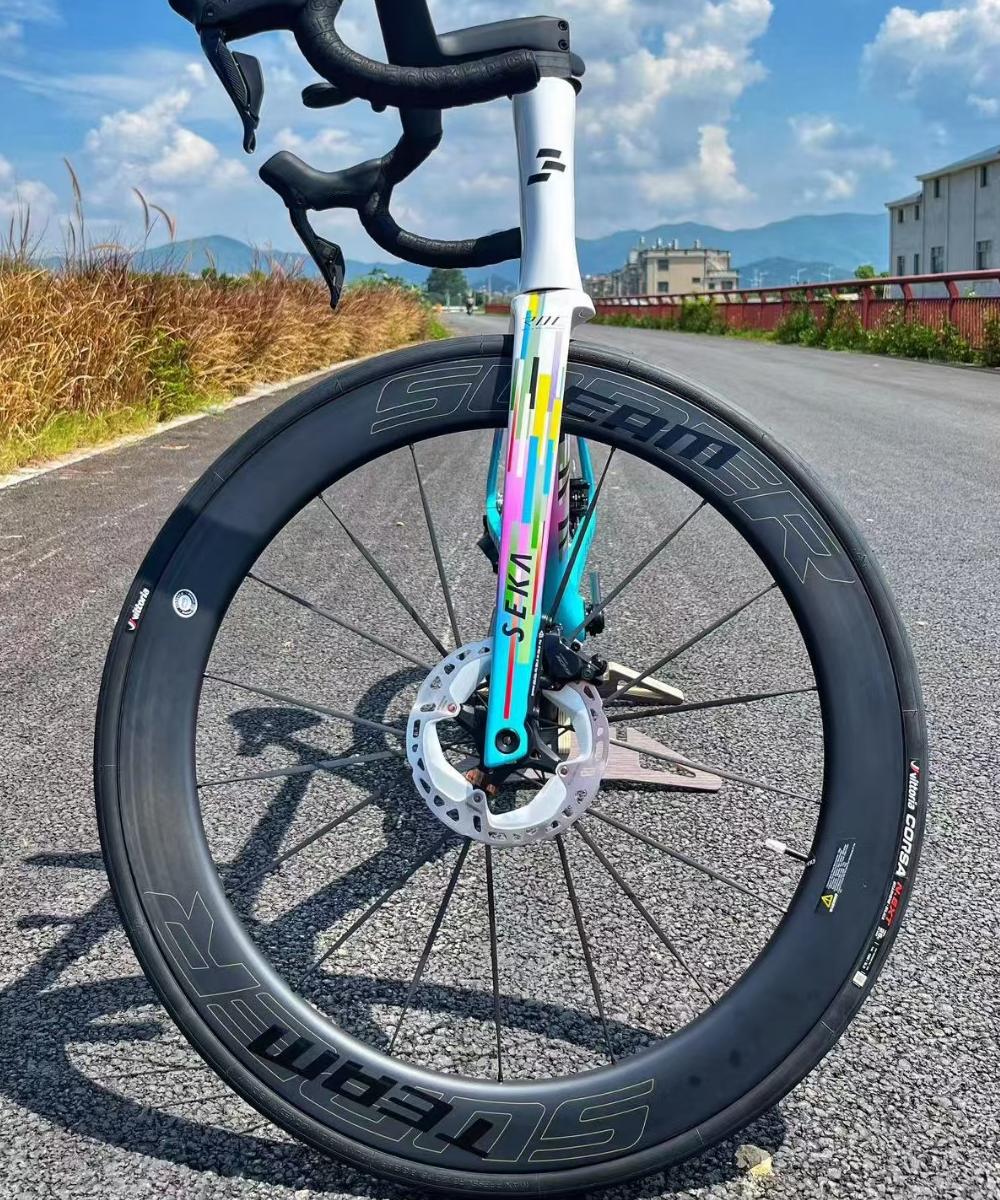

Are Road Bike Wheels Getting Wider? What It Means for You
Over the past decade, one of the most noticeable shifts in road bike technology has been the move toward wider rims and tires. What started as a trend among professionals has now become the new standard for everyday riders. But why are road bike wheels getting wider, and how does this affect your ride? Let’s break down the science, performance, and real-world benefits behind this evolution.
1. The Shift Toward Wider Rims
Traditional road bike rims used to have internal widths of around 13–15mm, designed for narrow 21–23mm tires. Today, most modern rims fall between 19–23mm internal width, pairing comfortably with 25–30mm tires. This change isn’t just about comfort — it’s a carefully engineered performance upgrade.
Wider rims create a more stable interface with the tire, allowing the tire sidewalls to sit straighter instead of bulging outward. This improves both aerodynamics and handling, making the wheelset more efficient overall.
2. Comfort and Control: The Real-World Benefits
Wider tires can run at lower pressures without increasing rolling resistance. Lower pressure means more surface contact with the road, which absorbs vibrations and bumps better. The result is a smoother, more comfortable ride — especially on rough pavement or long endurance rides.
Additionally, the improved contact patch provides better grip in corners, enhancing rider confidence on descents and technical routes. For many cyclists, this improvement in control is just as valuable as any aerodynamic gain.
3. Aerodynamics Reimagined
You might assume wider tires increase drag — but in reality, that’s not always true. When paired correctly, a wide tire can match the rim’s outer width, creating a seamless airflow transition.
Modern “U-shaped” rim profiles are specifically designed to work with these wider tires, optimizing performance at typical yaw angles (crosswind angles). In wind tunnel tests, a 28mm tire on a 21mm internal width rim can perform as efficiently as an older 23mm tire on a 15mm rim — or even better in real-world crosswinds.
4. Rolling Resistance and Speed
One of the biggest revelations from tire testing is that wider tires often roll faster on real roads. The wider contact patch deforms less vertically and more horizontally, reducing energy loss. Combined with lower tire pressure, this translates into higher efficiency and less fatigue over long distances.
5. Compatibility and Setup Considerations
Before upgrading, check your bike’s frame and brake clearance. Disc brake bikes typically handle wider setups (up to 32mm tires or more) without issue. Rim brake frames, however, may be limited to 25mm or 28mm tires. Also, ensure your rims are tubeless-ready, as wider rims pair perfectly with modern tubeless systems for even more comfort and puncture protection.
6. What It Means for You
The move toward wider wheels is not just a passing trend — it’s the result of real performance gains validated by both lab data and pro peloton experience. Whether you’re chasing marginal gains in speed, seeking all-day comfort, or riding mixed terrain, a wider rim and tire setup offers a better balance of aerodynamics, grip, and ride quality.
In short: yes, road bike wheels are getting wider — and for most riders, that’s a very good thing.