
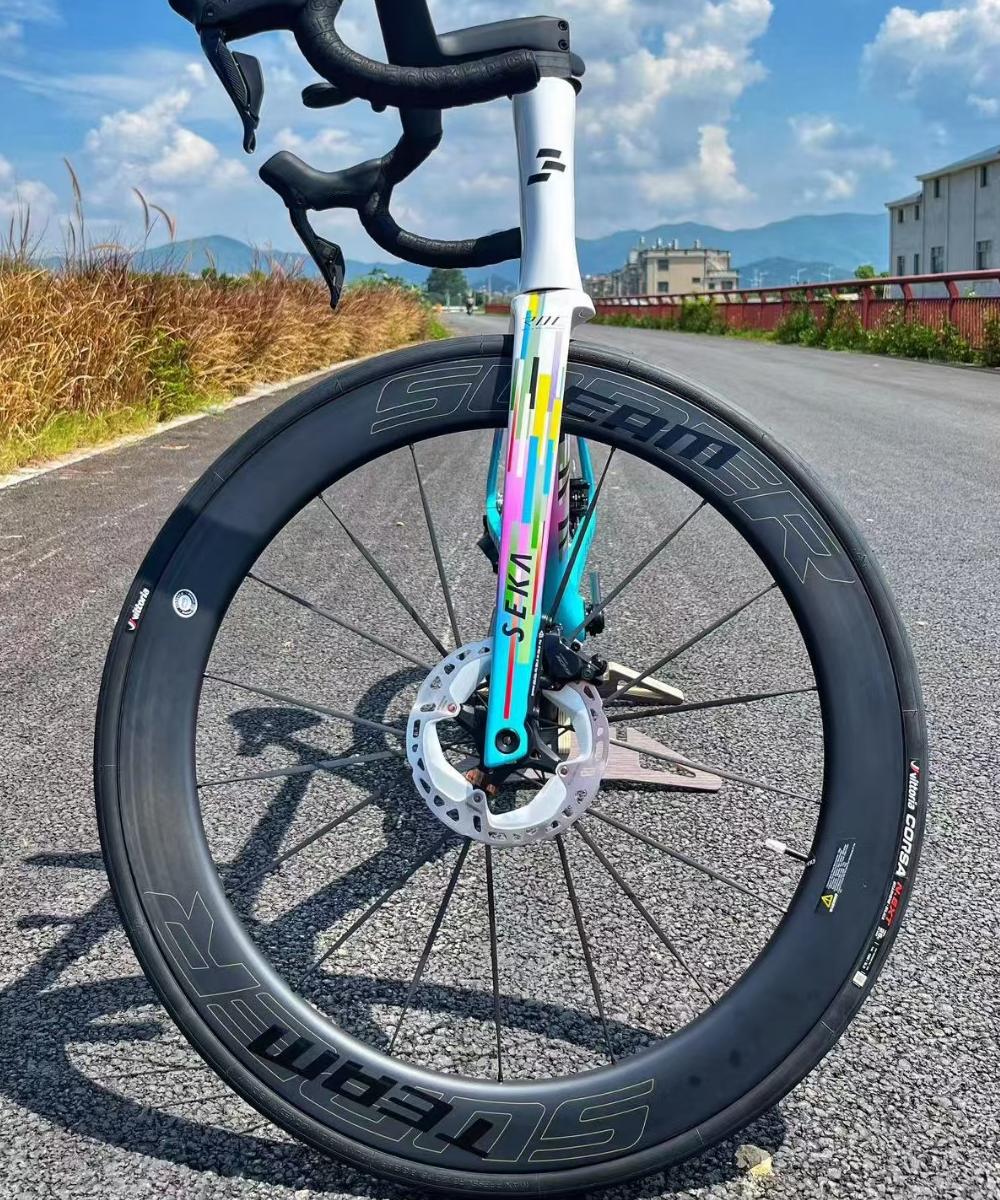

Why Descending Is More Dangerous in Cold Conditions
Speed Amplifies Winter Risks
Descending magnifies every limitation introduced by cold weather. Higher speeds reduce reaction time while increasing the consequences of reduced grip, inconsistent braking, and delayed body response.
Cold plus speed equals risk.
Reduced Tire Grip at Low Temperatures
Cold tire rubber becomes stiffer and less able to conform to road texture. On descents, where lean angle and braking loads increase, this loss of compliance significantly reduces available traction.
Grip disappears faster than expected.
Asphalt and Surface Changes
Cold asphalt offers less micro-grip than warm pavement. Shaded sections, bridges, and tree-lined descents often remain colder than surrounding roads, creating uneven traction mid-descent.
Uneven grip breaks confidence.
Braking Limitations Under Load
Descending demands sustained, controlled braking. In cold conditions, brake pads offer a weaker initial bite and less predictable modulation. Rim brake systems, especially on carbon wheels, are particularly affected.
Consistency matters most downhill.
Longer Stopping Distances
Higher speeds combined with reduced grip increase stopping distances dramatically. What feels like a small delay in braking response becomes critical when speed is high.
Distance grows exponentially.
Cold Hands Reduce Control
Numb fingers reduce braking precision. Subtle modulation becomes difficult, increasing the risk of wheel lock-up or abrupt traction loss.
Dexterity is control.
Body Stiffness and Delayed Reactions
Cold muscles respond more slowly to sudden corrections. On descents, where balance adjustments must be immediate, this delay can be decisive.
Flexibility saves margins.
Wind and Crosswind Effects
Cold weather often brings gusty winds. On fast descents, crosswinds can destabilize the bike, especially with deeper rims, demanding rapid steering corrections when grip is already reduced.
Stability is harder to recover.
Psychological Overconfidence
Riders often descend based on familiarity rather than conditions. A descent that feels safe in summer can be hazardous in winter, but muscle memory encourages the same speeds.
Memory ignores temperature.
Visibility and Perception Challenges
Low winter sun creates glare and deep shadows, making it harder to read surface changes while descending at speed.
Reading the road takes time.
Surface Contaminants
Sand, salt, leaves, and moisture accumulate in winter. On descents, these materials collect in corners where braking and leaning forces are highest.
Corners concentrate danger.
Equipment Tolerance Shrinks
Small setup issues—slight brake rub, marginal tire pressure, or worn pads—become more impactful during cold descents.
Precision becomes essential.
Risk Management on Cold Descents
Safer descending in winter means lower entry speeds, earlier braking, reduced lean angles, and a wider safety margin.
Speed control is safety.
Practical Takeaway
Descending in cold conditions is dangerous because traction, braking consistency, and rider response all degrade at the same time. Recognizing this helps riders adjust speed and technique before problems arise.
Conclusion
Cold weather turns familiar descents into high-risk situations. Respecting reduced grip, braking limits, and human factors is essential for safe winter descending on the road.