
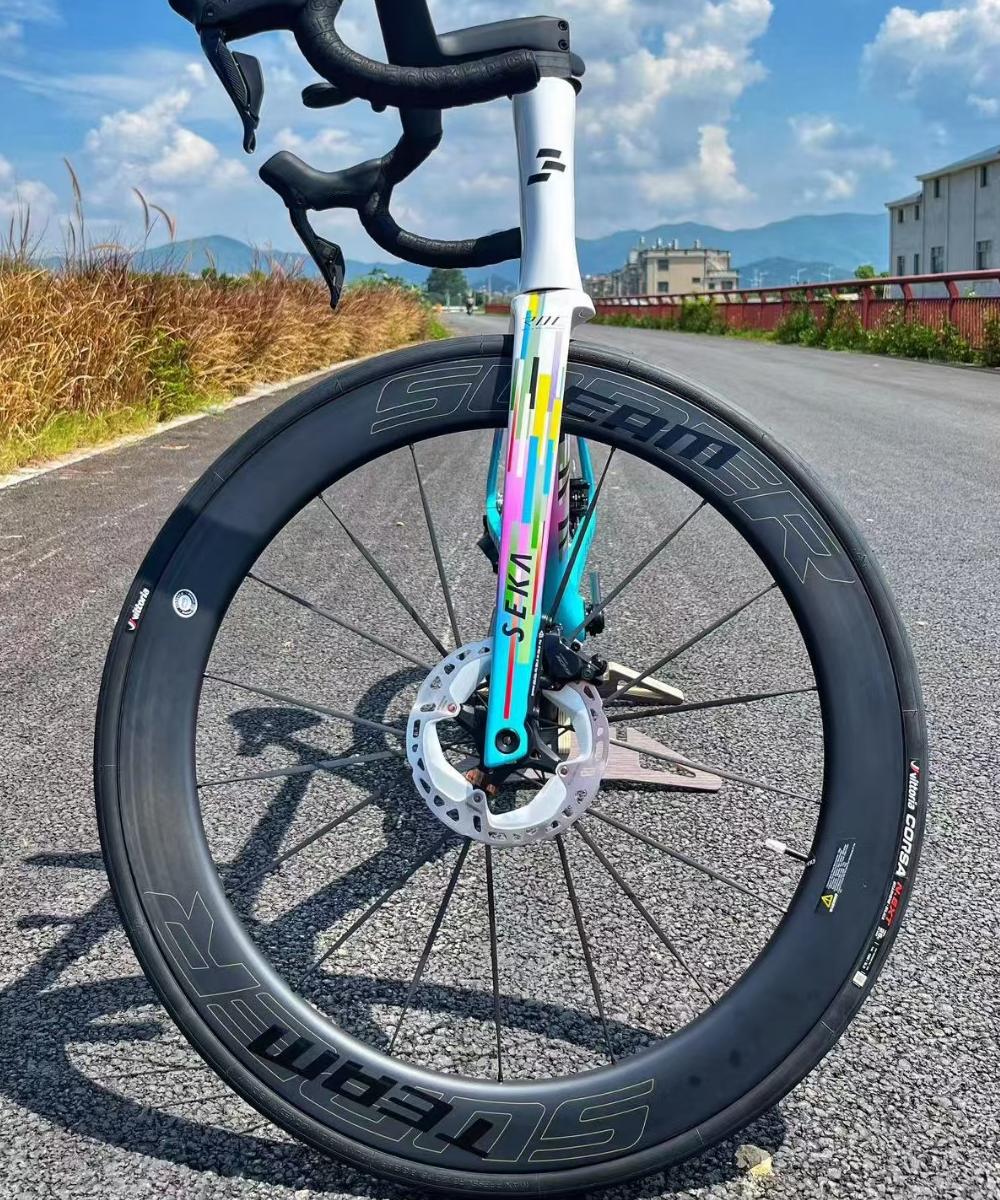

The Science Behind Pre-Tensioned Carbon Spokes
Carbon spokes are becoming increasingly popular in high-performance road and gravel wheels due to their stiffness, light weight, and aerodynamic advantages. However, their performance depends not only on the material but also on how they are pre-tensioned during wheel build.
What Is Pre-Tensioning
Pre-tensioning involves applying an initial tension to the spoke before the wheel is fully trued. For carbon spokes, this step is critical because the material is less forgiving than steel and has different elastic properties. Proper pre-tension ensures that the spoke can effectively transfer power, maintain wheel integrity, and resist fatigue.
How It Works
Load Distribution: Pre-tensioned spokes help distribute forces evenly across the hub and rim, minimizing localized stress points.
Stiffness Optimization: Carbon spokes have high tensile strength but low elongation. Pre-tensioning aligns the fibers under load, optimizing lateral stiffness without compromising compliance.
Fatigue Resistance: Proper tension reduces micro-movements and bending at the spoke ends, which are common failure points in carbon spokes.
Vibration Damping: Pre-tensioned spokes can better absorb small road vibrations, improving ride comfort without sacrificing efficiency.
Considerations in Wheel Building
Over-tensioning can cause carbon fibers to crack or delaminate.
Under-tensioning results in poor power transfer and a “spongy” wheel feel.
The hub design, rim stiffness, and spoke pattern all influence the ideal pre-tension.
Conclusion
The science of pre-tensioned carbon spokes demonstrates that material alone does not define performance. Correct tensioning maximizes stiffness, durability, and comfort. As wheel technology advances, understanding and applying precise pre-tensioning techniques will be essential for riders seeking high-performance carbon wheels.