
Stiffness and Power Transfer: Why Racing Wheels Feel More “Alive”
When riders upgrade from entry-level to racing wheelsets, one of the first impressions they mention is: “The bike feels completely different.”
It accelerates faster, corners sharper, and responds instantly to every pedal stroke.
That sensation isn’t just psychological — it’s a result of wheel stiffness and power transfer efficiency, two areas where racing wheelsets truly outperform entry-level models.
Let’s explore what stiffness really means, how it affects your ride, and why it’s a defining factor in wheelset performance.
1. What Is Wheel Stiffness?
Wheel stiffness refers to how much a wheel flexes under load — whether that load comes from pedaling, sprinting, or cornering forces.
There are two main types:
Lateral stiffness: resistance to side-to-side flex.
Torsional stiffness: resistance to twisting when power is applied.
Entry-level wheels tend to flex more because they use lower-tension spokes, simpler lacing patterns, and heavier materials. This gives them a smoother, more forgiving feel — great for comfort but less ideal for performance.
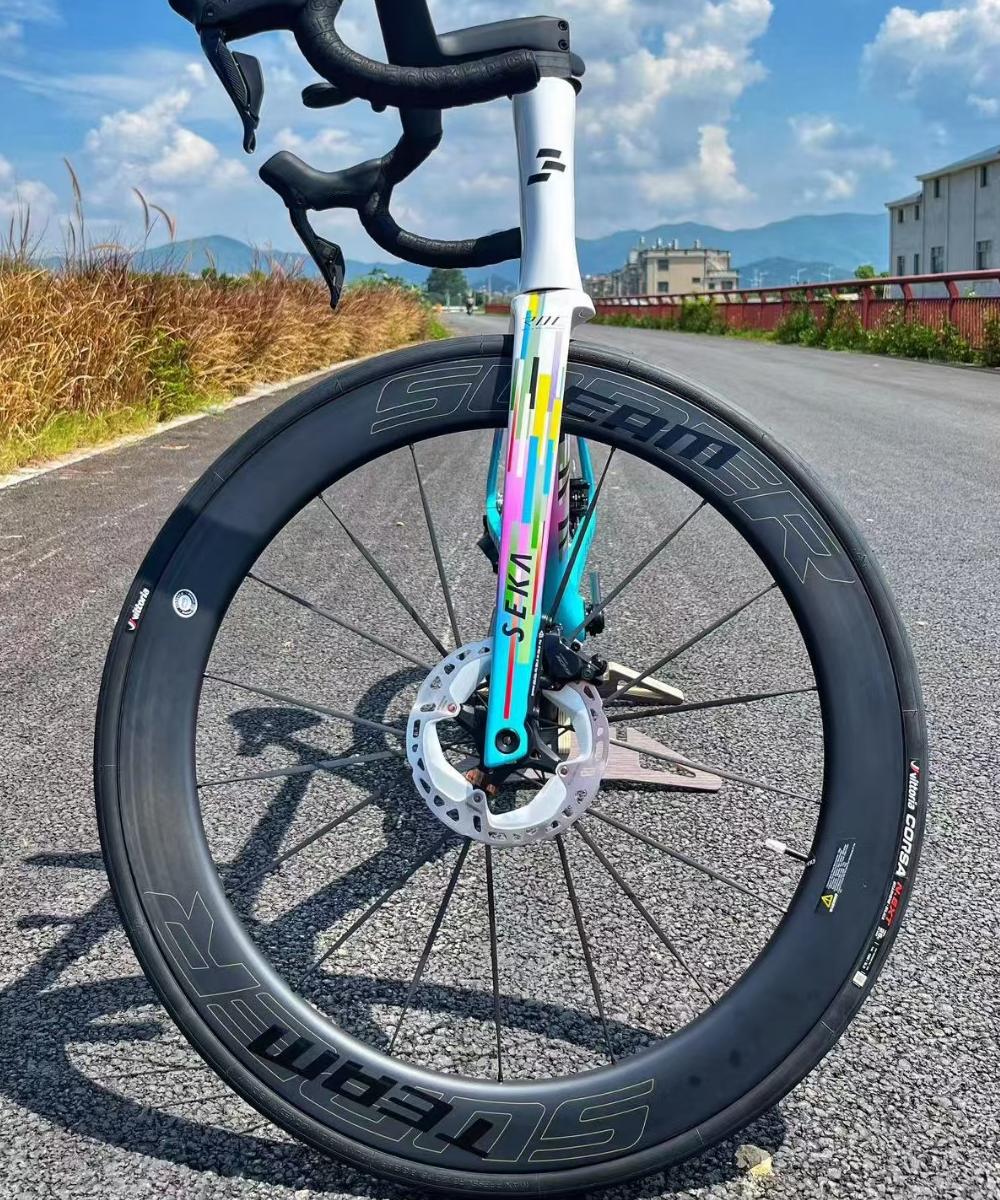
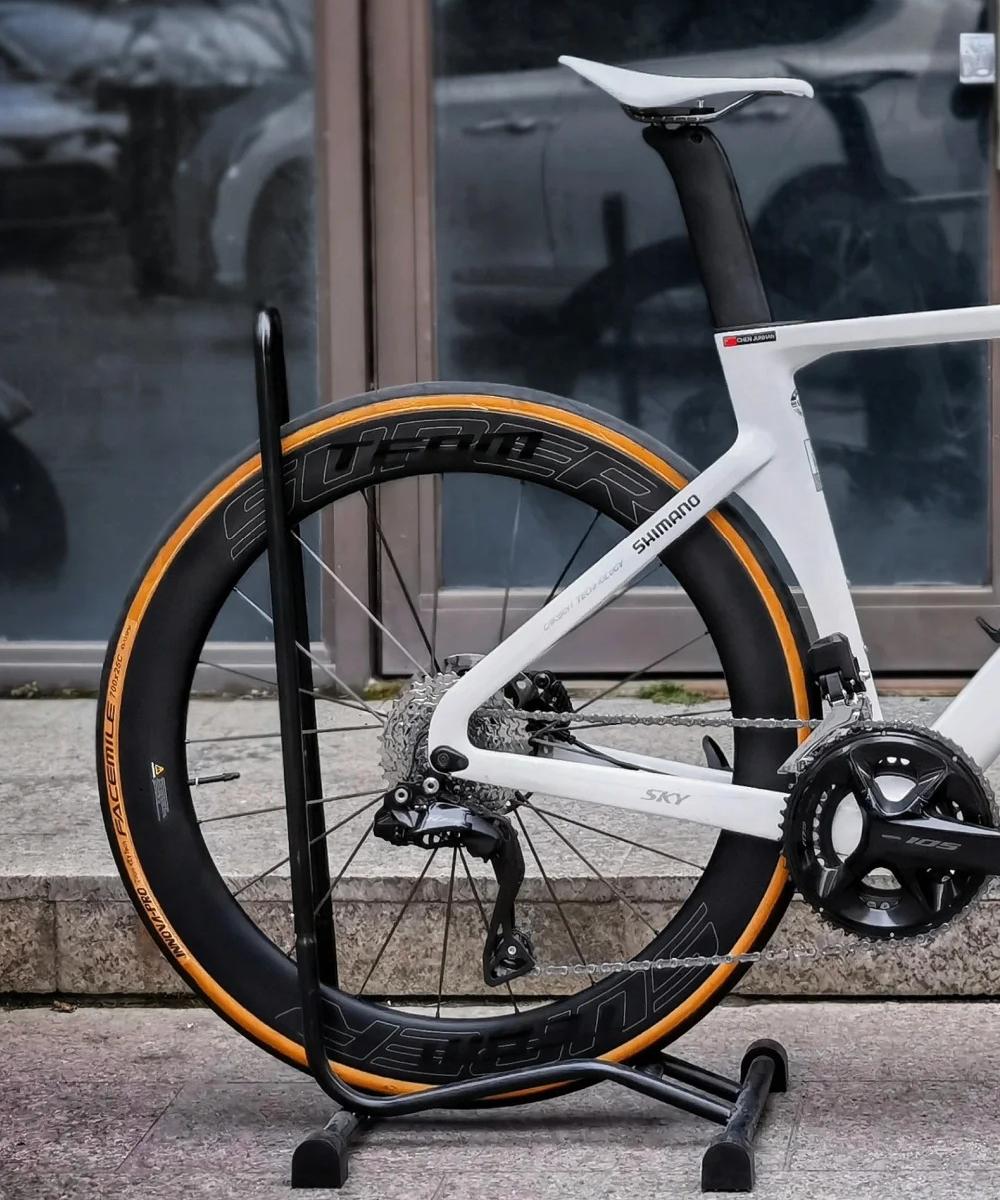
Racing wheels, on the other hand, use high-tension bladed spokes, optimized lacing, and rigid carbon rims. The result is exceptional stiffness and a direct power response.
2. Power Transfer and Efficiency
Every time you push the pedals, your energy travels through the drivetrain to the rear wheel. A stiffer wheelset ensures that more of that energy turns into forward motion — rather than being lost as flex or vibration.
With entry-level wheels, a small amount of this power gets absorbed by the wheel’s flex, especially during hard accelerations or out-of-saddle climbs.
Racing wheels eliminate that inefficiency, converting nearly every watt into speed.
That’s why cyclists often describe racing wheels as having “instant acceleration.” It’s not just about weight — it’s about mechanical efficiency.
3. Sprinting and Climbing Performance
The stiffer the wheel, the faster it reacts to changes in force.
During a sprint, when you put maximum torque into the pedals, stiff racing wheels maintain perfect alignment between rim, hub, and tire. There’s no delay — the bike just goes.
When climbing, stiffness provides stability and precision. You can stand on the pedals without feeling the bike “wiggle” underneath you. That sense of control translates to smoother rhythm and better climbing confidence.
Entry-level wheels, while less efficient, can actually feel more comfortable on long rides — their slight flex absorbs road chatter and reduces fatigue on rough pavement.
4. Cornering and Handling Precision
Wheel stiffness also affects how your bike handles.
In corners, stiff wheels maintain tire contact and line accuracy, letting you carve turns with confidence. For racers, this consistency is crucial — it’s the difference between attacking through a corner and holding back.
Entry-level wheels are more forgiving but less predictable at high speeds. They deform slightly under side loads, which can feel vague when pushing hard into corners.
5. Material Matters: Carbon vs Aluminum
Carbon fiber has revolutionized wheel stiffness.
Unlike aluminum, carbon’s directional fibers can be precisely layered to resist flex only where needed. This allows engineers to fine-tune stiffness without adding unnecessary weight.
The result? Racing carbon wheels are both lighter and stiffer than most aluminum ones — a rare combination that directly improves speed and responsiveness.
Entry-level aluminum rims, though heavier and more flexible, excel in durability and everyday use. They’re ideal for riders who value longevity and comfort over peak performance.
6. Balancing Comfort and Stiffness
Too much stiffness isn’t always better. An overly rigid wheel can transmit road vibration directly to the rider, leading to fatigue during long rides.
That’s why modern racing wheels are designed with vertical compliance — they maintain lateral stiffness (for speed and control) but allow a small amount of vertical give for comfort.
Entry-level wheels naturally offer this comfort due to their construction, making them friendlier for beginners or endurance riders.
7. The Real-World Difference
If you switch from an entry-level to a racing wheelset, you’ll notice:
Faster acceleration
Crisper handling in corners
Better climbing stability
More efficient sprint response
It’s not just a minor improvement — it changes the way the entire bike behaves.
8. Final Thoughts
Wheel stiffness and power transfer are what make racing wheels feel so “alive.” Every watt you put in translates to motion. Every turn of the pedals feels sharper and more direct.
Entry-level wheels remain excellent for training and everyday use — comfortable, dependable, and affordable. But when performance is the goal, stiffness is what sets racing wheelsets apart.
The difference isn’t just measurable in watts — it’s something you feel every time you ride.