
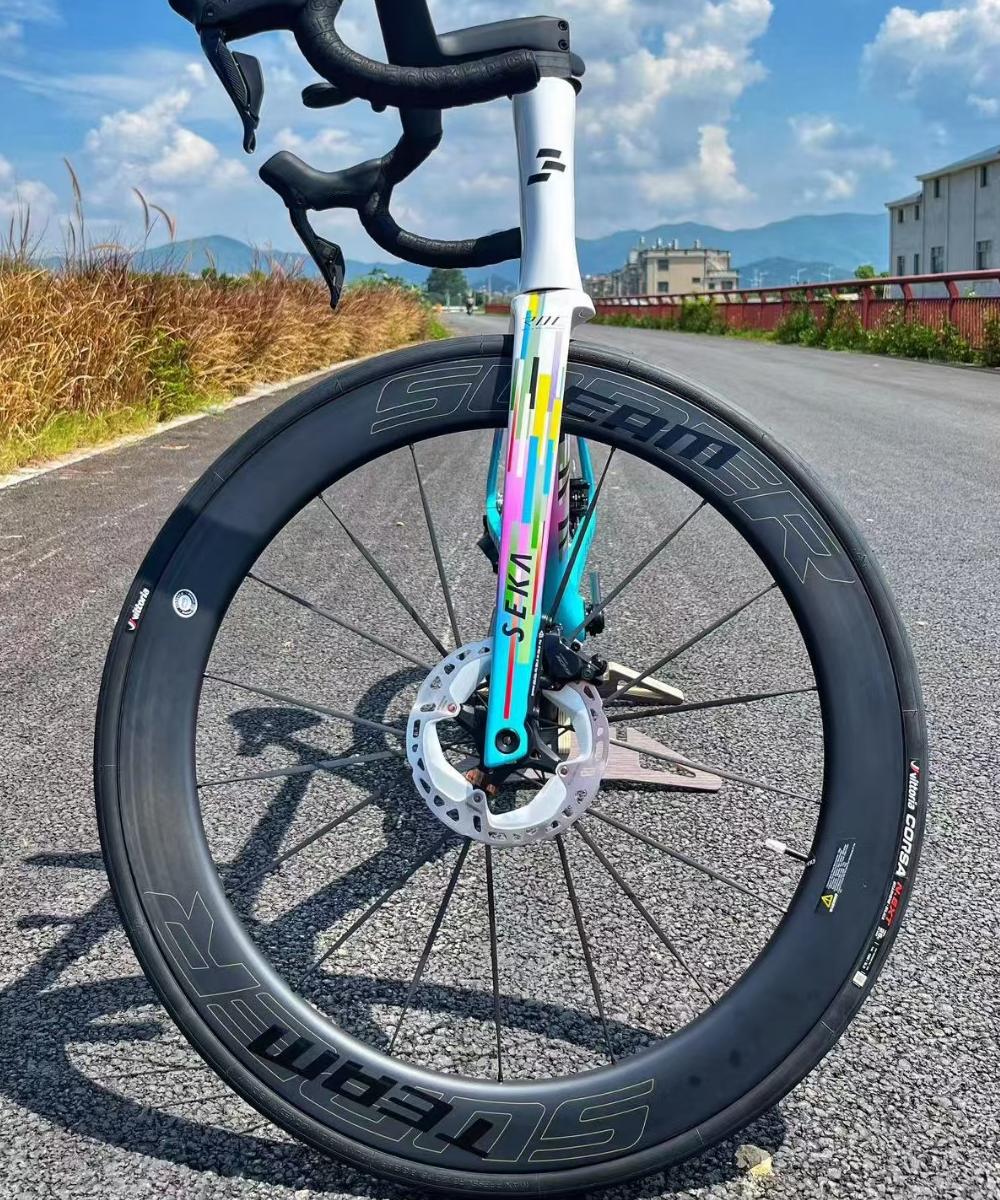

How Manufacturing Tolerances Affect Carbon Rim Consistency
Carbon rims offer a remarkable combination of light weight, stiffness, and aerodynamic performance. However, achieving consistent performance across different wheels depends heavily on manufacturing tolerances. Even small deviations in layup, resin application, or curing processes can impact ride quality, braking, and durability.
Dimensional Accuracy
Carbon rims are manufactured layer by layer, often with automated layup systems or hand placement of carbon fiber sheets. Slight variations in rim width, depth, or bead seat diameter can result in uneven tire fit, affecting both rolling resistance and ride stability. For tubeless setups, an off-spec bead seat can make sealing difficult and increase the risk of burping under load.
Layup and Resin Distribution
The orientation of carbon fibers and consistency of resin distribution are critical. Minor inconsistencies can lead to uneven stiffness, causing one wheel to feel more compliant than the other. This can affect power transfer and lateral stability, especially during sprinting or hard cornering. Manufacturers with tight tolerances ensure that each rim maintains predictable flex and torsional rigidity.
Weight Variation
Carbon rims are sensitive to fiber count and resin application. Even a few grams difference between wheels in the same set can alter rotational inertia, which may subtly affect acceleration and climbing performance. High-quality production controls minimize these variations, ensuring that paired wheels respond consistently under load.
Braking Surface Consistency
For rim brake carbon wheels, consistent brake track thickness and finish are vital. Variations can lead to uneven heat buildup or differences in braking feel between front and rear wheels, compromising safety and performance. Tighter tolerances ensure uniform heat dissipation and predictable braking behavior.
Quality Control Measures
Manufacturers employ laser measurement systems, automated layup verification, and thorough inspection protocols to maintain tight tolerances. Even in high-end carbon rims, tolerance ranges of ±0.1mm can make a meaningful difference in performance consistency.
Conclusion
Manufacturing tolerances in carbon rims directly affect tire fit, stiffness, braking, and weight distribution. Riders benefit most from rims produced with stringent quality controls, as even minor inconsistencies can translate into noticeable differences in ride feel and handling. Understanding the importance of tolerances helps cyclists make informed decisions when selecting high-performance carbon wheelsets.