
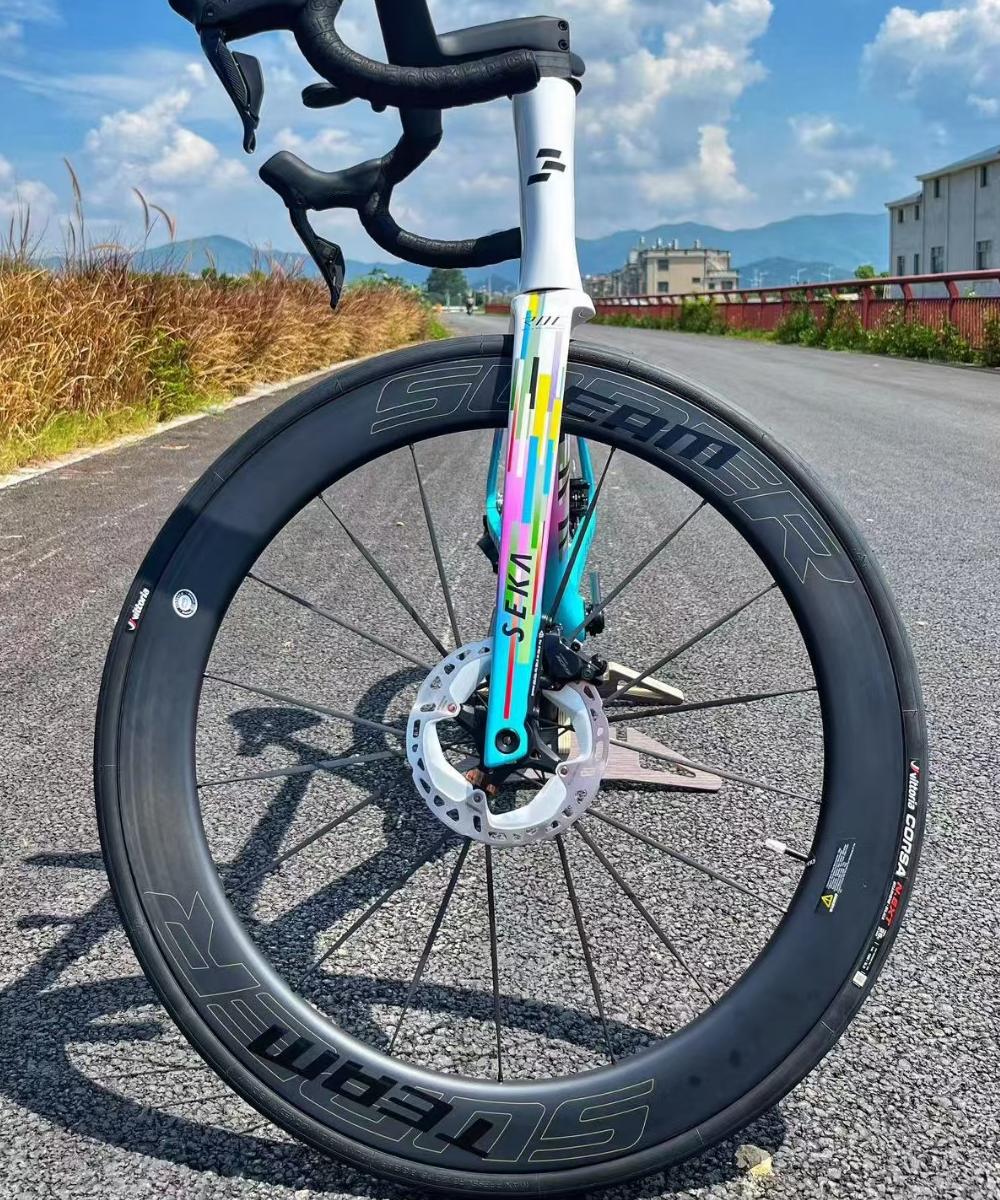

Carbon Gravel Wheels vs Alloy: Braking in Wet and Dry Conditions
Introduction
For gravel riders, braking performance is just as important as rim strength and tire choice. The difference between carbon and alloy wheels becomes especially noticeable in varying weather. While alloy rims have long been praised for consistent braking, carbon rims are catching up with specialized brake tracks and pad compounds. Understanding how each material behaves in wet and dry conditions helps riders make informed choices for performance and safety.
Braking on Carbon Gravel Wheels
Dry Conditions
Strengths:
Modern textured brake tracks provide excellent stopping power.
Lighter weight improves acceleration and climbing efficiency
Challenges
Braking can feel less progressive compared to alloy, requiring precise modulation.
Wet Conditions
Strengths:
New-generation resins and pad compounds greatly improve wet braking.
Challenges:
Water can reduce friction initially, creating a split-second delay before pads bite.
Heat buildup during long descents is more critical—especially on rim-brake carbon wheels.
Braking on Alloy Gravel Wheels
Dry Conditions
Strengths:
Predictable and linear braking response.
No heat-related degradation of rim structure.
Challenges:
Typically heavier than carbon, reducing responsiveness in climbs.
Wet Conditions
Strengths:
Alloy rims maintain reliable braking even when wet.
No “delay phase” before pads engage effectively.
Challenges:
More prone to rim wear from grit and water abrasion.
Gravel-Specific Considerations
Pad Compounds
Carbon rims require specific pads; using the wrong type can cause damage or reduced braking.
Alloy rims are more forgiving, but gravel grit accelerates wear regardless.
Heat Management
Carbon rims are sensitive to prolonged braking on long, muddy descents.
Alloy dissipates heat faster, reducing fade risk.
Durability
Wet gravel accelerates pad and rim wear in both materials.
Alloy rims often last longer under heavy braking abuse, while carbon prioritizes weight and performance.
Choosing the Right Option
Choose Carbon If
You value weight savings and performance in mixed conditions.
You ride primarily in dry or moderately wet environments.
You want aero advantages for fast gravel racing.
Choose Alloy If
You ride frequently in wet, muddy, or mountainous regions.
You prioritize durability and predictable braking over weight.
You want a cost-effective and low-maintenance solution.
Conclusion
When it comes to braking on gravel, alloy wheels still offer unmatched reliability in wet conditions, while carbon wheels excel in weight savings and performance on dry terrain. Advances in carbon rim technology have narrowed the gap, but the choice ultimately depends on riding style, terrain, and climate. Riders who prioritize confidence in all-weather braking may lean toward alloy, while those chasing speed and efficiency will find modern carbon gravel wheels up to the task.