
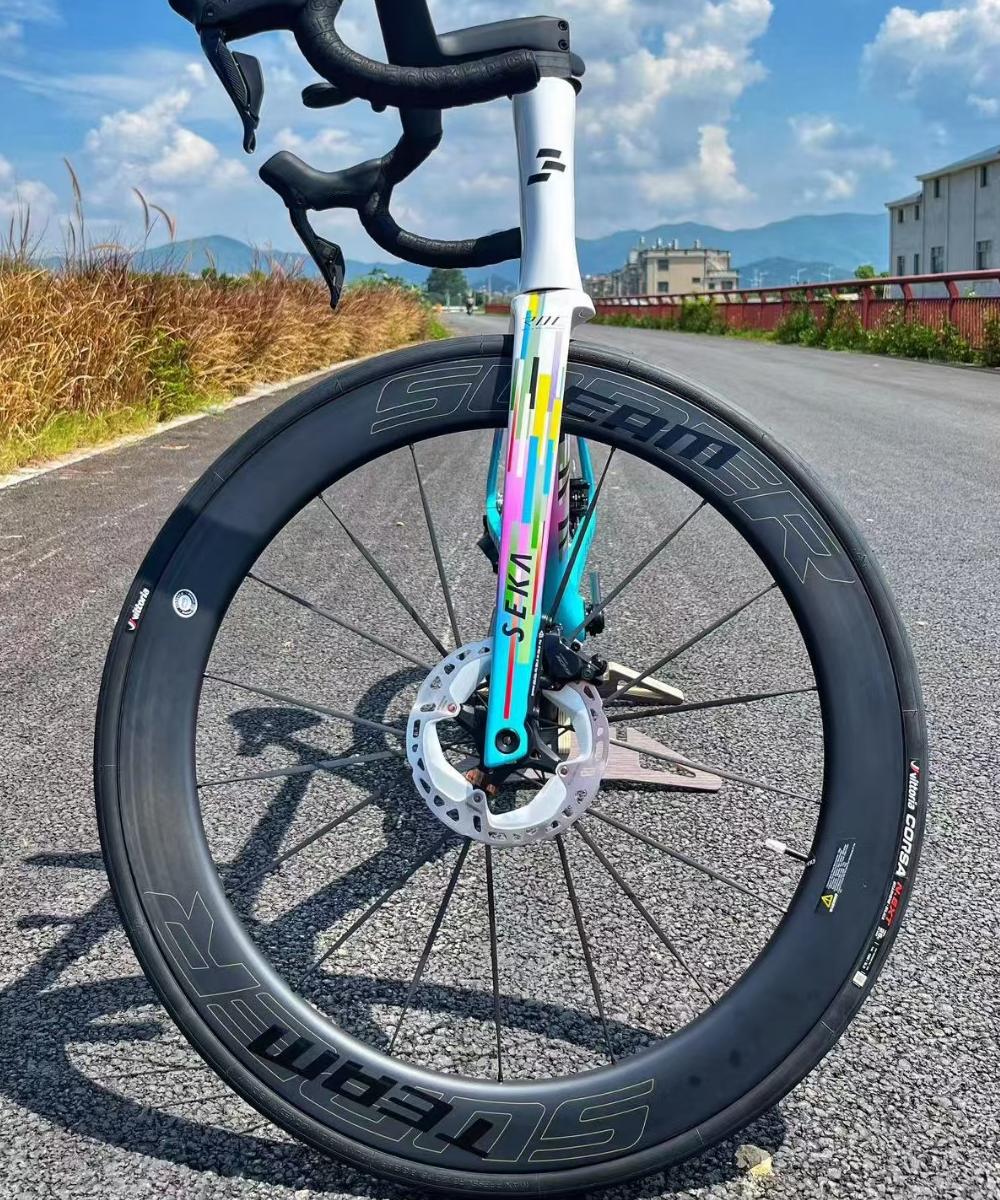

Carbon Brake Track Overheating: Causes and Prevention
Carbon wheels have become a staple in high-performance cycling, offering weight savings, stiffness, and aerodynamic advantages. However, one persistent challenge with carbon clincher rims, especially in rim brake systems, is brake track overheating. Excessive heat not only reduces braking efficiency but can also lead to rim damage or even failure. Understanding the causes and knowing how to prevent overheating is essential for both performance and safety.
Causes of Brake Track Overheating
1. Prolonged Braking on Descents
Continuous braking on long, steep descents generates significant friction. Unlike alloy rims, carbon doesn’t dissipate heat as efficiently, causing rapid temperature build-up.
2. High Rider Weight and Load
Heavier riders or bikes carrying gear exert more braking force, which translates into higher thermal stress on the brake track.
3. Improper Brake Pad Selection
Using standard pads instead of carbon-specific brake pads can drastically increase heat and accelerate rim wear. Carbon brake pads are engineered to manage friction and minimize heat transfer.
4. Poor Braking Technique
Dragging brakes (holding them lightly for extended periods) causes constant friction, building heat gradually until it becomes dangerous.
5. Environmental Conditions
Hot weather, high altitudes, or long alpine descents amplify the risk of overheating, especially if cooling airflow is limited.
Prevention Methods
1. Adopt Proper Braking Technique
Use “pulsed braking” rather than dragging brakes. Apply firm braking in short bursts to allow cooling time between applications. Alternate between the front and rear brakes to distribute heat more evenly.
2. Choose Carbon-Specific Pads
Always use brake pads recommended by the wheel manufacturer. These pads are designed to reduce heat buildup and maintain braking performance.
3. Optimize Tire Pressure
Overinflated tires increase stress on the brake track. Keeping tire pressure within the manufacturer’s recommended range helps manage heat and prevents blowouts.
4. Upgrade to Disc Brakes
For riders frequently descending long mountains, disc brakes eliminate the problem of rim overheating entirely. Many modern carbon wheelsets are disc-brake optimized.
5. Inspect and Maintain Rims
Regularly check the brake track for signs of wear, discoloration, or resin damage. Early detection of heat damage can prevent catastrophic rim failure.
Final Thoughts
While carbon wheels deliver outstanding performance benefits, brake track overheating is a real concern for rim brake users. By understanding the causes and applying effective prevention techniques, riders can enjoy the benefits of carbon wheels without compromising safety. For those tackling frequent mountain descents, considering a shift to disc brakes may be the ultimate solution.