


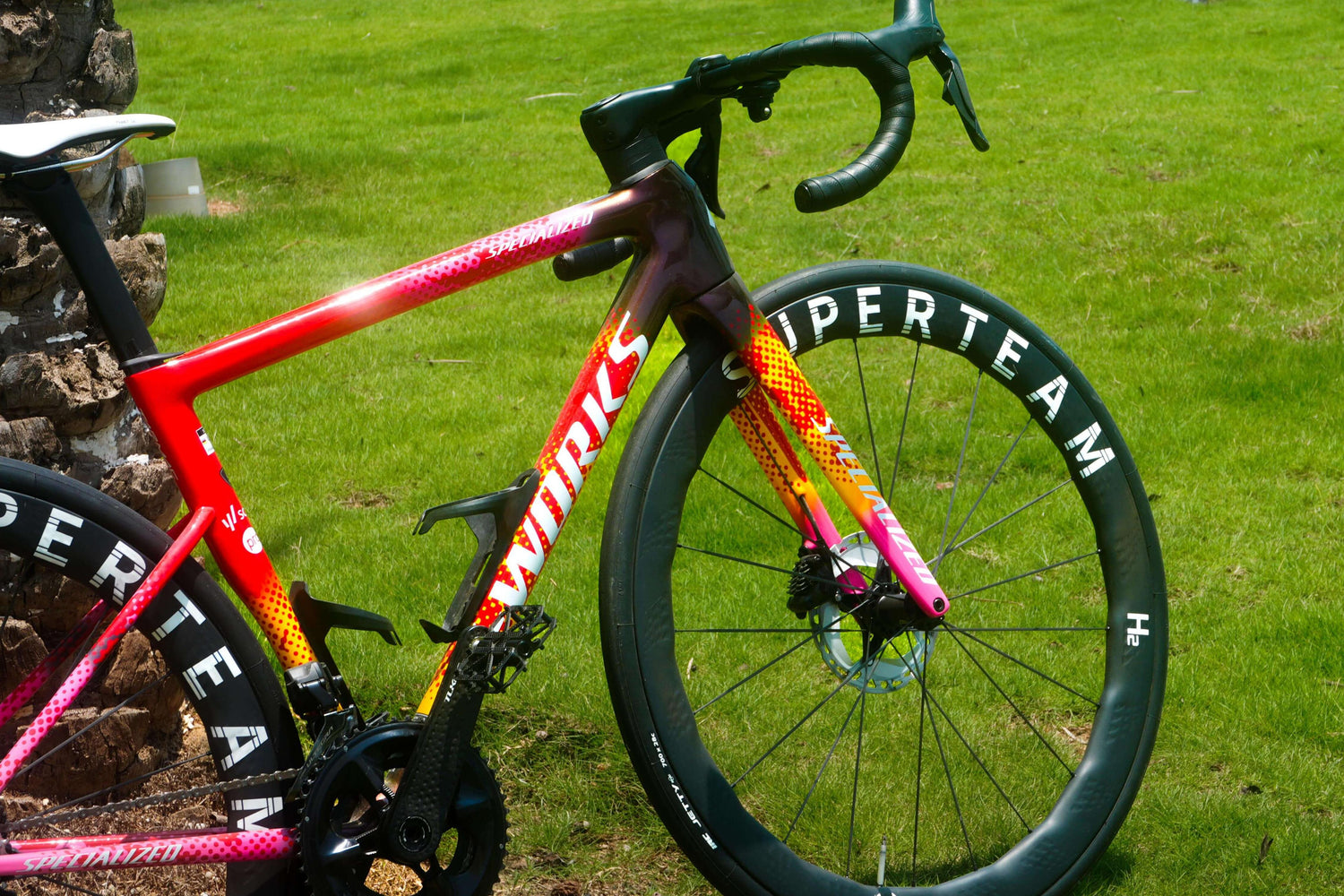
When selecting tires, beyond material and characteristics, the tread pattern is a crucial factor; it directly determines your riding efficiency, safety, and comfort.
Tread patterns generally fall into the following categories, each with its own purpose, advantages, and disadvantages.
Slick Tires
As the name implies, these have virtually no tread pattern, though some may feature very shallow grooves for water drainage.

Slick tires offer a large contact patch with the ground and minimal rolling resistance, resulting in the fastest speeds and the least physical effort. The downside is their limited range of suitable environments; grip drops drastically on standing water or loose soil, making them prone to slipping.
Suitable for road bikes, urban commuting, and track racing.
Semi-Slick Road Tires
These feature a smooth center section flanked by shallow tread patterns or small knobs on the sides.

This design offers low resistance and high speed while maintaining good grip, agile handling, and responsive cornering. In my view, they have no real flaws; while they may not excel in any single area, they are more than capable for general use, so that isn't a drawback.
They can be fitted to almost any bike, provided you avoid overly complex or rugged terrain.
Knobby Tires
The tread surface is covered in "knobs" or lugs. Depending on the intended use, the size, shape, and density of these knobs vary significantly.

The knobs dig deep into soft surfaces, providing superior grip, traction, and braking power. However, they create significant rolling resistance, making pedaling more strenuous.
Small-knob tires are suitable for light off-road riding and mixed surfaces, while large-knob tires are designed for extreme conditions like heavy off-roading and mud.
City/Commuter Tires
The tread pattern falls somewhere between slick and knobby tires but differs distinctly from semi-slicks; the center section—usually smooth on other tires—features continuous drainage grooves, while the sides retain anti-slip tread patterns.

Like semi-slicks, these prioritize balance. However, whereas semi-slicks emphasize speed and handling, commuter tires trade some of that performance for enhanced adaptability and safety. They maintain reliable braking on wet or slippery surfaces and offer moderate rolling resistance. Their performance is well-rounded, even if not exceptional in any single category. Beyond these, there are specialized tires designed for specific terrains—such as rain tires, mud tires, and snow tires—which the average rider generally does not need to purchase.
So, how do you choose the right tire for your needs?
If you ride primarily on paved city roads and prioritize speed and efficiency, opt for slick or semi-slick tires. On hard, smooth surfaces, the primary requirement is traction through surface contact; this relies on the adhesive properties of the rubber compound. While some tread patterns are acceptable, you should avoid aggressive knobs. Using knobby tires on smooth pavement is like running on a polished floor in spiked shoes: not only do you fail to gain traction, but the deformation of the knobs also wastes energy.
If you occasionally ride on dirt paths, a semi-slick tire is the minimum recommendation. On loose dirt or soft forest trails covered in sand and gravel, rubber cannot adhere effectively and instead tends to pick up debris. In these conditions, you need tread patterns that can "bite" into the ground to prevent the wheel from spinning in place.
For off-road enthusiasts, knobby tires are the clear choice. Navigating loose terrain requires mechanical interlocking and driving force; the knobs act like excavator buckets or boat paddles, digging into the soil to generate thrust. Using slick or standard commuter tires—which cannot transfer lateral or longitudinal force—would likely result in the wheel simply spinning uselessly.

Leave a comment
All comments are moderated before being published.
Este site está protegido pela Política de privacidade da hCaptcha e da hCaptcha e aplicam-se os Termos de serviço das mesmas.