
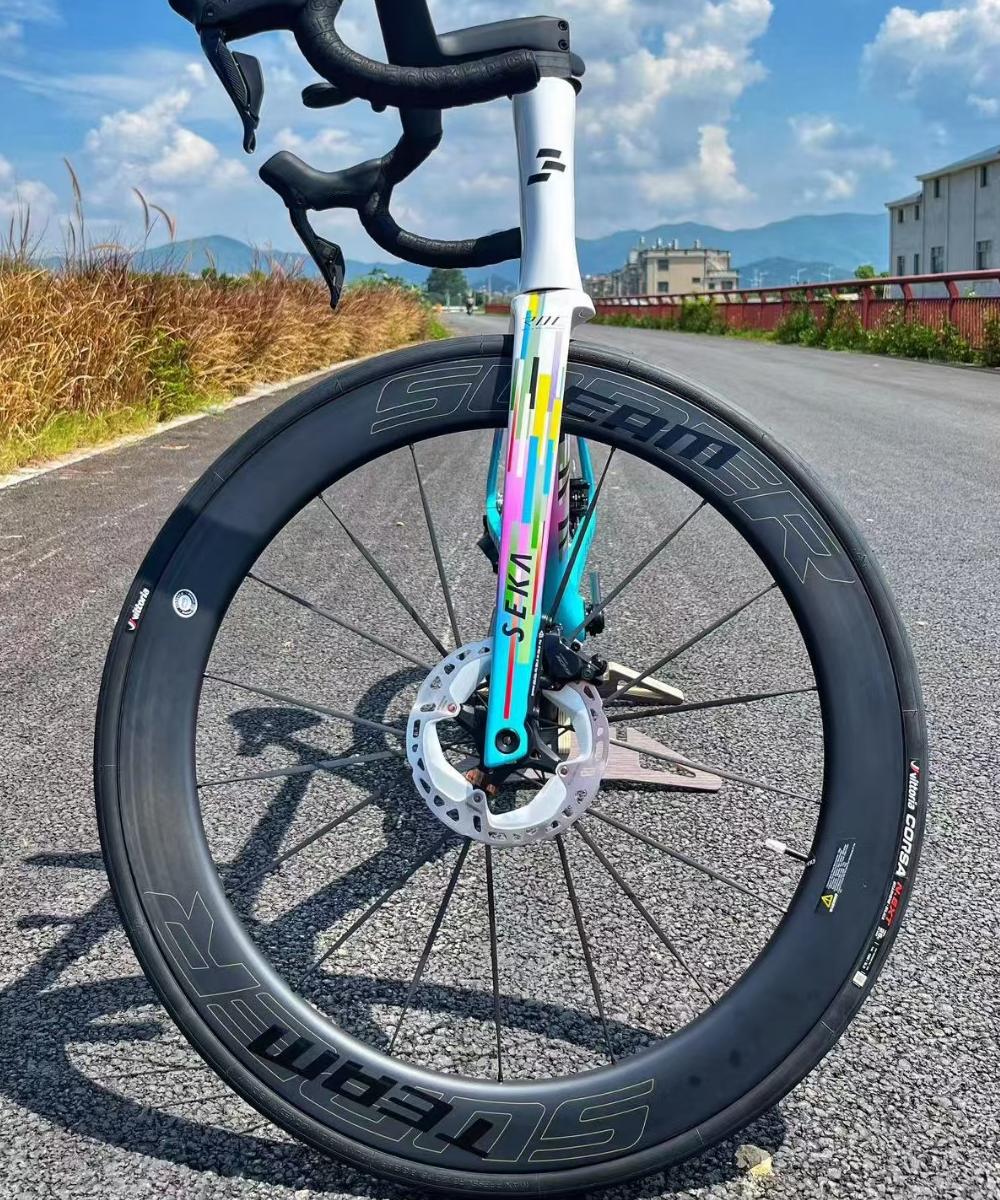
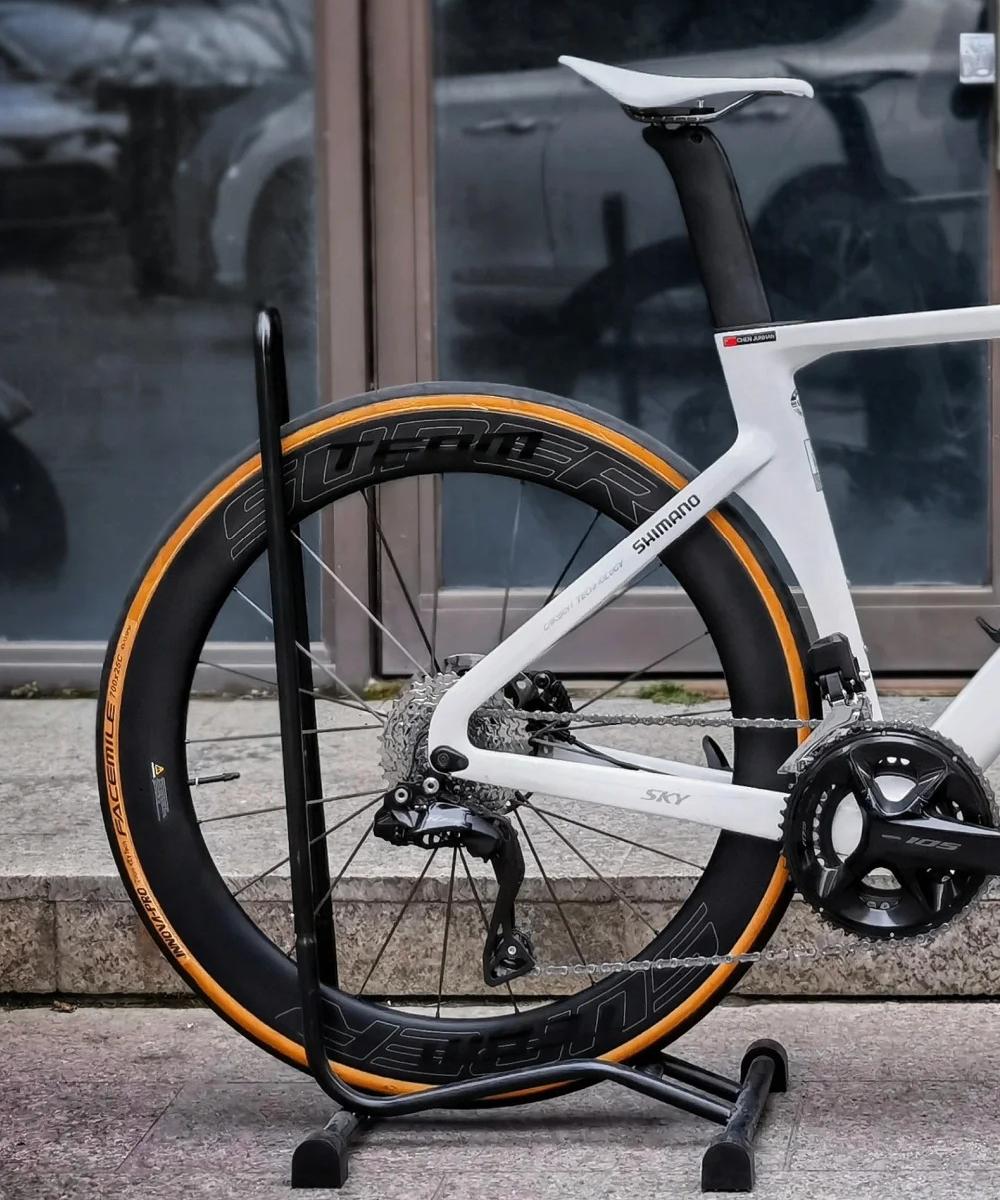

Want to make your mountain bike more responsive, comfortable, and even more fun? Fork tuning is the key to unlocking a new world. Whether you're a beginner or an experienced rider, the right fork settings can significantly improve your riding experience. Today, we'll explore the secrets of fork tuning step by step, from air pressure, preload, and chamber volume to damping adjustment.

I. Air Pressure and Preload: Finding the Starting Point of Balance
Almost all modern forks include a weight-to-air pressure chart, but this is just the beginning. The real key is setting the preload (Sag)—the percentage of the fork's total travel that is compressed when you're fully equipped on the bike.

For short-travel forks like XC, a preload of 20%-35% is generally recommended.

The operation is simple: push the fork's O-ring all the way down, get on the bike, and then dismount naturally. Observe the position of the indicator ring. A higher preload results in a softer fork, suitable for complex terrain; a lower preload results in a more responsive fork, suitable for smoother conditions. However, even with the correct settings, aggressive riders may still bottom out the fork.
Solution? Adjust the chamber volume.
II. Chamber Volume: The Secret to Controlling the Compression Curve

[Linear Compression]

[Gradual Compression]
Fork compression characteristics are divided into two types: linear compression (consistent stiffness throughout the stroke) and gradual compression (stiffening towards the end of the stroke). Linear compression is suitable for smooth riding, while gradual compression prevents the fork from bottoming out during aggressive riding.


To achieve gradual compression, simply reduce the chamber space using a "chamber volume modification kit".

These small parts, installed on top of the chamber, cause a sharp increase in pressure at the end of compression, forming a buffer barrier. The operation is simple: deflate the fork, install the modification kit, and re-inflate. If your fork frequently bottoms out, you might want to try this trick.
III. Compression Damping: The Trade-off Between Pedaling Efficiency and Shock Absorption
The compression damping knob on the fork is far more than a simple "lock-up switch." It controls the fork's ability to resist compression, directly impacting pedaling efficiency and terrain adaptability.

Full Open Mode: Essential for downhill or bumpy sections, maximizing shock absorption.
Mid-Range: Balances pedaling and shock absorption, suitable for mixed terrain.
Closed Mode: Reduces power loss when climbing, but sacrifices comfort.

Some forks also offer fine-tuning. If the fork drops excessively during braking or pedaling, power loss is noticeable, the damping can be increased appropriately, but remember not to overdo it—the fork's primary task is always shock absorption.
IV. Rebound Damping: A Delicate Trade-off Between Speed and Control

Rebound damping is perhaps the setting riders love to tweak the most. It determines how quickly the fork returns to its original speed after compression, commonly known as "tortoise and hare adjustment."
Quick Rebound (“Rabbit” Mode): The fork responds quickly, suitable for riding on continuous bumps or for those seeking a more engaging ride.

[Quick Rebound: Quickly returns the fork to its initial position, but too much opening, especially with large drops, can cause the rebound to impact the rider.]
Slow Rebound (“Turtle” Mode): More stable landing, but too slow a rebound can result in the fork not fully recovering before the next impact.


[Slow Rebound: A slow rebound speed will result in a slower rebound speed after the next compression, until the entire travel is consumed. Appropriate adjustment will reduce the fork's rebound on the rider and bike.]
Personal preference is important, but it must be considered in conjunction with actual road conditions. If you feel a "push" or bike bounce during the fork rebound, appropriately reduce the rebound speed; for complex and varied terrain, a quick rebound is often safer.
V. Practical Case: How to Customize Your Fork?
If you're truly unsure how to set it up, a classic setup (adjust as your skills improve) includes: Preload: Medium (approximately 25%-30%)
Bed Capacity: Smaller (with progressive compression modifications)
Compression Damping: Fully open (downhill) or partially open (mixed terrain)
Rebound Damping: Medium to slow (for balanced control and response)
But remember, air pressure values cannot be copied verbatim—weight, riding style, and terrain differences will all affect the results. The best teachers are always making repeated adjustments and field testing.
Conclusion:
There is no standard answer to fork settings, only the most suitable choice for the current situation. From preload to damping fine-tuning, every modification is a dialogue between rider and bike. Record the road feel of different combinations and gradually find the "parameter values" for your fork on different tracks. After all, isn't the joy of riding that feeling of oneness with the bike and the sense of accomplishment from continuous exploration precisely?



Leave a comment
All comments are moderated before being published.
Este site está protegido pela Política de privacidade da hCaptcha e da hCaptcha e aplicam-se os Termos de serviço das mesmas.