
⏰ Key Information
| Start Date | July 4, 2026 (Saturday) |
| Finish Date | July 26, 2026 (Sunday) |
| Stages | 21 |
| Total Distance | Approximately 3,334 km |
| Grand Départ | Barcelona, Spain |
| Final Stage | Paris, France (Champs-Élysées) |
Rest Days
- July 13 (after Stage 9)
- July 20 (after Stage 15)
What's Special About the 2026 Route?
If there is one word to describe the 2026 Tour de France route, it is spectacular.
The race begins with one of the most anticipated Grand Départs in recent years—Barcelona. Stage 1 features a Team Time Trial (TTT) through the city's streets, meaning the general classification battle begins immediately. Team strength will already create meaningful gaps on the very first day.
From Spain, the peloton heads north into the Pyrenees, tackling legendary climbs including the iconic Col du Tourmalet, before moving east into the Alps.
The Alpine finale is particularly historic. Riders will finish atop the legendary Alpe d'Huez on two consecutive days—Stages 19 and 20—a remarkably rare occurrence in Tour history.
The race concludes in Paris, but with a twist. Before reaching the traditional finish on the Champs-Élysées, riders must tackle three ascents of Montmartre. This year's final stage won't simply be a ceremonial sprint—it has real bite.

📅 Complete Stage Guide
| Stage | Date | Route | Distance | Type |
| S1 | July 4 | Barcelona → Barcelona | 19.7 km | 🟡 Team Time Trial |
| S2 | July 5 | Tarragona → Barcelona | 182 km | 🔴 Montjuïc Hilly Stage |
| S3 | July 6 | Granollers → Les Angles | 196 km | ⛰️ Pyrenees Summit Finish |
| S4 | July 7 | Carcassonne → Foix | 182 km | ⛰️ Mountain Stage |
| S5 | July 8 | Lannemezan → Pau | 158 km | 🟢 Sprint Stage |
| S6 | July 9 | Pau → Gavarnie | 186 km | ⛰️ Col du Tourmalet |
| S7 | July 10 | Agen → Bordeaux | 175 km | 🟢 Sprint Stage |
| S8 | July 11 | Périgueux → Bergerac | 182 km | 🟢 Sprint Stage |
| S9 | July 12 | Mallemort → Ussel | 185.5 km | 🟠 Rolling Stage |
| Rest Day | July 13 | — | — | — |
| S10 | July 14 | Aurillac → Le Lioran | 166.6 km | ⛰️ Bastille Day Mountain Stage |
| S11 | July 15 | Vichy → Nevers | 161.3 km | 🟢 Sprint Stage |
| S12 | July 16 | Circuit de Nevers Magny-Cours → Chalon | 181 km | 🟢 Sprint Stage |
| S13 | July 17 | Dole → Belfort | 205.8 km | 🟠 Longest Stage |
| S14 | July 18 | Mulhouse → Le Markstein | 184 km | ⛰️ Vosges Summit Finish |
| S15 | July 19 | Champagnole → Plateau de Solaison | 169 km | ⛰️ Alpine Summit Finish |
| Rest Day | July 20 | — | — | — |
| S16 | July 21 | Évian-les-Bains → Thonon-les-Bains | 26.1 km | 🕐 Individual Time Trial |
| S17 | July 22 | Chambéry → Voiron | 169 km | 🟢 Transitional Stage |
| S18 | July 23 | Voiron → Orcières-Merlette | 171 km | ⛰️ Alpine Summit Finish |
| S19 | July 24 | Gap → Alpe d'Huez | 130 km | ⛰️🔥 Alpe d'Huez |
| S20 | July 25 | Le Bourg-d'Oisans → Alpe d'Huez | 110 km | ⛰️👑 Queen Stage (5,600 m of climbing) |
| S21 | July 26 | Torcy → Paris (Champs-Élysées) | 133 km | 🏁 Montmartre + Paris Finale |
🏅 The Four Jerseys Explained
The Tour de France features four separate competitions, each represented by an iconic leader's jersey.
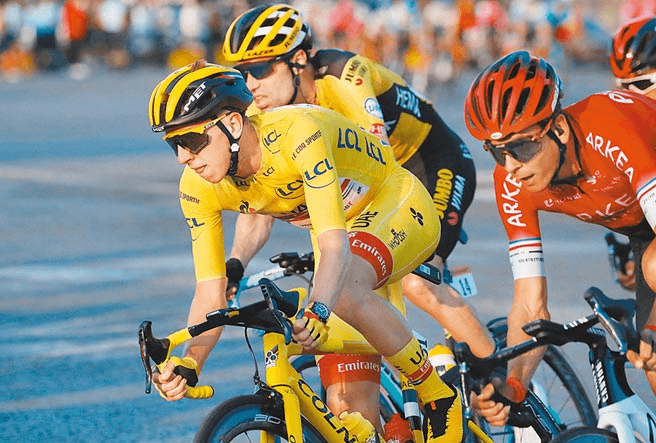
🟡 Yellow Jersey — General Classification (GC)
Awarded to the rider with the lowest cumulative race time across all stages.
Time bonuses are available on selected stages, allowing riders to reduce their overall time.
🟢 Green Jersey — Points Classification
Awarded to the rider who earns the most points from stage finishes and intermediate sprints.
Although primarily designed for sprinters, versatile riders can also score valuable points on selective stages.
🔴⚪ Polka Dot Jersey — King of the Mountains
Awarded to the rider who collects the most King of the Mountains (KOM) points by cresting categorized climbs first.
Harder climbs offer more points, making the biggest mountain stages decisive in this competition.
⚪ White Jersey — Best Young Rider
Awarded to the highest-ranked rider in the General Classification who is 25 years old or younger on January 1, 2026.

Tour de France Champions (Past 15 Editions)
| Year | Winner | Runner-up | Third Place |
| 2025 | Tadej Pogačar (Slovenia) | Jonas Vingegaard (Denmark) | Florian Lipowitz (Germany) |
| 2024 | Tadej Pogačar | Jonas Vingegaard | Remco Evenepoel (Belgium) |
| 2023 | Jonas Vingegaard | Tadej Pogačar | Adam Yates |
| 2022 | Jonas Vingegaard | Tadej Pogačar | Geraint Thomas |
| 2021 | Tadej Pogačar | Jonas Vingegaard | Richard Carapaz |
| 2020 | Tadej Pogačar | Primož Roglič | Richie Porte |
| 2019 | Egan Bernal | Geraint Thomas | Steven Kruijswijk |
| 2018 | Geraint Thomas | Tom Dumoulin | Chris Froome |
| 2017 | Chris Froome | Rigoberto Urán | Romain Bardet |
| 2016 | Chris Froome | Romain Bardet | Nairo Quintana |
| 2015 | Chris Froome | Nairo Quintana | Alejandro Valverde |
| 2014 | Vincenzo Nibali | Jean-Christophe Péraud | Thibaut Pinot |
| 2013 | Chris Froome | Nairo Quintana | Joaquim Rodríguez |
| 2012 | Bradley Wiggins | Chris Froome | Vincenzo Nibali |
| 2011 | Cadel Evans | Andy Schleck | Fränk Schleck |
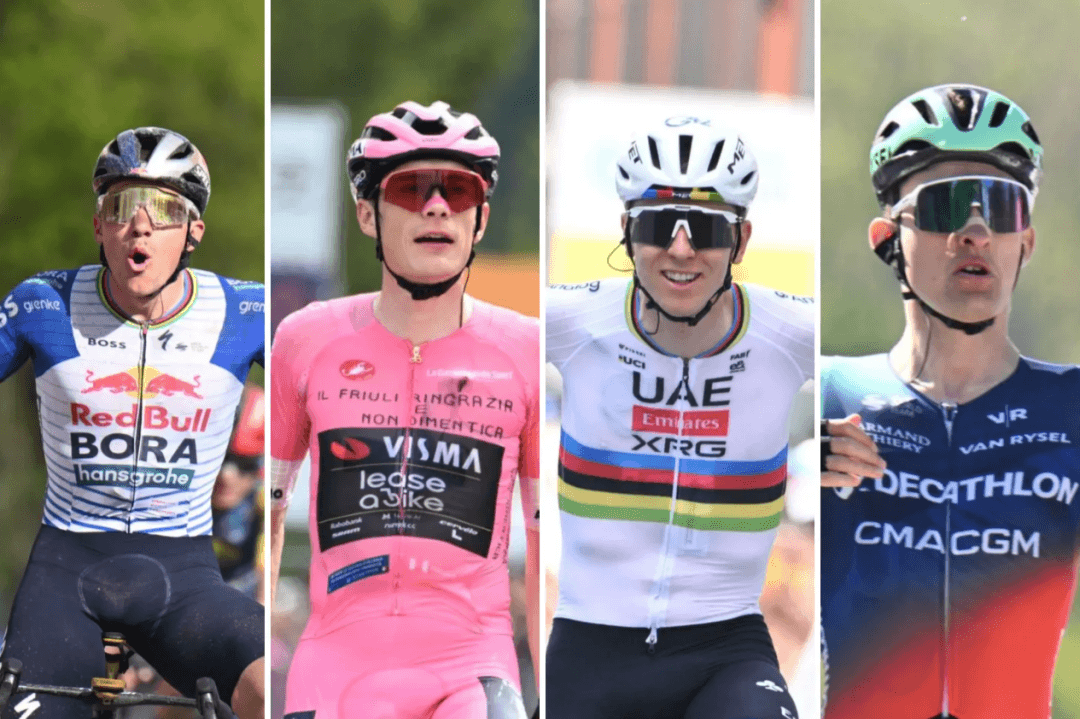
Over the past six editions, the Tour de France podium has been dominated by Tadej Pogačar and Jonas Vingegaard—a rivalry whose sustained excellence is virtually unmatched in modern Tour history.
On July 4, every rider rolls away from the start line in Barcelona with the same dream.
Three weeks later, Paris will reveal who earned the right to wear yellow.

Laisser un commentaire
Tous les commentaires sont modérés avant d'être publiés.
Ce site est protégé par hCaptcha, et la Politique de confidentialité et les Conditions de service de hCaptcha s’appliquent.