
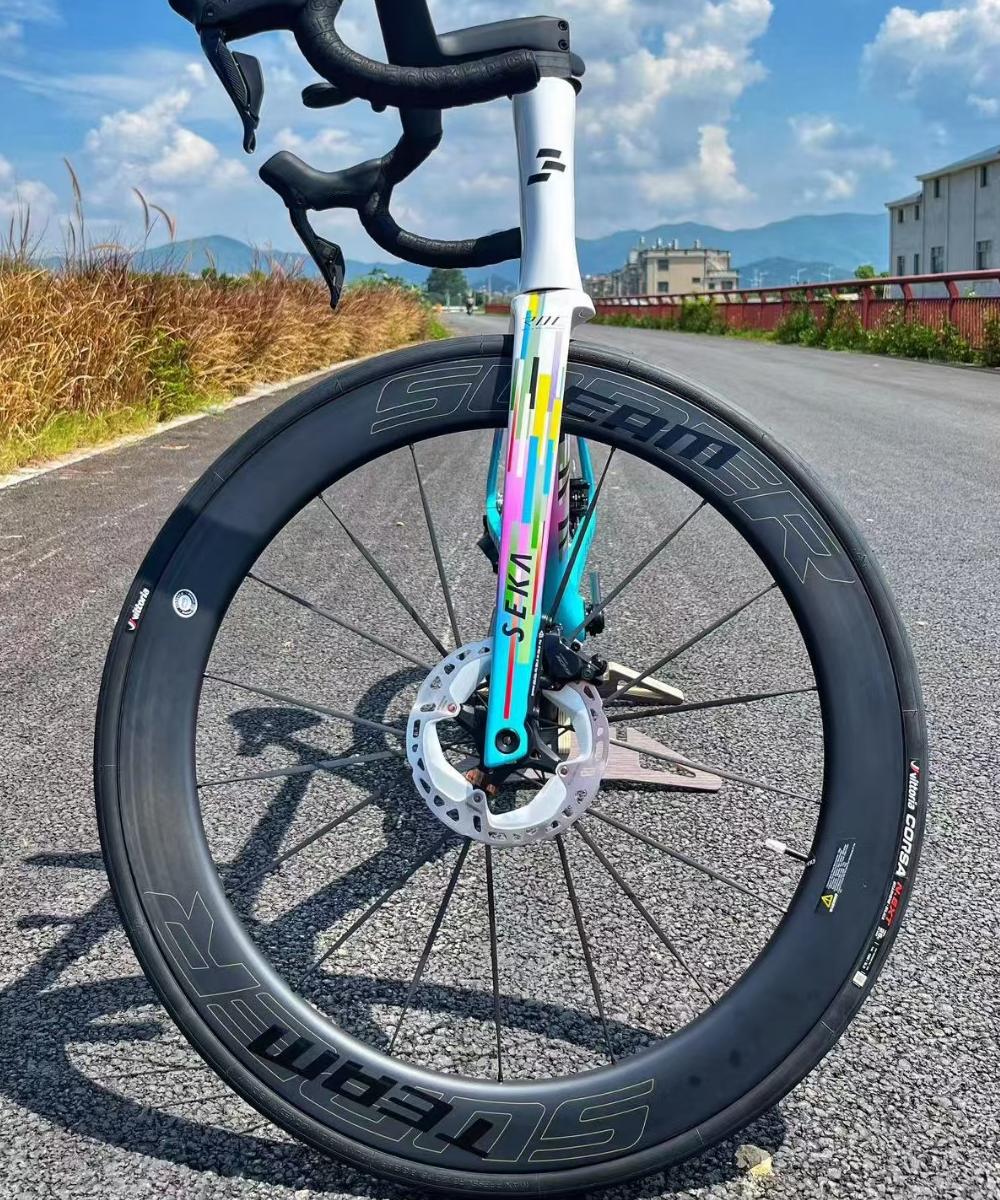

Carbon vs Alloy Wheels in Wet Conditions: Braking and Safety Compared
Choosing the right wheel material becomes especially critical when riding in wet or slippery conditions. Carbon and alloy wheels each behave differently under rain, humidity, or wet road surfaces, particularly in terms of braking performance, control, and safety.
1. Braking Performance
Carbon Wheels: Carbon rims offer excellent stiffness and lightweight performance, but their braking efficiency can decrease when wet. Traditional rim brakes on carbon surfaces may require more force to achieve the same stopping power, and initial brake modulation can feel less predictable. Modern carbon-specific brake pads help mitigate this issue, but wet braking still requires careful attention.
Alloy Wheels: Aluminum rims generally provide more consistent braking in wet conditions. The friction between brake pads and alloy surfaces is less affected by moisture, giving riders more predictable stopping distances and modulation.
2. Heat Management
Carbon Wheels: Prolonged braking, especially on descents, can generate heat, which affects carbon wheel integrity and the brake pads’ performance. Wet conditions can help slightly with cooling, but riders still need to monitor for excessive heat.
Alloy Wheels: Aluminum dissipates heat more effectively, reducing the risk of overheating or brake fade during long descents, even in wet conditions.
3. Tire and Rim Grip
Carbon Wheels: Carbon rims are compatible with modern tubeless tires that enhance wet-weather grip, but riders must ensure proper tire pressure and braking technique to prevent slipping.
Alloy Wheels: Alloy rims combined with standard clincher tires tend to offer reliable traction in wet conditions, making them forgiving for everyday rides or less experienced cyclists.
4. Safety Considerations
Riding in wet weather requires extra caution regardless of wheel material:
Increase braking distance and avoid sudden braking.
Be mindful of painted road surfaces, manhole covers, and debris, which become more slippery when wet.
Maintain proper tire pressure and ensure your brake pads are suitable for wet conditions.
Conclusion
Both carbon and alloy wheels have advantages and limitations in wet conditions. Carbon wheels excel in performance and lightweight characteristics but demand careful braking technique and maintenance. Alloy wheels provide more consistent and predictable braking, making them a safer choice for riders prioritizing wet-weather reliability. Ultimately, the choice depends on your riding style, conditions, and willingness to adapt braking habits for optimal safety.