


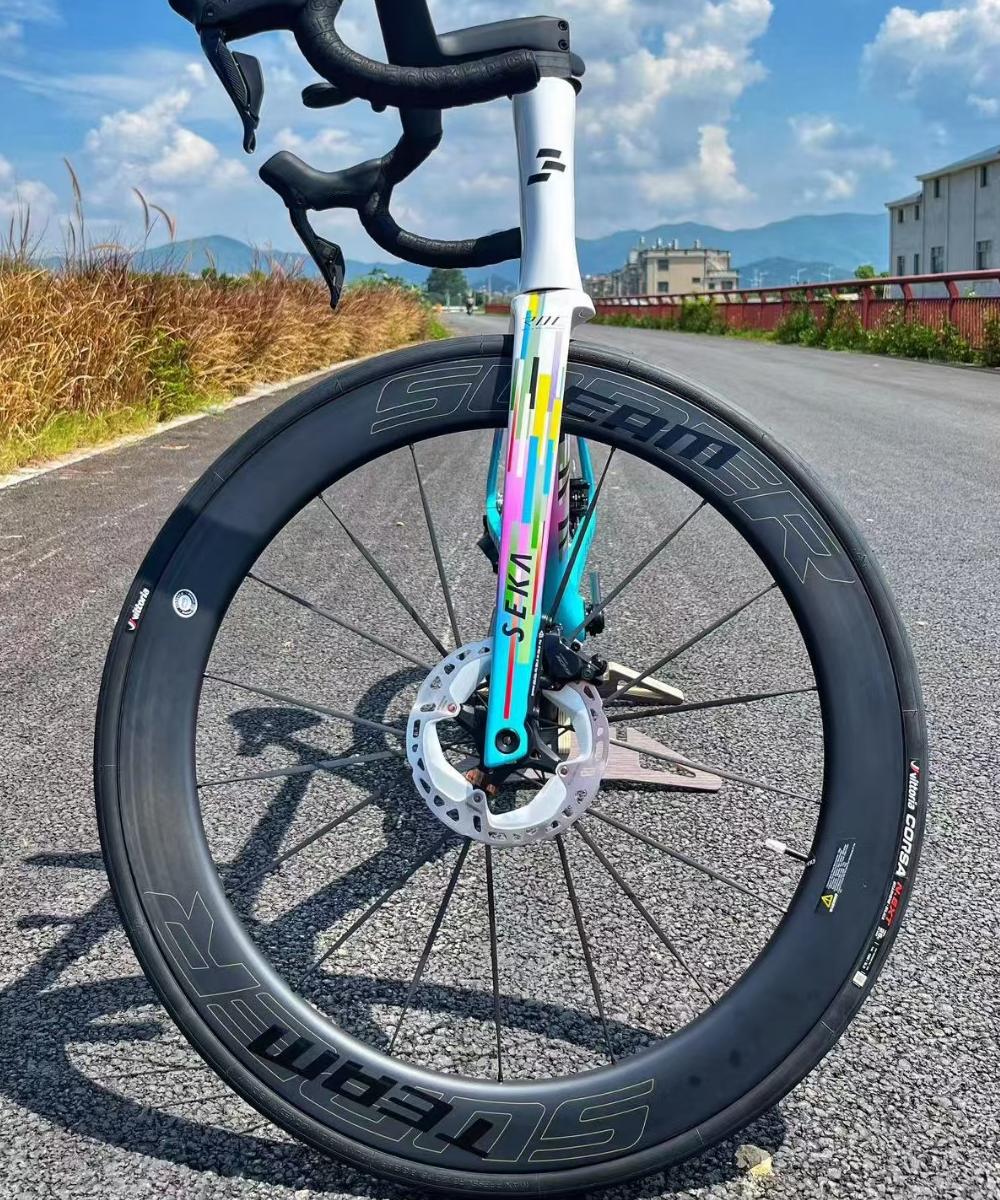

Comfort Test: Road Cycling Rims on Rough Roads
Rough roads are an unavoidable part of real-world cycling. Cracked pavement, coarse chipseal, uneven surfaces, and patched asphalt all affect how your wheels respond—and ultimately how comfortable you feel during long hours on the bike. This article focuses on how different road cycling rims perform on rough roads, what affects comfort, and what riders can expect when the terrain gets harsh.
Comfort is more than just a “nice feeling.” It directly affects endurance, handling stability, and how fast you can ride over long distances. When rims transmit too much vibration, your hands, arms, shoulders, and lower back fatigue quickly. When rims manage vibrations better, you stay fresher, more efficient, and more confident on uneven terrain.
To understand this better, we tested road cycling rims across multiple rough-road environments: worn asphalt, broken pavement, mild gravel transitions, and expansion-joint sections. All tests used the same frame, 28mm tubeless tires, identical tire pressures, identical spokes, and similar mid-depth rims. This allowed the rim differences to be more accurately observed.
One of the most important comfort factors is internal rim width. Wider rims (21–23mm internal) allow the tire to sit in a more rounded and stable shape. This increases vibration absorption and reduces the sharp “buzz” that travels into the handlebars. Narrow rims (17–19mm internal) deliver a harsher ride and transmit more chatter, especially at higher speeds.
Carbon layup also plays a major role. Some rims use extremely stiff carbon structures optimized for sprinting and aerodynamics. These rims feel fast but unforgiving on rough surfaces. Others use more balanced layup designs that maintain lateral stiffness while offering slightly more vertical compliance. These rims deliver noticeably smoother road feedback without sacrificing performance.
Rim depth influences comfort in a predictable way. Mid-depth rims (40–45mm) offer a strong balance by being stiff enough for stability yet not excessively harsh. Very deep rims (50–60mm) tend to feel sharper because their structures resist flex more strongly. Shallow rims (30–35mm) can feel smoother but sometimes lack the solid, planted sensation that riders want on rough descents.
Spoke tension and spoke count also contribute. Higher tension increases stiffness and road feedback, while slightly lower tension (within safe limits) provides more give. More spokes distribute the load better, which can help maintain comfort when roads get unpredictable.
During the test, rims with wider internal widths and balanced layups consistently performed best on rough surfaces. Vibration was notably reduced on broken asphalt, and the wheels felt more controlled on long, rough descents. Hand and arm fatigue decreased noticeably after one hour of rough-road riding compared with stiffer aero-oriented rims. Tire shape also played a crucial role: when mounted on wider rims, the 28mm tires behaved more like 30mm tires in comfort and stability.
For riders choosing wheels specifically for rough roads, the best setups typically include a wide internal rim width, mid-depth profile, and carbon layups tuned for all-round performance rather than pure stiffness. These combinations deliver smoother vibrations, improved control, and greater long-ride comfort.
Riders can also improve rough-road comfort with simple adjustments: lowering tire pressure by 2–5 PSI, using tubeless setups, choosing more supple tire casings, or ensuring spokes are evenly tensioned rather than overly tight. All of these changes add comfort without sacrificing speed.
Comfort is not a secondary factor—it is part of performance. The right cycling rims can transform how the bike handles rough terrain, allowing you to ride faster, longer, and with far less fatigue. For cyclists who frequently encounter imperfect surfaces, comfort-oriented rims offer a clear real-world advantage.