

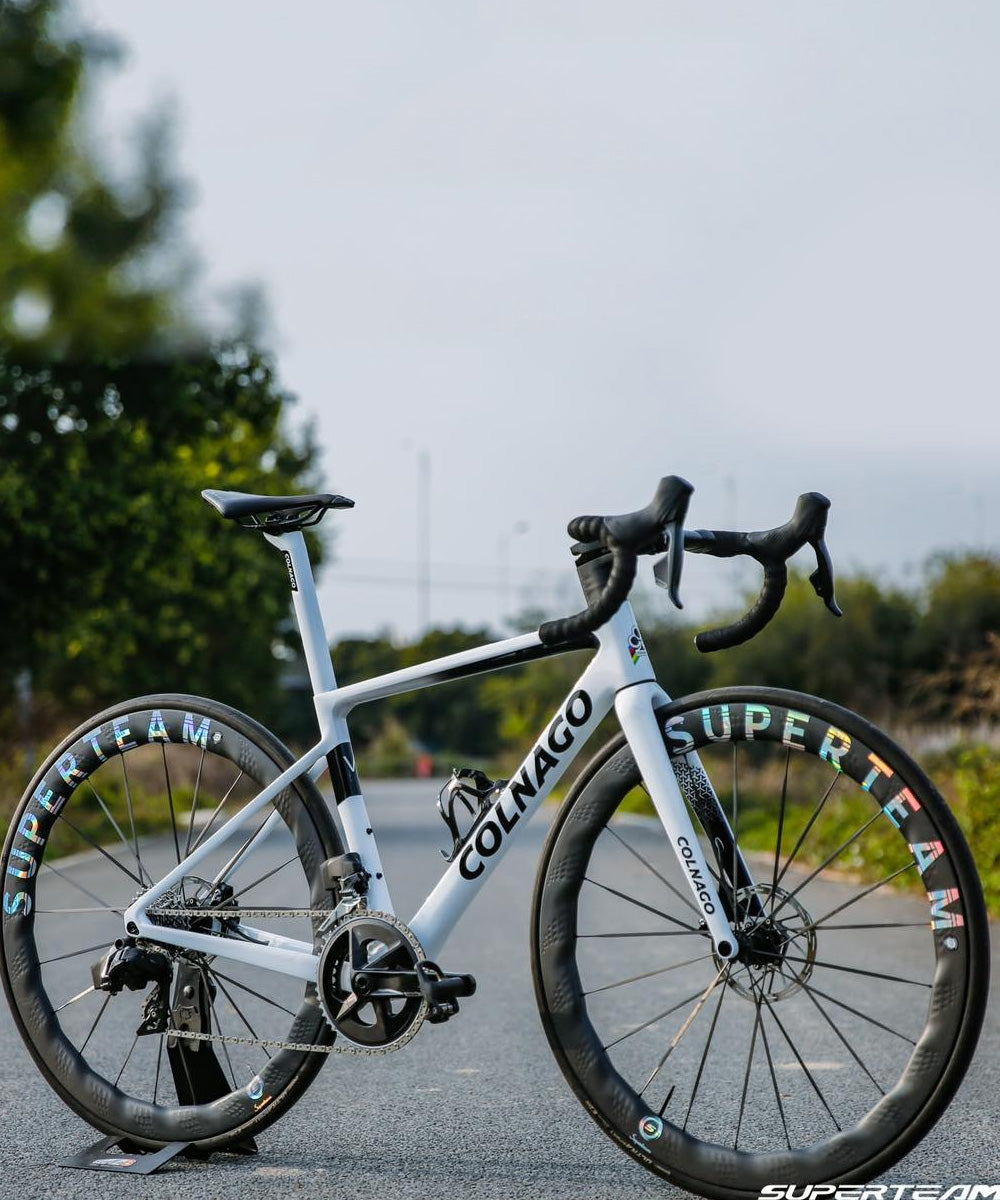


AI-Driven Aerodynamic Optimization: The Next Big Leap?
Artificial intelligence (AI) is increasingly influencing the cycling industry, particularly in aerodynamic design for high-performance wheelsets. By analyzing complex airflow patterns and rider interactions, AI offers the potential to push wheel efficiency beyond what traditional testing methods can achieve.
1. How AI Is Being Applied
Computational Fluid Dynamics (CFD) Enhancements: AI algorithms can process vast CFD simulations faster, identifying optimal rim shapes and tire-rim integration.
Predictive Modeling: Machine learning can predict how design changes impact drag, crosswind stability, and overall performance under real-world conditions.
Design Automation: AI can generate novel rim profiles and spoke geometries that human designers might not conceive, balancing aerodynamics, stiffness, and weight.
2. Advantages Over Traditional Methods
Faster Iteration: AI can evaluate thousands of design variations in the time it takes for a single physical prototype or wind tunnel test.
Real-World Optimization: By analyzing variable conditions—wind angles, rider position, and tire pressure—AI can optimize designs for more than just perfect lab conditions.
Reduced Costs: Minimizing prototype production and wind tunnel testing lowers R&D expenses.
3. Challenges and Considerations
Data Quality: AI predictions are only as good as the data and models used; inaccurate inputs can lead to flawed designs.
Integration with Materials Science: Aerodynamic optimization must consider structural integrity and manufacturability, especially for carbon fiber rims.
Validation Requirements: Even AI-generated designs require extensive physical testing to ensure safety, durability, and compliance with cycling regulations.
4. Industry Outlook
Leading wheel manufacturers are beginning to integrate AI tools alongside traditional CFD and wind tunnel testing. While AI alone cannot replace real-world testing, it serves as a powerful complementary tool for accelerating innovation and refining design efficiency.
5. Conclusion
AI-driven aerodynamic optimization represents a significant advancement in wheel design, offering the ability to explore innovative shapes and configurations faster than ever before. As machine learning models improve and integrate more real-world data, AI could reshape how wheelsets are engineered, delivering tangible performance gains for competitive and recreational cyclists alike.