

Why Rim Brakes Still Have a Place in Modern Aero Bikes
In an age where disc brakes dominate the conversation in road cycling, it’s easy to assume rim brakes are relics of the past. But talk to experienced riders, pro mechanics, or even some aero bike designers, and you’ll find a different story. Rim brakes, despite their decline in popularity, still hold unique advantages that keep them relevant in the high-performance world of modern aero bikes.
1. Weight Advantage Still Matters
One of the most compelling reasons to stick with rim brakes is the weight savings. A typical rim brake setup can shave off 300–400 grams compared to an equivalent disc brake system. For climbers and riders who prioritize power-to-weight ratio, that’s a meaningful gain—especially on long ascents or stage races with repeated elevation.
Aero bikes are already designed to minimize drag, so when combined with the lighter total mass of a rim-brake setup, the performance balance between aerodynamics and climbing efficiency can be excellent.
2. Simplicity and Maintenance Ease
Rim brakes are mechanically simpler, easier to maintain, and require fewer specialized tools. For riders who prefer to handle their own maintenance—or those in regions where service support is limited—this simplicity is a huge plus.
You don’t have to worry about rotor alignment, hydraulic fluid bleeding, or disc warping after long descents. A set of properly adjusted rim brakes can remain reliable for years with minimal upkeep.
3. Aerodynamic Integration
Modern rim-brake aero frames, such as the Cervélo S5 (previous generations) or Specialized Venge, were meticulously optimized around caliper brakes. The smaller frontal area of the rim-brake fork and the absence of disc rotors often result in cleaner airflow and less drag.
For time trial or triathlon bikes, rim brakes can even outperform disc setups aerodynamically, since the brake calipers are often hidden behind the fork or integrated into the frame.
4. Wheel Compatibility and Travel Convenience
Rim-brake bikes generally use quick-release skewers, making wheel removal and installation faster—especially when traveling with your bike. You don’t have to worry about rotor clearance or pad rubbing after reassembly.
For cyclists who travel frequently or participate in international races, this simplicity saves both time and stress.
5. Modern Rim Brake Wheels Are Still Evolving
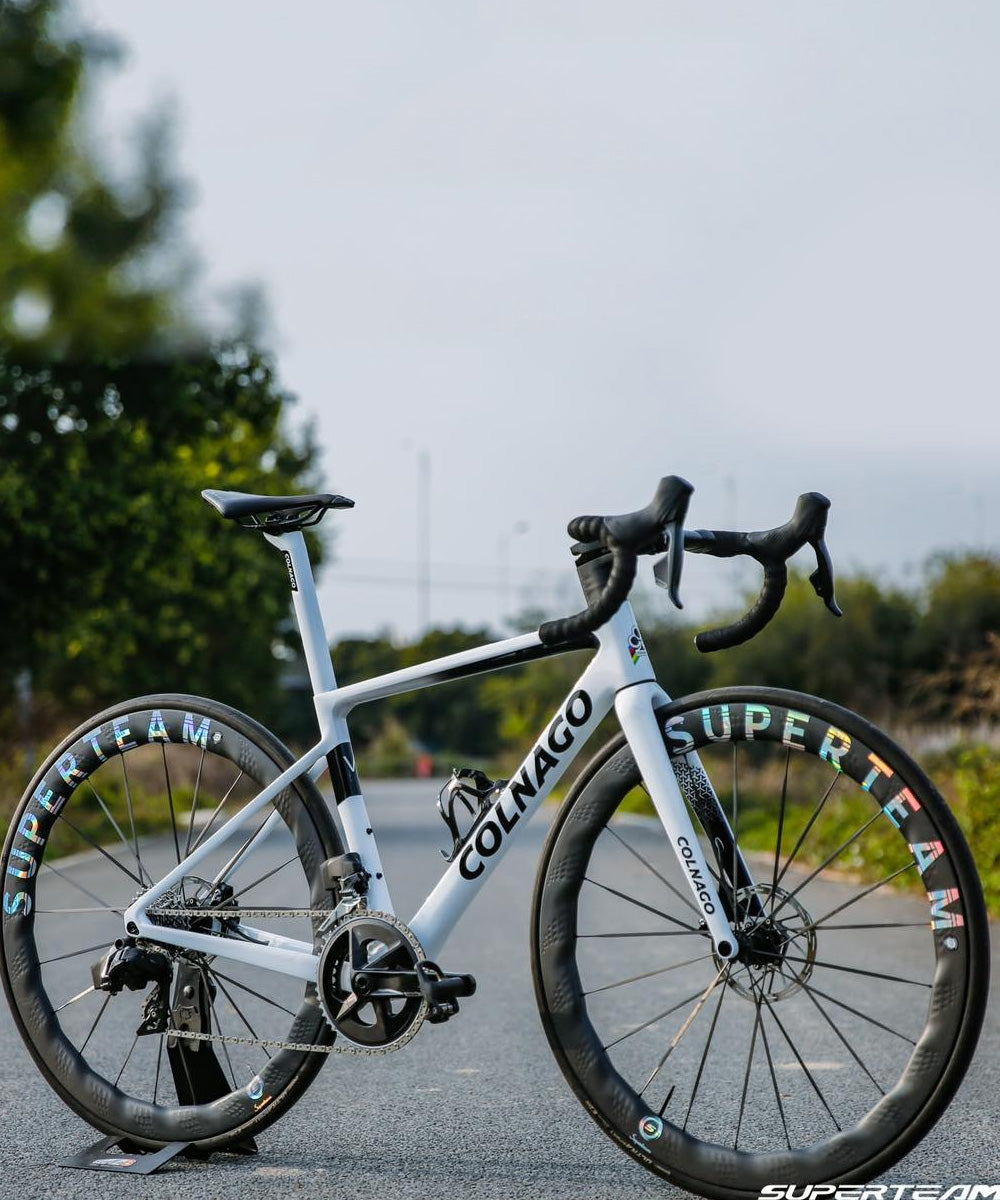
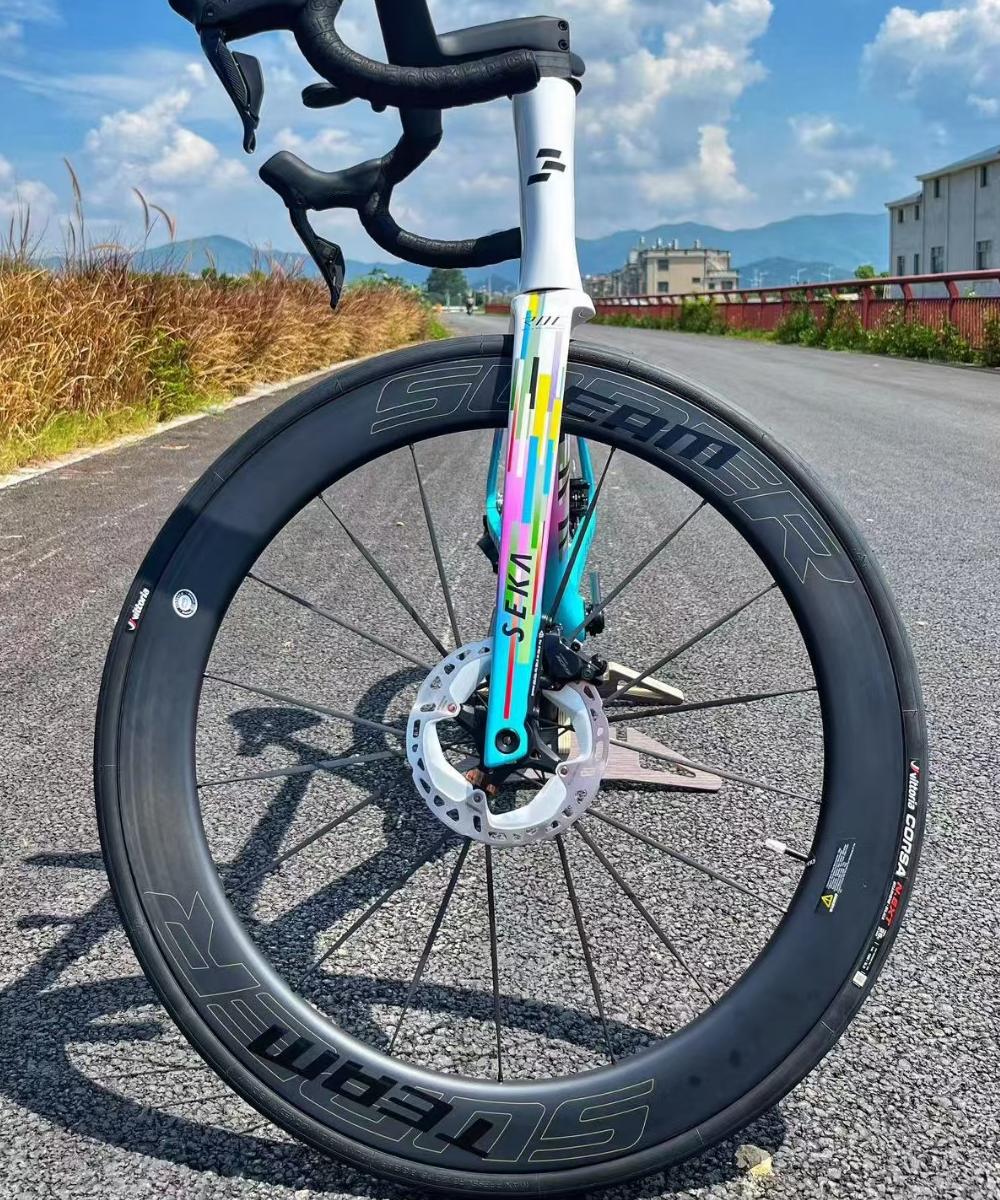
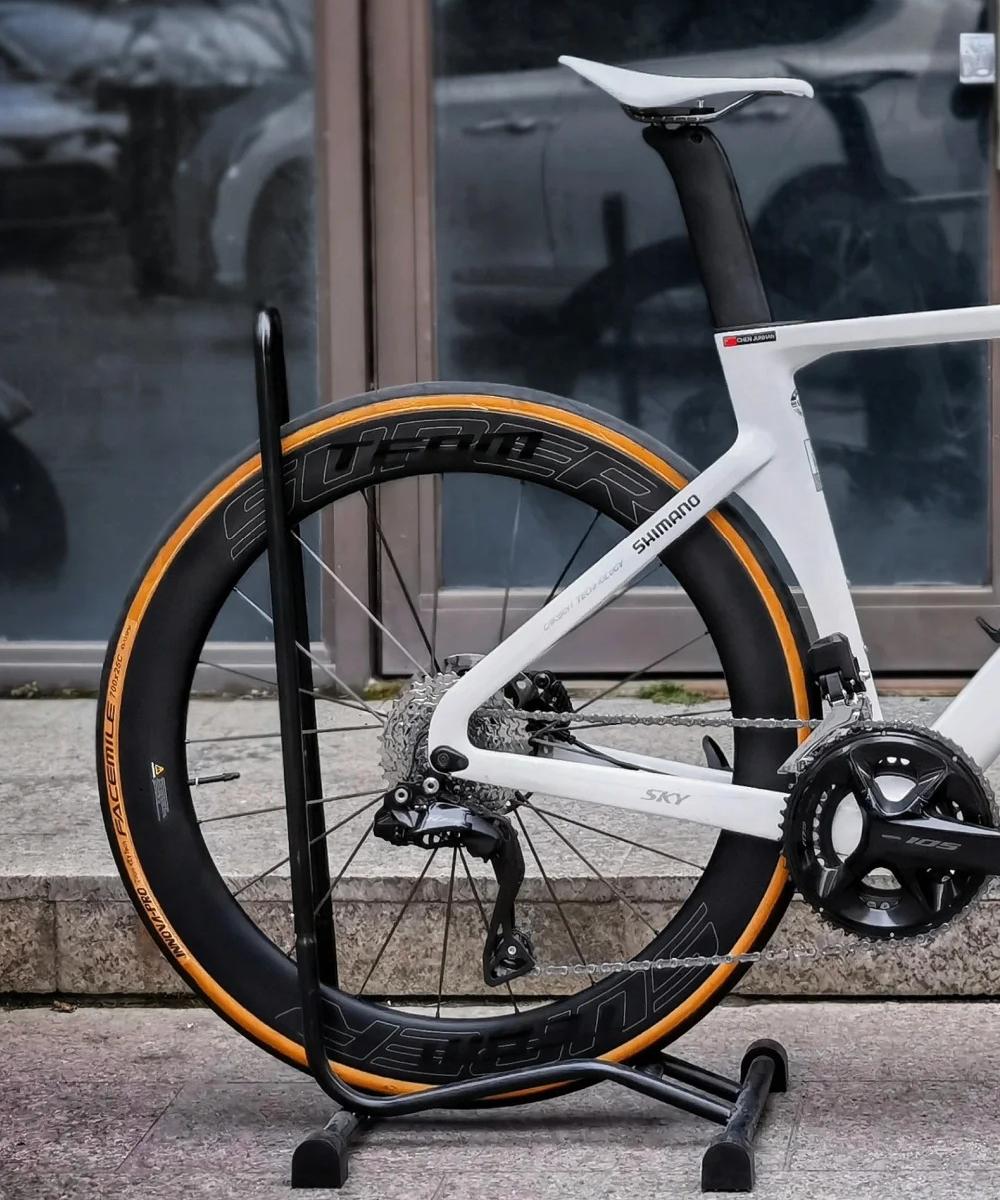
Brands like Superteam, Campagnolo, and Shimano continue to refine rim-brake carbon wheelsets. Improved braking tracks, resin formulas, and temperature resistance mean modern carbon rims perform far better than those from a decade ago.
When paired with quality brake pads, braking performance in dry conditions can be surprisingly close to that of disc systems—especially for lightweight riders.
6. Cost Efficiency
Let’s face it—disc systems are more expensive to buy and maintain. From hydraulic fluid to rotors, the costs add up. Rim-brake setups, on the other hand, are more budget-friendly, allowing riders to invest more in wheel upgrades or aero helmets that yield tangible speed gains.
Conclusion: A Classic That Still Performs
Rim brakes may no longer dominate the peloton, but they are far from obsolete. For riders chasing the perfect balance of lightness, simplicity, and aerodynamic purity, rim brakes still make perfect sense—especially on modern aero bikes designed around their strengths.
Sometimes, progress doesn’t mean abandoning the past—it means understanding where it still shines.