


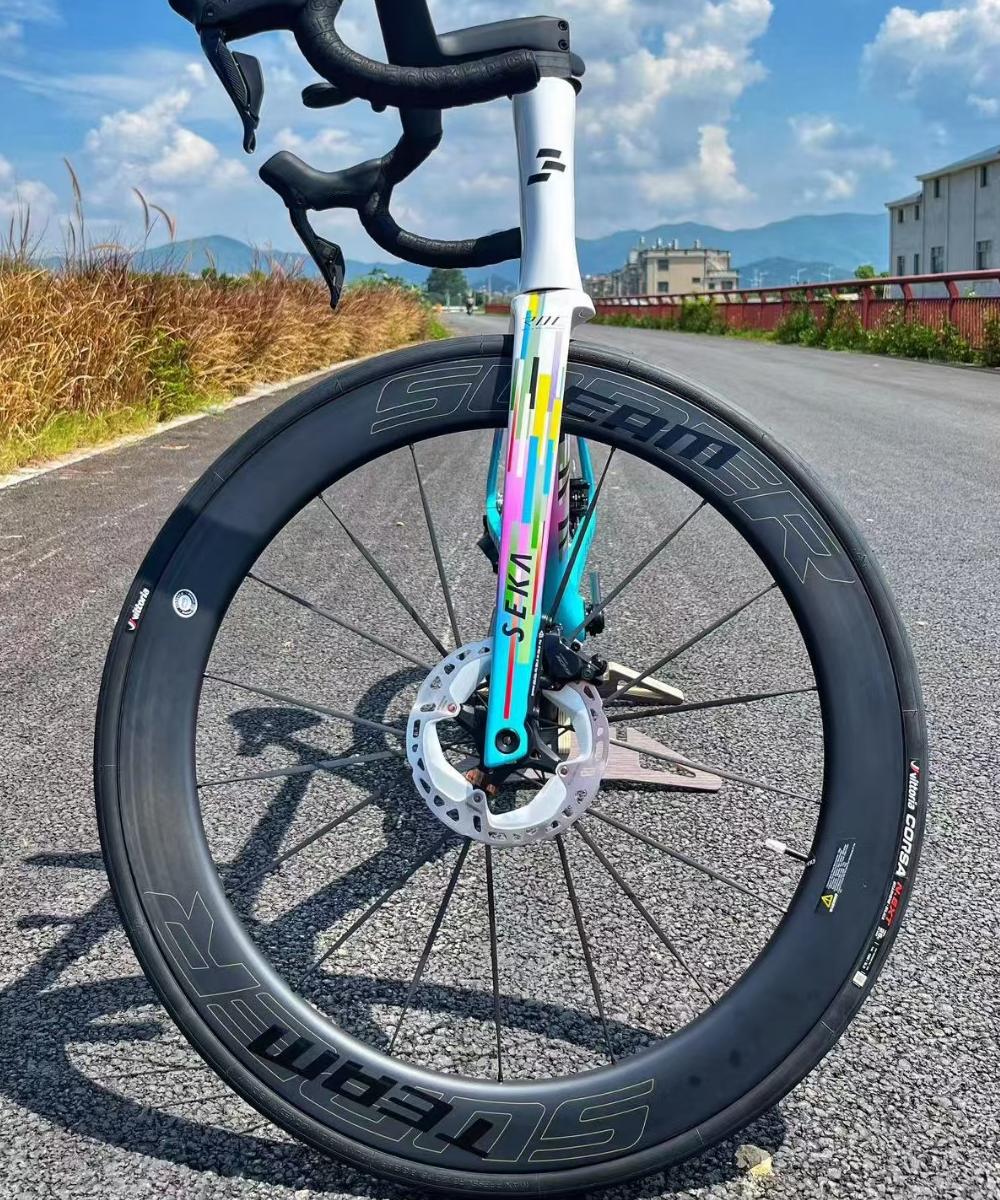

What Makes a Wheel Aerodynamic? Understanding the Science Behind Faster Carbon Wheels
For road cyclists, triathletes, and racers, aerodynamics has become one of the most important factors when choosing a wheelset. A lighter wheel may help on climbs, but when riding at higher speeds, aerodynamic efficiency often plays a much bigger role. This raises an important question: what makes a wheel aerodynamic?
An aerodynamic wheel is not simply a wheel with a deep rim. Many design elements work together to reduce air resistance, improve stability, and help riders maintain speed with less effort.
Rim Depth: The Foundation of Aerodynamic Performance
One of the most obvious factors affecting wheel aerodynamics is rim depth.
Generally, deeper rims create a longer surface area for airflow to remain attached before separating from the wheel. This helps reduce turbulence and lowers aerodynamic drag.
For example:
30–40mm rims provide a balance between weight and aerodynamics.
45–60mm rims are popular among road racers because they offer significant aero benefits without excessive weight.
80mm+ rims are often used for time trials and triathlons where maximum aerodynamic advantage is the priority.
However, deeper is not always faster. Extremely deep rims can become difficult to control in crosswinds, especially for lighter riders. Modern aerodynamic wheels focus on optimizing the relationship between rim depth, width, and airflow management.
Rim Shape: Why Modern Wheels Are Not Just Flat Discs
The shape of the rim plays a critical role in aerodynamic efficiency.
Older deep-section wheels often used narrow, V-shaped profiles. While these designs reduced frontal area, they could create unstable airflow and poor handling in crosswinds.
Modern carbon wheels usually feature wider, rounded, or aerodynamic U-shaped profiles. These shapes allow air to flow more smoothly around the rim and reduce sudden airflow separation.
Many high-performance carbon wheelsets now use:
Wider external rim widths
Rounded rim shoulders
Smooth transitions between tire and rim
This creates a more aerodynamic system where the tire and rim work together instead of acting as separate components.
Tire and Rim Compatibility
A common mistake is focusing only on the rim while ignoring tire compatibility.
The tire is the first point of contact with the air, meaning its shape directly affects airflow around the wheel.
A wider rim can help create a smoother tire profile, especially when paired with modern 25mm or 28mm tires. The transition from tire to rim becomes more aerodynamic, reducing turbulence.
For example, a 25mm tire mounted on a properly designed wide carbon rim often performs better aerodynamically than the same tire on an older narrow rim.
Spokes and Hub Design
Spokes also influence aerodynamic performance.
Traditional round spokes create more air resistance because they disturb airflow as the wheel rotates. Many modern performance wheels use bladed spokes or carbon spokes with aerodynamic profiles.
Carbon spokes offer several advantages:
Lower aerodynamic drag
Reduced weight
High stiffness
Efficient power transfer
The hub design also matters. High-quality hubs with smooth bearings reduce friction, allowing more energy from the rider to reach the road.
Ceramic bearings are often used in premium wheelsets because they can provide lower rolling resistance and long-term durability when properly maintained.
Carbon Fiber Construction
Carbon fiber is the preferred material for aerodynamic wheels because it allows engineers to create complex shapes that would be difficult with aluminum.
Carbon rims can be molded into optimized aerodynamic profiles while maintaining excellent stiffness and low weight.
Advanced carbon wheel designs may include features such as:
High-modulus carbon fiber layers
Reinforced spoke areas
Tubeless-ready structures
Integrated aerodynamic profiles
These technologies help create wheels that are both fast and reliable.
Conclusion: Aerodynamics Is About Balance
So, what makes a wheel aerodynamic?
The answer is not just rim depth. Aerodynamic performance comes from the combination of:
Rim depth
Rim shape
Tire compatibility
Spoke design
Hub efficiency
Carbon construction
The fastest wheels are designed as complete aerodynamic systems. For cyclists looking to improve speed, reduce fatigue, and gain performance advantages, investing in a well-designed carbon wheelset can be one of the most noticeable upgrades available.