

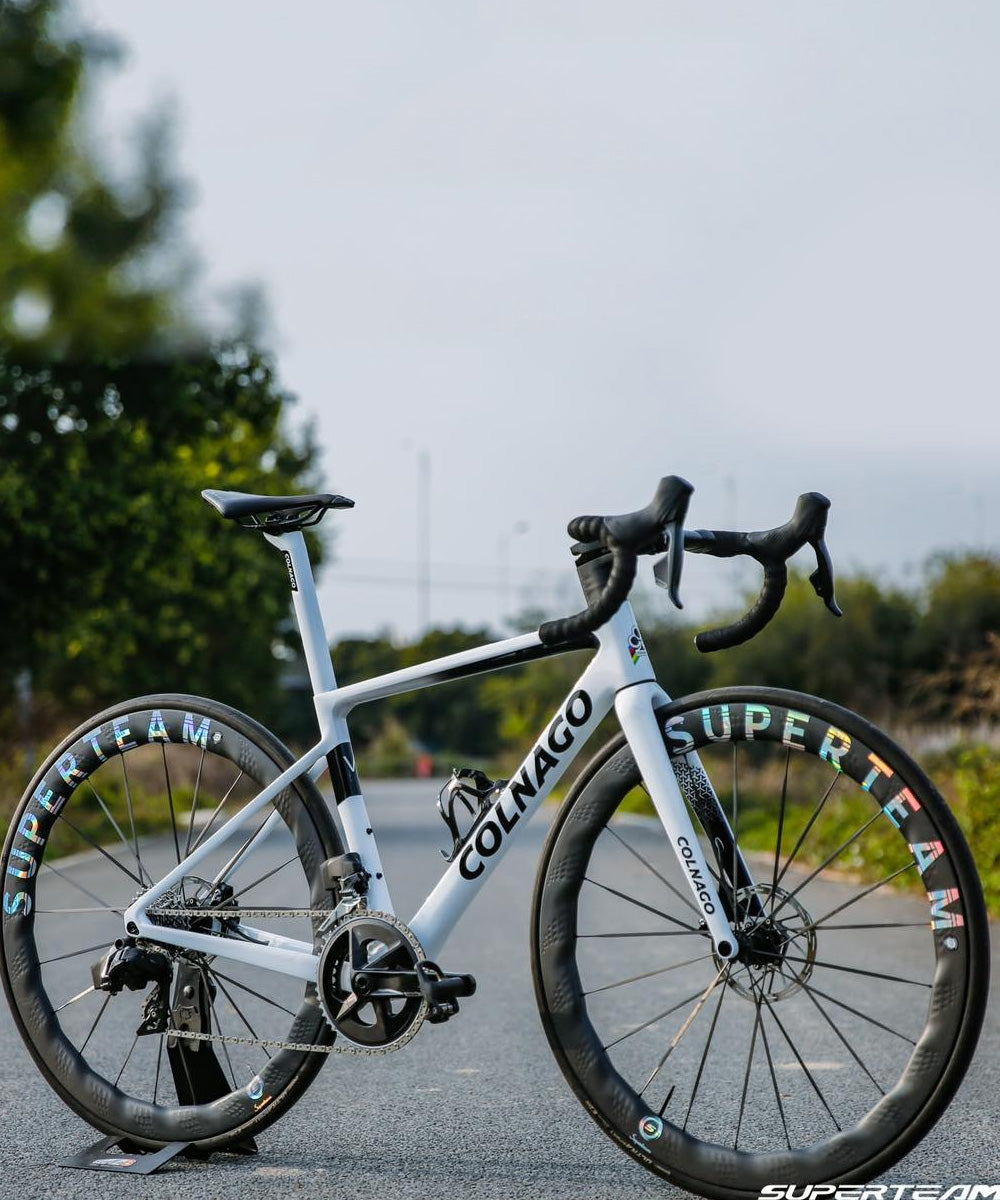


Understanding Rim Heat Build-Up During Long Gravel Rides
Introduction
Long gravel rides often include sustained braking on descents, unpredictable terrain, and variable weather. These conditions can cause significant heat build-up in rims, especially for riders using rim-brake carbon wheels. Excessive heat doesn’t just affect braking—it can compromise tire pressure, rim structure, and overall safety. Understanding how heat accumulates and how to manage it is critical for riders who want both performance and reliability on gravel.
Why Heat Build-Up Happens
Friction from Braking
Rim brakes convert kinetic energy into heat at the brake track.
On gravel descents, braking is often extended and uneven, intensifying the effect.
Lower Speeds, More Braking
Gravel surfaces reduce rolling speed compared to pavement.
Riders spend longer braking at moderate speeds, producing sustained heat.
Tire Pressure and Air Expansion
Heat from the rim transfers to the tire, increasing internal pressure.
Overheated rims risk blowouts, especially with tubeless setups at low pressures.
Effects of Excessive Rim Heat
Brake Fade
Overheated pads lose friction, requiring more lever force.
Braking becomes inconsistent and less predictable.
Resin Degradation in Carbon Rims
Carbon rims rely on epoxy resins that soften under high heat.
Prolonged exposure can cause warping, delamination, or micro-cracks.
Tire Stability
Rising pressure inside the tire may cause burping in tubeless systems.
In extreme cases, tire blowouts can occur mid-descent.
Factors Influencing Rim Heat
Rim Material
Alloy rims dissipate heat faster than carbon but wear faster under grit.
Carbon rims hold heat longer, requiring better braking discipline.
Brake Pad Compound
Pads optimized for carbon reduce heat transfer but may wear faster in gravel grit.
Rim Depth
Deeper rims trap more heat, while shallower rims allow better dissipation.
Riding Style
Heavy, continuous braking leads to higher heat loads than pulsed, controlled braking.
Managing Rim Heat on Gravel Rides
Brake Modulation
Use short, firm pulses rather than dragging brakes.
Alternate between front and rear brakes to distribute load.
Tire and Pressure Setup
Choose tubeless systems with reinforced sidewalls for safety under heat stress.
Avoid excessively high starting pressures
Equipment Choice
Consider alloy rims if riding long, steep, and wet gravel descents.
Select brake pads designed for heat management on carbon rims.
Technique on Descents
Feather brakes before entering corners instead of mid-corner.
Allow cooling periods by releasing brakes on straights.
Conclusion
Rim heat build-up on long gravel rides is a hidden but serious challenge that affects braking consistency, tire safety, and rim longevity. While carbon rims offer lightweight performance, they demand careful braking technique and pad selection. Alloy rims provide better heat dissipation but trade efficiency for durability. By understanding the causes and managing rim heat proactively, riders can maintain both safety and performance over extended gravel adventures.