

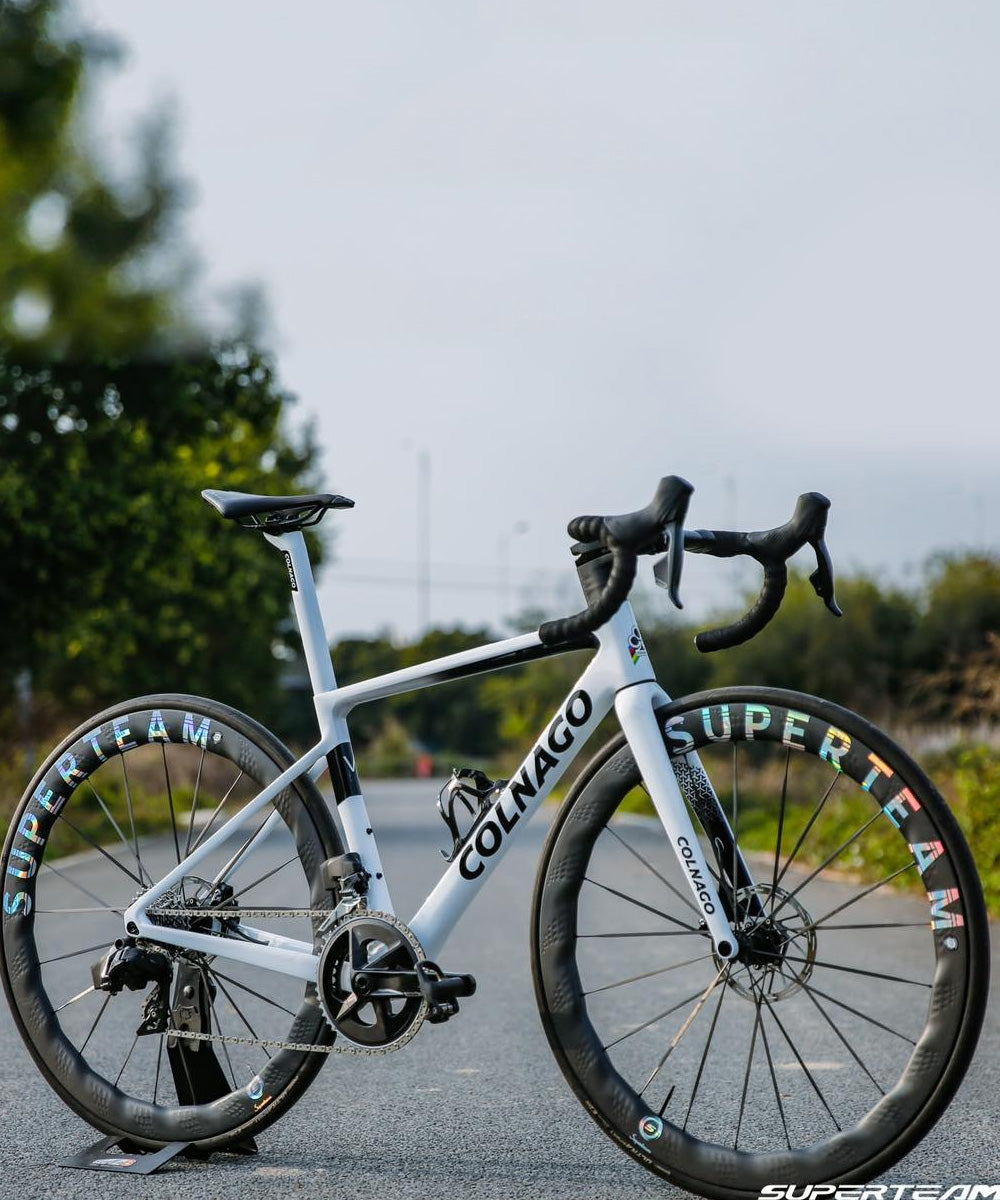


Understanding Radial vs. Tangential Spoke Loading
Spoke lacing patterns are fundamental to wheel performance, and understanding the difference between radial and tangential (or crossed) spoke loading is essential for optimizing strength, stiffness, and power transfer.
Radial Spoke Lacing
Definition: Radial lacing connects the hub flange directly to the rim without crossing other spokes.
Characteristics:
Shorter spoke length reduces weight slightly.
Minimizes lateral stiffness, offering some compliance.
Typically used on front wheels or non-drive side rear wheels where torque transfer is minimal.
Advantages: Lightweight, simple aesthetics, reduced spoke tension requirements.
Limitations: Poor at transmitting torque, higher risk of spoke fatigue under heavy acceleration or braking.
Tangential (Crossed) Spoke Lacing
Definition: Tangential lacing crosses spokes over one another before attaching to the rim, creating an angle relative to the hub flange.
Characteristics:
Spokes are under both radial and tangential tension.
Optimized for torque transmission on drive-side rear wheels or disc-brake hubs.
Increases lateral stiffness and distributes load more evenly.
Advantages: Excellent for power transfer, durable under high torque loads, improved wheel longevity.
Limitations: Slightly heavier, more complex build, slightly increased wind resistance.
Choosing the Right Lacing Pattern
Front wheels: Radial lacing is often sufficient unless paired with heavy disc braking.
Rear wheels: Tangential lacing is preferred on the drive side for optimal torque handling.
High-performance setups: Some modern wheelsets use a mix of radial and tangential spokes to balance weight, stiffness, and torque transmission.
Conclusion
Radial and tangential spoke loading serve different purposes in wheel design. Radial spokes offer weight savings and simplicity, while tangential spokes excel in torque transfer and durability. Understanding these differences helps riders select or build wheels that best match their riding style and performance needs.