

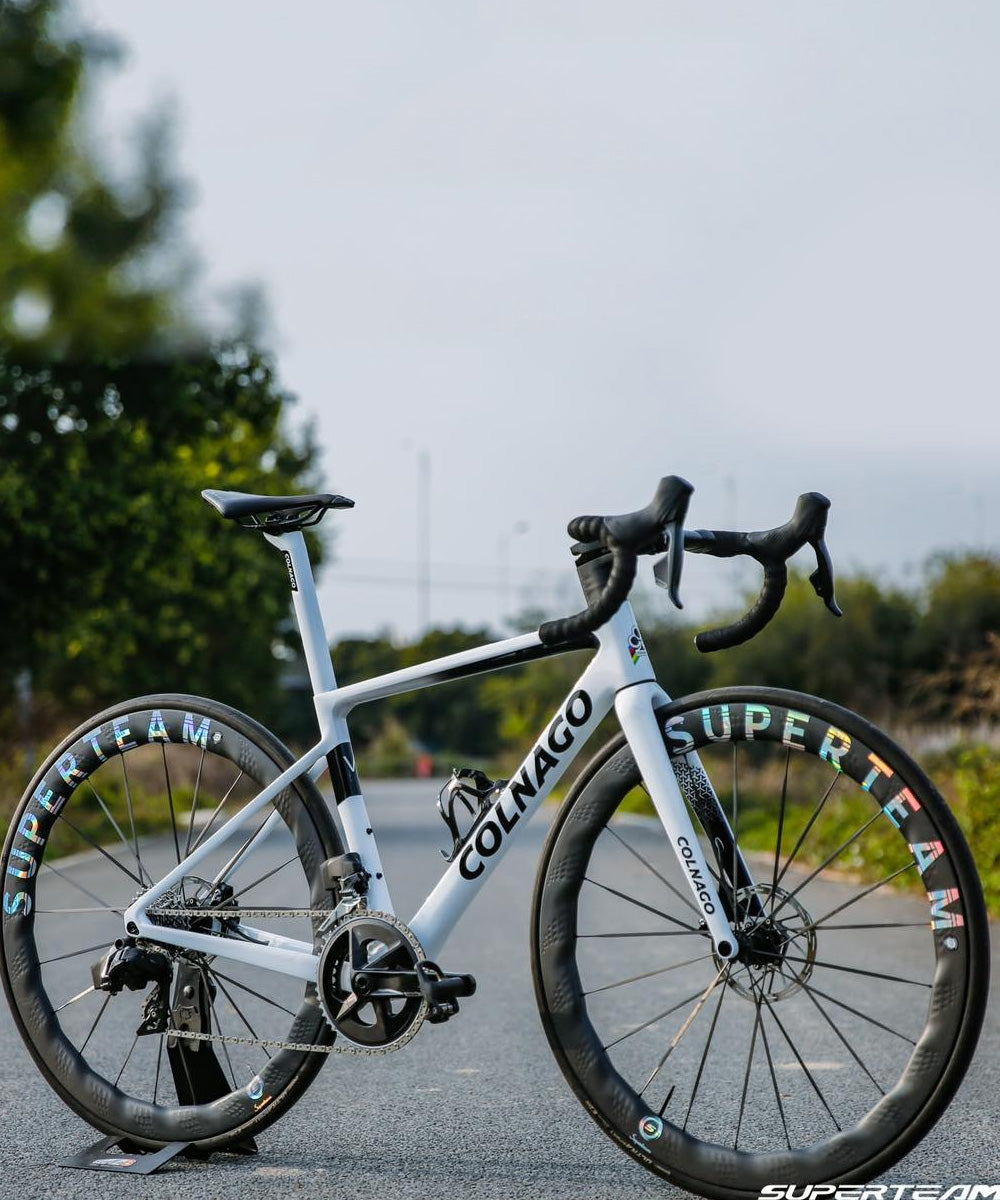


The Thermal Management Challenges of Rim Brake Carbon Rims
Rim brake carbon rims offer impressive stiffness, low weight, and aerodynamic performance, but they also face a unique engineering challenge: heat. Unlike disc brake systems, where heat is transferred to a separate rotor, rim brakes apply friction directly to the rim surface. This means the carbon structure must manage both mechanical braking forces and thermal stress at the same time. Understanding how heat affects carbon rims helps riders make safer decisions during long descents or intense braking.
When braking on carbon rims, heat builds rapidly at the brake track. Carbon fiber itself handles heat well, but the resin binding the fibers is far more sensitive. If temperatures climb too high, the resin can soften, deform, or weaken, which can eventually lead to brake pulsing, warping, or—in extreme cases—rim failure. Manufacturers design modern carbon rims with higher-temperature resins and reinforced brake tracks, but the risk still increases on steep descents or during prolonged braking.
Another challenge is how carbon dissipates heat compared to aluminum. Aluminum conducts heat quickly across the rim surface, spreading thermal energy before it can concentrate. Carbon, however, is a poor thermal conductor, meaning heat stays localized at the brake track. This creates “hot zones” that can accelerate wear or cause uneven pressure on the tire, especially at high inflation levels.
Riding technique also plays a major role in thermal management. Continuous braking generates more heat than pulsed braking, and heavy riders or those carrying extra gear can put even more thermal load on the rim. Wet weather adds complexity—in rain, carbon rims require more braking force, which increases the amount of heat produced once the brake track dries during prolonged braking.
Modern carbon rims use engineered solutions to combat these issues, such as textured brake tracks, heat-resistant resins, ceramic coatings, and strategically layered carbon fibers. These improvements significantly enhance thermal stability, but they do not fully eliminate the need for proper braking habits and regular inspection.
Ultimately, thermal management remains one of the most important considerations for riders using rim brake carbon wheels. Understanding the limitations—and adapting braking technique accordingly—helps maintain safety, prolong rim lifespan, and ensure consistent performance on demanding terrain.