

Spoke Count and Carbon Wheelset Durability: What Riders Need to Know
When choosing a carbon wheelset, riders often focus on weight, aerodynamics, or rim profile. Yet one factor plays a critical but sometimes overlooked role in ride quality and longevity: spoke count. The number of spokes a wheel uses directly affects strength, compliance, stability, and even long-term durability. Understanding how spoke count interacts with wheel design helps cyclists choose the right setup based on terrain, riding style, and performance expectations.
Why Spoke Count Matters
A bicycle wheel works as a tensioned structure. Each spoke helps distribute loads—bumps, lateral forces, and rider weight—through the rim and hub. With more spokes, these loads are shared more evenly, while fewer spokes concentrate the stress on each individual spoke and nipple.
This means spoke count influences:
-
Impact resistance
-
Lateral stiffness
-
Vertical compliance
-
Long-term fatigue durability
-
Ease of maintenance
High Spoke Count: Durability and Stability
Wheels with higher spoke counts (24/28 or 28/32) are typically designed for durability rather than minimum weight.
Key advantages:
-
Greater load capacity
The wheel can handle heavier riders, rough roads, and aggressive riding without deforming. -
Better long-term fatigue resistance
Each spoke carries less load, reducing the chance of fatigue cracks at the nipple bed. -
Improved stability under braking and cornering
More spokes prevent lateral flex during hard sprints or descents. -
More forgiving ride feel
With load spread over more tension points, vibrations are less harsh, a benefit for endurance riders.
Best for:
-
Gravel and endurance road
-
Heavier or more powerful riders
-
Loaded touring
-
Every day, training wheels
Low Spoke Count: Speed and Aerodynamic Efficiency
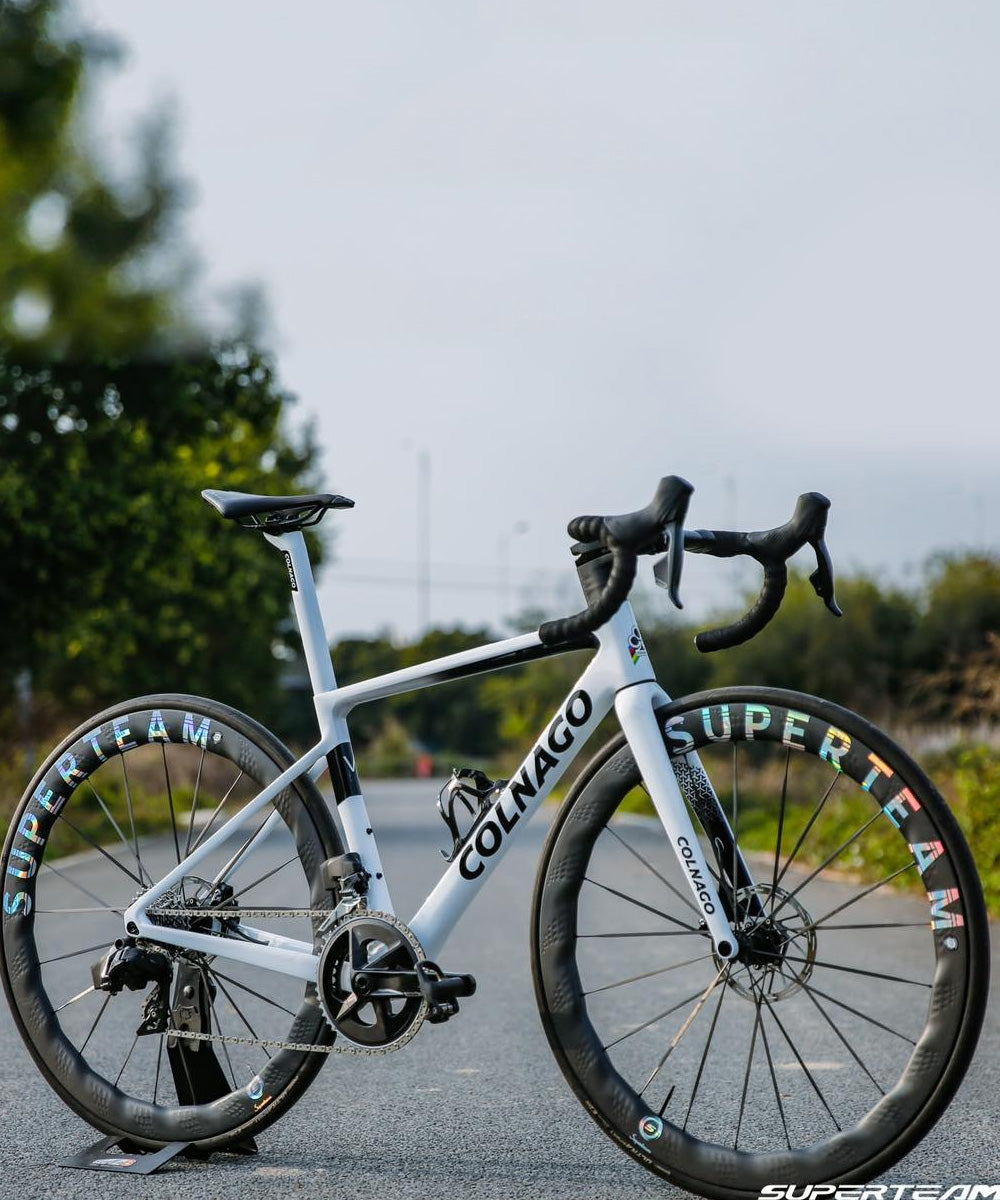
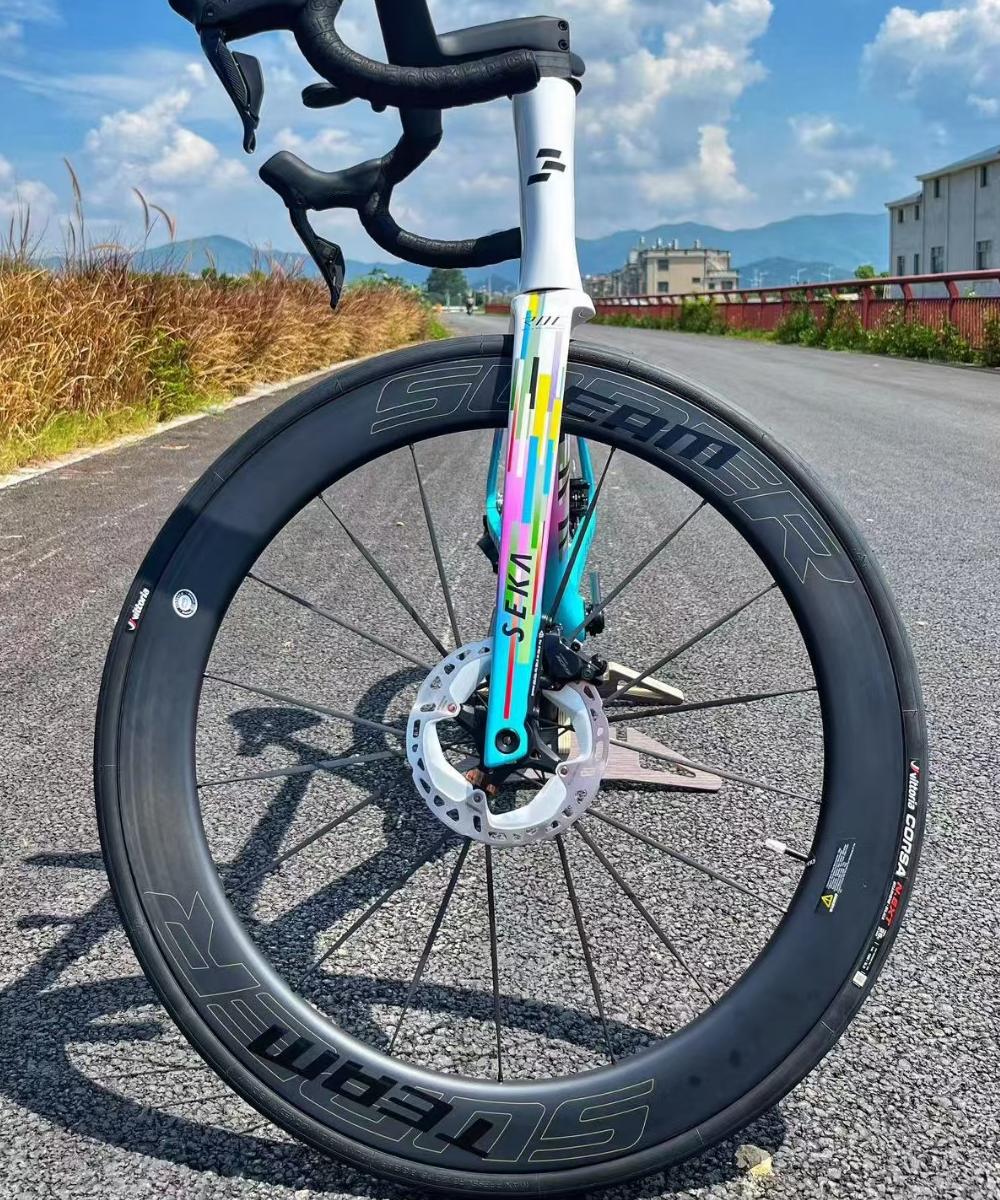
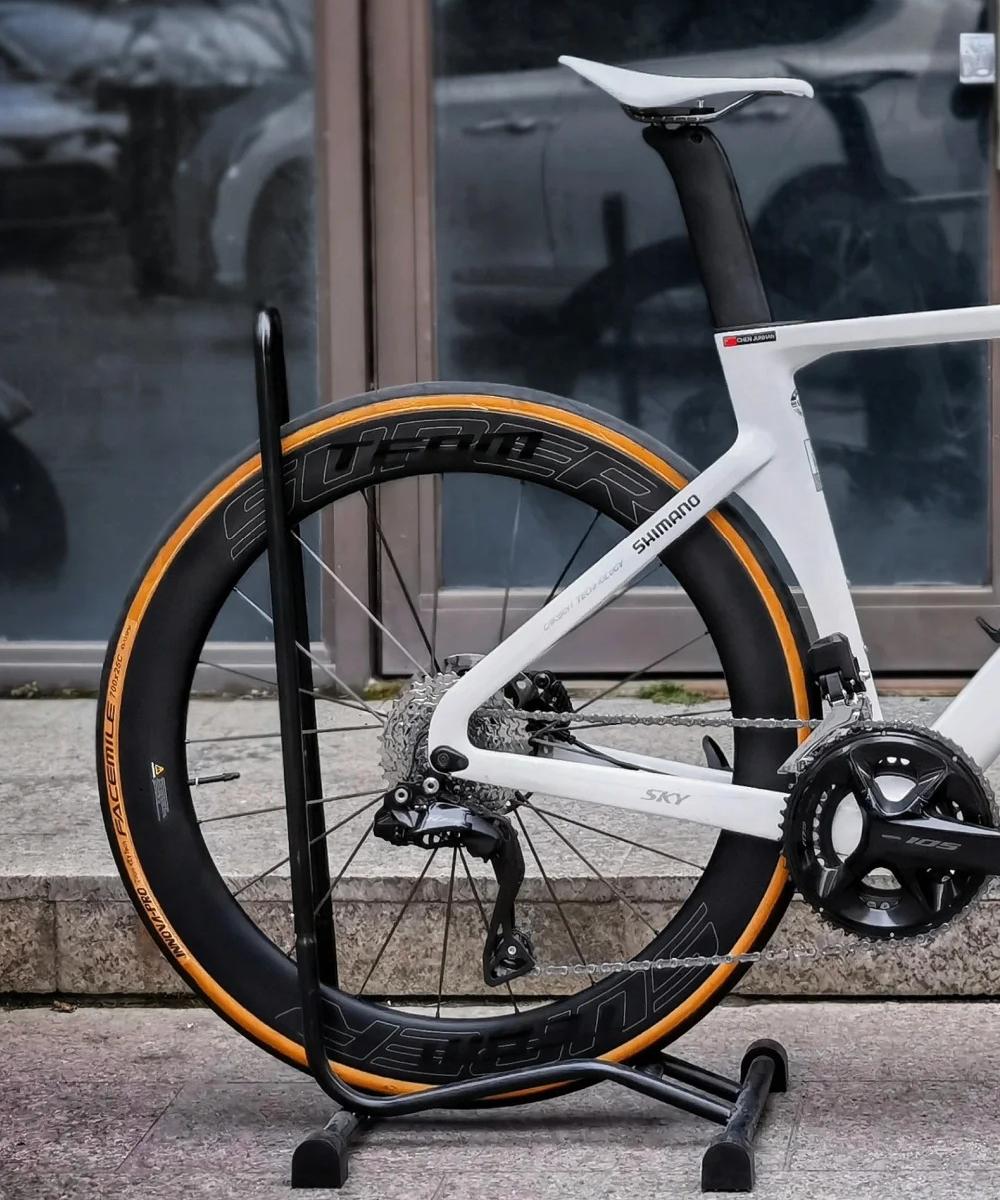
Modern performance carbon wheels often use fewer spokes (16/18 front, 21/24 rear). This reduces aerodynamic drag and rotating mass.
Main benefits:
-
Better aerodynamics
Fewer spokes present less frontal area and lower turbulence. -
Lower weight
Every spoke, nipple, and drilled rim hole adds grams. -
Responsive acceleration
Reduced rotational weight improves sprinting and climbing response. -
Race-focused rigidity
Fewer spokes can deliver a tighter, stiffer wheel—ideal for competitive riding.
Best for:
Road racing
Time trials
High-speed flat riding
Lightweight climber wheelsets
Carbon Rim Construction and Spoke Count
Carbon rims behave differently from aluminum. Because carbon is strong but less tolerant of point loads, spoke tension distribution becomes even more important.
Low-spoke carbon wheels require advanced layup, reinforced nipple beds, and precision tensioning.
High-spoke carbon wheels are more forgiving but slightly heavier and less aerodynamic.
Brands with stronger layup technology can safely use lower spoke counts without compromising durability.
Rear vs. Front Wheel Considerations
Rear wheels endure more load due to drivetrain torque and rear weight bias. That’s why many manufacturers use:
Fewer spokes in front (16–18)
More spokes in the rear (21–24 or 24–28)
This maintains balance in stiffness and stability.
How to Choose the Right Spoke Count
Consider the following factors:
1. Rider weight and power
Heavier or more powerful riders benefit from 24/28 or higher counts.
2. Road conditions
Rough roads demand stronger, higher-spoke wheelsets.
3. Intended use
Racing → lower spoke count
Training/endurance → higher spoke count
4. Maintenance preference
More spokes = easier truing and more redundancy
Fewer spokes = higher tension, more precision required
Conclusion
Spoke count is not just a number—it determines how a carbon wheelset performs under stress, how it accelerates, and how long it will last. By choosing the spoke count that matches your riding style, you ensure the perfect balance of durability, performance, and long-term reliability.