


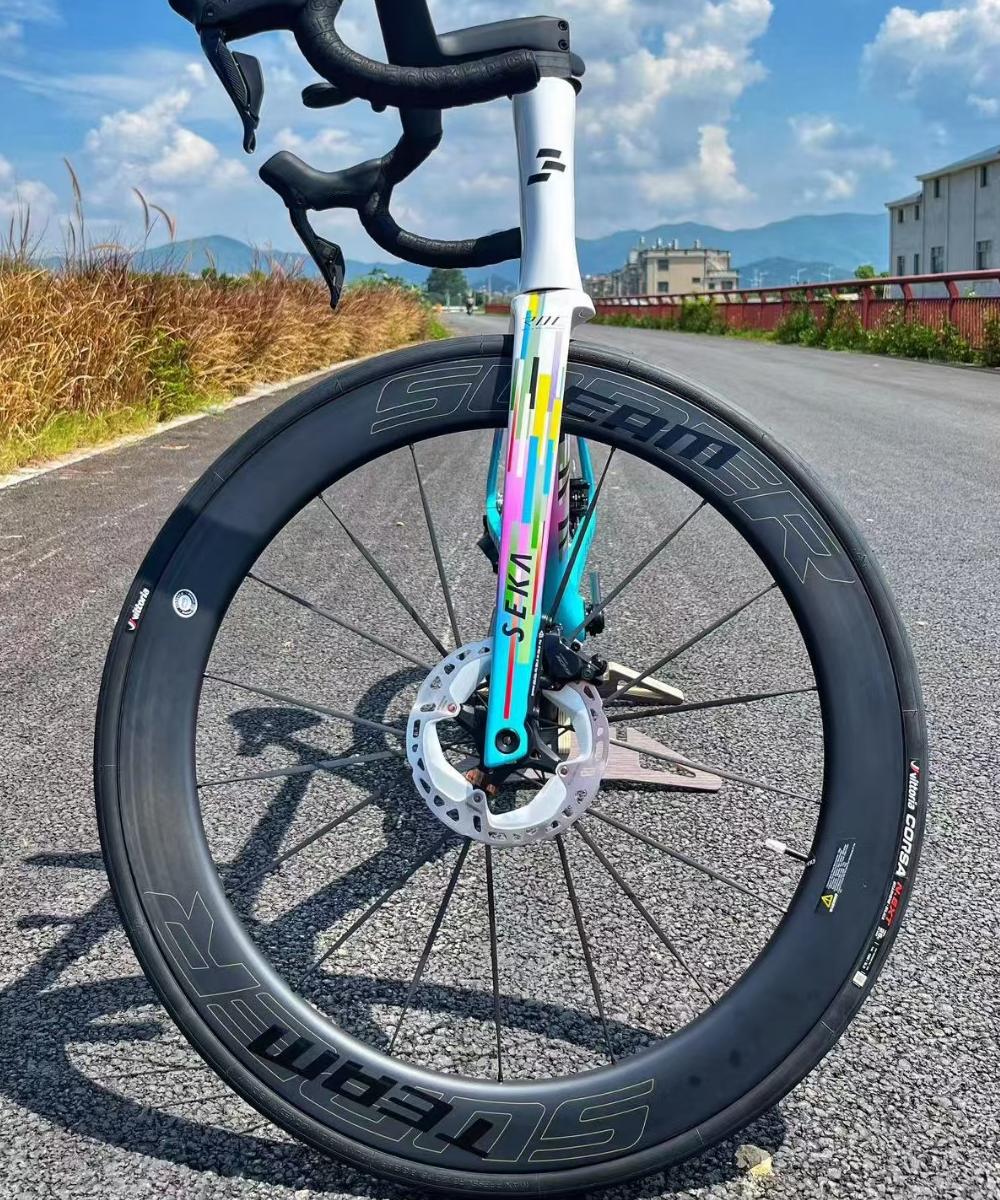

How to Check Brake Rotor Runout with Feeler Gauges
Brake rotor runout—also known as lateral deviation—is a common cause of brake rub, noise, vibration, and inconsistent braking feel. Even a small amount of rotor wobble can cause the pads to lightly touch the rotor on every wheel revolution. Checking runout with feeler gauges is one of the most accurate ways to diagnose the issue and determine whether the rotor needs truing or replacement.
To begin, mount the wheel securely in the bike frame or truing stand. Make sure the axle is fully seated in the dropouts or thru-axle slots, because any misalignment can create false readings. Spin the wheel and visually check the rotor for side-to-side movement. This quick check helps you identify where the rotor may be rubbing or deviating.
Feeler gauges are thin, precise metal blades available in various thicknesses. They are commonly used to measure gaps in mechanical systems, making them ideal for checking rotor runout. Most rotor manufacturers allow up to 0.2–0.3 mm of lateral variation, though high-performance rotors may require tighter tolerances.
To measure runout, position the feeler gauge between the rotor and brake pad or caliper body. Use the thinnest blade first, then move up gradually. Slowly spin the wheel and see where the rotor touches or clears the gauge. If a particular blade fits smoothly on one section but binds or scrapes on another, it indicates lateral deviation in that area.
For a more accurate measurement, hold the feeler gauge against a fixed point on the caliper, such as the inside edge of the pad slot. As the wheel rotates, observe the gap between the rotor and the gauge. The difference between the largest and smallest gaps gives you the runout value. If the variation exceeds the recommended tolerance, the rotor needs adjustment.
When runout is present, use a rotor truing tool to gently bend the affected section. Work slowly and apply small, controlled movements. After each adjustment, recheck with the feeler gauge to ensure you are moving closer to the ideal alignment rather than overcorrecting. Repeat the process until the rotor spins without contacting the gauge or pads.
If the rotor still shows excessive runout after careful truing, it may be warped beyond repair or suffering from heat fatigue. In that case, replacement is the safest option. Also, check that the rotor bolts are properly torqued, as uneven bolt tension can cause rotor distortion that mimics runout.
Using feeler gauges to check rotor runout provides highly accurate measurements and helps diagnose even minor alignment problems. With a few minutes of careful inspection, you can eliminate brake rub, improve braking smoothness, and extend the life of your rotor and pads.