

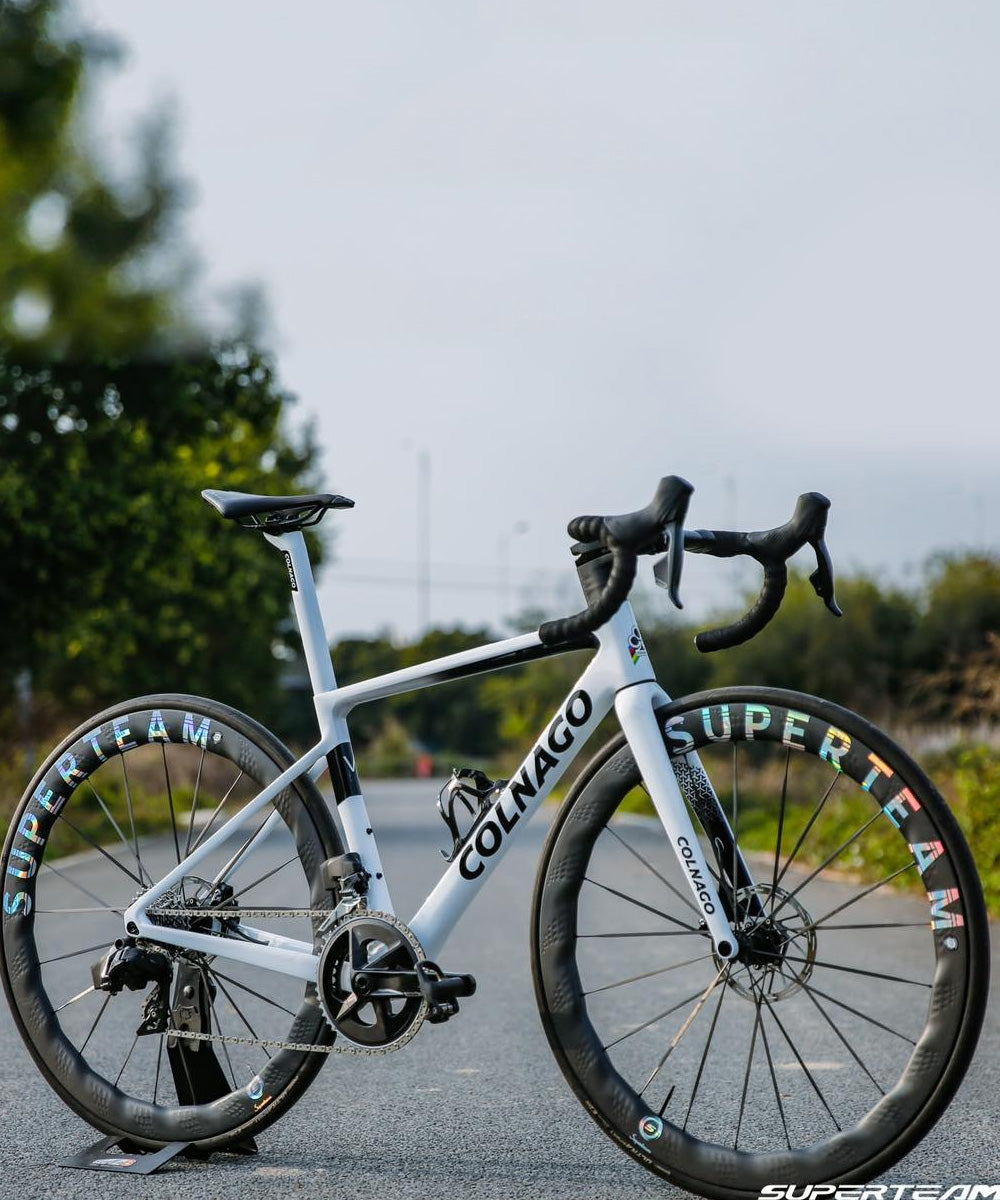


How Rim Material Influences Heat Dissipation During Braking
Understanding Why Your Wheel's Composition Matters on Long Descents
Introduction
When you’re flying downhill at 70 km/h and pulling the brakes into a hairpin turn, heat becomes a silent but serious factor. During braking—especially with rim brake systems—the kinetic energy of the rider and bike is converted into thermal energy.
Where does that heat go? Straight into your rim.
The rim material you choose plays a critical role in how well that heat is handled, and it can determine whether your braking remains safe and consistent—or leads to fade, delamination, or even blowout.
Why Heat Dissipation Matters
Rim brake systems rely on friction between the brake pad and the rim surface.
Continuous or heavy braking (e.g., alpine descents) can raise rim temperatures to over 200°C (392°F).
Poor heat management leads to:
Brake fade (weaker braking over time)
Softening of rim resin (in carbon rims)
Tire blowouts due to inner tube overheating
Warping or cracking of rim structure
Common Rim Materials and Their Heat Performance
Aluminum Alloy Rims
Pros:
Excellent thermal conductivity (~130–200 W/m·K)
Heats up fast but also cools down quickly
Less risk of sudden failure due to overheating
Stable braking performance in all weather conditions
Cons:
Heavier than carbon
Can show wear grooves over time
Not as aerodynamic or stiff as a high-end carbon design.
Best for: Training wheels, wet-weather rides, long descents, or heavier riders.
Carbon Fiber Rims
Pros:
Lighter, more aerodynamic
Better stiffness-to-weight ratio
Improved braking feel with modern resins and brake pad combos
Cons:
Poor thermal conductivity (~5–10 W/m·K)
Heat builds up faster and stays longer
Risks include resin softening, delamination, and braking inconsistency
Mitigating Technologies:
High TG (glass transition temperature) resins for better heat resistance
Heat-dissipating brake pads designed to match specific carbon tracks
⚠️ Warning: Using incorrect brake pads on carbon rims can dramatically increase the risk of damage or failure.
⚗️ Hybrid and Composite Rims
Some newer rims combine materials or use novel treatments, such as:
Basalt brake tracks (as seen in some early carbon rims)
Ceramic-coated aluminum rims (e.g., Mavic Exalith)
Alloy-core carbon rims that dissipate heat internally before it damages the outer layers
These hybrids aim to balance carbon's weight advantage with aluminum's heat tolerance.
Real-World Examples
|
Product |
Material |
Heat Dissipation Features |
|
Superteam Ultra H2 D50 |
Full carbon |
High-TG resin, custom brake pads recommended |
|
DT Swiss PR 1400 |
Alloy |
Traditional aluminum rim, solid for descents |
|
ENVE SES 3.4 |
Carbon |
Molded textured brake track, high heat tolerance |
|
Zipp 303 Firecrest (rim brake) |
Carbon |
Showstopper brake track, silica-coated surface |
Disc Brakes: A Heat Detour?
Disc brakes move braking forces away from the rim, almost eliminating rim overheating. However, the rotor and caliper now take on the thermal load.
Still, if you're using rim brakes, rim material remains a critical component of safety.
Recommendations
|
Rider Type |
Recommended Rim Material |
|
Mountain descender |
Aluminum or hybrid rim with proven heat dissipation |
|
Racer on rolling terrain |
High-TG carbon rims with approved pads |
|
Weight-focused climber |
Lightweight carbon, but brake strategically |
|
Everyday commuter |
Alloy rims for reliability and cost-effectiveness |
Conclusion
Your rim is more than just a support for your tire—it’s also your heat sink.
Material choice directly impacts how heat is absorbed, managed, and dispersed under braking stress. While carbon rims have caught up significantly thanks to better resins and designs, aluminum remains the gold standard for heat management—especially on long, technical descents.
If you’re running rim brakes, choose your wheelset with your riding conditions and weight in mind. The right choice keeps your speed high and your stopping power cool.