

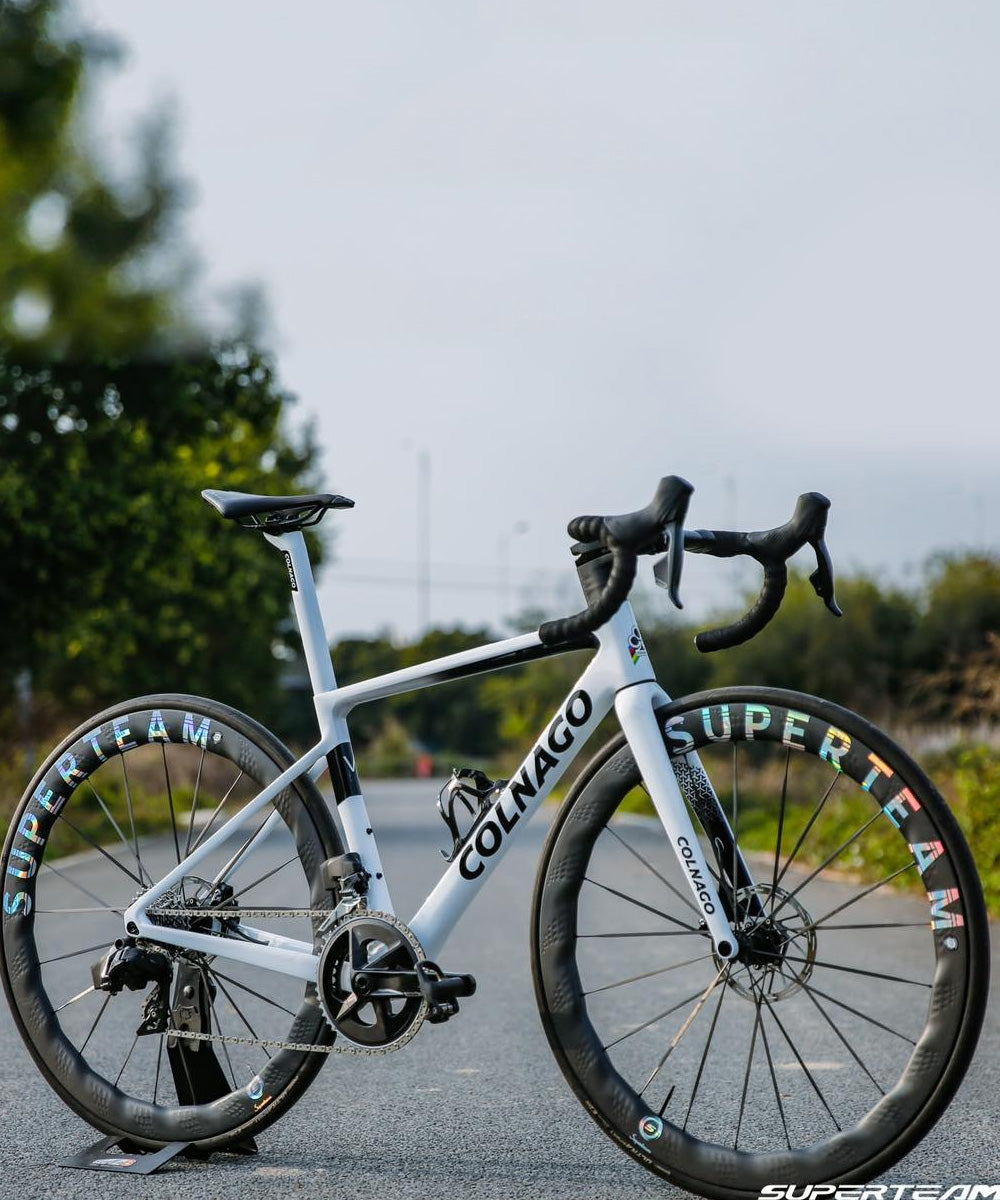



Climbing is one of the few moments in road cycling where technique, physiology, and instinct collide. The decision to stay seated or stand on the pedals looks simple from the outside, yet it has a measurable impact on efficiency, fatigue, traction, and pacing. Strong climbers aren’t standing more or less than everyone else—they’re standing at the right moments.

Staying seated is the foundation of efficient climbing. When seated, your body mass remains centered over the bike, keeping traction consistent on the rear wheel and reducing unnecessary movement. This position favors aerobic efficiency, making it ideal for long climbs, steady gradients, and sustained efforts near threshold. Seated climbing allows you to regulate breathing, maintain a stable cadence, and conserve upper-body energy. Over long ascents, this matters more than raw force.
Seated climbing also minimizes spikes in power output. Standing naturally increases power for short durations, but those surges come at a metabolic cost. Riders who stand too often on long climbs tend to burn matches early, even if the climb doesn’t feel aggressive at first. For climbs lasting several minutes or more, staying seated as long as cadence and gearing allow usually leads to better overall performance.

Standing, on the other hand, is a tool—not a default. It shines when torque demand suddenly increases. Steep ramps, sharp gradient changes, or moments when cadence drops too low are all valid reasons to stand. By shifting body weight over the pedals, you recruit additional muscle groups and temporarily reduce the load on any single muscle. This can relieve fatigue and help reset rhythm, especially late in a climb.
Short-term efforts are also valuable for micro-recovery. Briefly standing for 10–20 seconds can change muscle activation patterns, relieve pressure points, and restore blood flow without significantly increasing overall fatigue—if power is controlled. The mistake many riders make is turning these moments into full surges instead of controlled posture changes.

Bike setup plays a role in this decision as well. Riders with compact gearing and wider-range cassettes can stay seated longer without bogging down. Those with stiffer frames and wheels may find standing feels more responsive, while others lose efficiency due to bike sway or traction loss. Tire choice, road surface, and gradient consistency all influence whether standing helps or hurts.
From a pacing perspective, standing is best used deliberately. On rolling climbs or variable gradients, standing briefly over the steepest sections while returning to seated climbing elsewhere keeps power smoother across the climb. On very steep pitches, standing may be unavoidable—but even then, alternating back to the saddle as soon as cadence stabilizes preserves energy.

The most important cue is not gradient or speed, but effort. If standing causes a sharp rise in breathing and heart rate, it’s likely costing more than it’s giving. If it smooths cadence, restores control, and feels sustainable, it’s doing its job. Skilled climbers constantly shift between seated and standing, but rarely without intention.
Ultimately, climbing well is about restraint. Staying seated builds efficiency and endurance. Standing provides leverage and relief when conditions demand it. Knowing when to use each—and when not to—is what separates riders who survive climbs from those who manage them.



Leave a comment
All comments are moderated before being published.
This site is protected by hCaptcha and the hCaptcha Privacy Policy and Terms of Service apply.